



Nims Dai: The Nepali Mountaineer Who Climbed All 14 Highest Peaks in Record Time
In 2019, a Gurkha soldier from a village in Myagdi climbed all fourteen of the world's 8,000-metre peaks in six months and six days, a feat the previous record holder had needed almost eight years to complete. This is the story of Nirmal Purja, the climber the world knew as Nims Dai, who died on Broad Peak in July 2026.
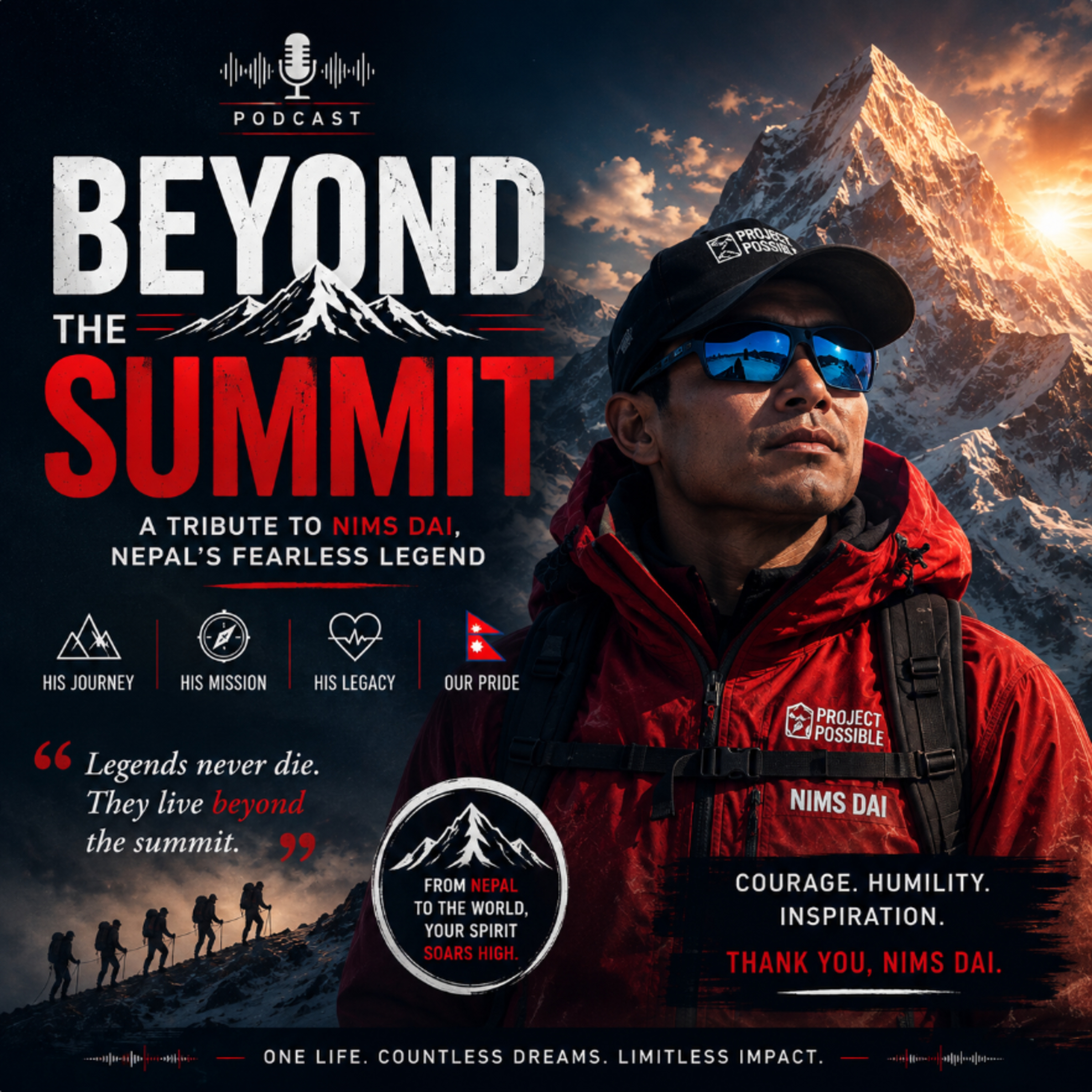
Some people climb mountains. Others redefine what is possible.In this special tribute episode, we celebrate the extraordinary life and legacy of Nims Dai (Nirmal Purja)…
▶ Listen on SpotifyShow notes & transcript →Follow the show →
🎧 Also on Apple Podcasts Castbox iHeartRadio
Overview
Editor's note. This article was written to celebrate the life and the work of Nims Dai, and it does so while acknowledging his death on Broad Peak on 30 July 2026. It is a biography rather than a eulogy: it records the records, the rescues and the arguments, including the criticism he attracted and answered, because that is the version of him his own account would recognise. Everything factual here is sourced, and the sources are listed at the foot of the page. Reporting on the avalanche is still developing and we will keep this page current.
The BriefNepal Travel Desk
On 1 August 2026, the expedition company Elite Exped confirmed what climbers around the world had spent two days hoping was not true: Nirmal "Nimsdai" Purja had died in an avalanche on Broad Peak in Pakistan. He was 43. All ten climbers swept down the mountain on the morning of 30 July were confirmed dead.
For a decade before that, Nims Dai was the most recognisable mountaineer alive, and the first Nepali climber to become a global name on his own terms rather than as somebody else's guide. In 2019 he climbed all fourteen 8,000-metre peaks in six months and six days. The previous fastest had taken just under eight years. In January 2021 he led the first team ever to stand on the summit of K2 in winter, and he did it without supplemental oxygen. In October 2024 he answered his critics by completing all fourteen again, this time without bottled oxygen on any of them.
What made him matter in Nepal was not only the records. Nepali climbers had been carrying loads, fixing ropes and hauling clients up the world's highest mountains for seventy years, largely uncredited outside the industry. Nims Dai spent his public life insisting, loudly and sometimes abrasively, that they be named, paid and remembered. "Anything is possible" was his slogan, printed on hoodies and quoted back at him constantly. The less marketable version of it, the one his teams heard, was that Nepali climbers had never needed permission to be the best in the world at this.
This article covers his childhood in Myagdi and Chitwan, his sixteen years in the British military, Project Possible, the winter K2 ascent, the rescues, the criticism he attracted, and what he changed for Nepal. It also covers his final climb honestly. If you are planning your own first trip into Nepal's high country, the altitude sickness guide and the Everest Base Camp trek guide are the practical companions to this one.
From a Village in Myagdi to the Plains of Chitwan
Nirmal Purja was born on 25 July 1983 in Dana, a village in Myagdi district in western Nepal, at roughly 1,600 m in the gorge of the Kali Gandaki river. Anyone who has walked the lower stages of the Annapurna Circuit or the Jomsom to Muktinath trail has passed through it: a strip of stone houses and orange trees between Tatopani and Ghasa, with Dhaulagiri and Annapurna on either side of the deepest river gorge on earth.
He barely knew it. When he was about four, the family moved down to Chitwan in the flat, hot Terai, and that is where he grew up: not in the mountains but in the lowland jungle belt that most visitors know for rhino safaris. It is one of the persistent ironies of his story. The climber who came to own the 8,000-metre peaks was raised at around 200 m above sea level, and by his own account did not see the high Himalaya properly until he was an adult.
His father, Nanda Bahadur Purja, was a Gurkha soldier. So were all three of his older brothers. His mother, Purna Kumari, ran the household on a soldier's remittances, which in rural Nepal is less a domestic arrangement than an economic system: for generations, families in the mid-hills have sent their sons to foreign armies because the pay is the surest route out of subsistence farming. Purja was the youngest, and the family's plan for him was school and then, if he was good enough, the same road his brothers had taken.
Two details from that childhood recur in everything he later said about himself. The first is that his mother had a serious heart condition, and the cost of her care shaped his decisions well into his thirties. The second is that he was not from a Sherpa family. The Sherpa are the community the outside world associates with Himalayan climbing, and their name has become a job title in the process. Purja came from a different part of Nepal entirely and had no inherited claim on the mountains, which is part of why he spent so much energy arguing that Nepali excellence at altitude was not the property of one ethnic group.
Gurkha, Then Special Boat Service
Purja joined the Brigade of Gurkhas in 2003, at 20. The selection is famously brutal, and famously oversubscribed: thousands of young Nepali men compete for a few hundred places each year, and the physical tests include the doko race, a hill run carrying a basket of rocks. Getting in is, in itself, a career achievement in Nepal.
He then did something no Gurkha had done. In 2009 he passed selection for the Special Boat Service, the Royal Navy's special forces unit and the maritime counterpart to the SAS. He was the first Gurkha to serve in the SBS. He stayed in the military for about sixteen years in total, serving in Afghanistan among other places, and was appointed a Member of the Order of the British Empire (MBE) in 2018 for services to high-altitude mountaineering.
The special forces years explain a great deal about how he later climbed. Elite military training is not primarily about strength; it is about operating competently while exhausted, frightened and oxygen-starved, and about planning logistics in fine detail so that the plan survives contact with reality. Purja approached the 8,000ers the way a military planner would: staged, resupplied, helicopter-assisted between ranges, with weather windows treated as targets of opportunity. Purist climbers found this distasteful. It was also, demonstrably, effective.
He came to mountaineering late. His first 8,000-metre summit was Dhaulagiri (8,167 m) on 18 May 2014, climbed on leave with borrowed and improvised kit, and it is worth noting that the mountain he chose first was the one that towers over his birthplace in Myagdi. He first summited Everest on 13 May 2016. On that same 2016 trip, according to widely published accounts, he brought a stricken climber down alone from the death zone above 8,000 m, the first of the rescues that would punctuate his career.
By 2018 he had a decision to make. He was in his mid-thirties, a serving special forces soldier with a pension in sight, and he had an idea that everyone he described it to considered impossible.
Project Possible: 14 Peaks in 6 Months and 6 Days
The idea was to climb all fourteen 8,000-metre peaks, the highest mountains on earth, spread across Nepal, Pakistan, Tibet and the India-Pakistan borderlands, in seven months. He called it Project Possible 14/7.
To understand how absurd that sounded in 2018, consider the baseline. Reinhold Messner, the first person to climb all fourteen, took sixteen years. The fastest anyone had done it was seven years, ten months and six days, by the South Korean climber Kim Chang-ho. Purja was proposing to cut that to seven months. Sponsors declined. Mountaineering media treated it as a stunt. He left the military to attempt it anyway, and funded the start of it himself, remortgaging his house and running the first phase on money that would not have covered the third.
He beat his own target. The fourteenth summit came on 29 October 2019, six months and six days after the first, a total of 189 days.
Phase one: six peaks in Nepal in 31 days
Spring 2019 was the sequence that made people take the project seriously. Annapurna, the most statistically lethal of the fourteen, on 23 April. Dhaulagiri on 12 May. Kanchenjunga on 15 May. Then, on 22 May, Everest and Lhotse in the same push, followed by Makalu on 24 May, giving him three 8,000ers inside 48 hours and six in 31 days. The Everest-Lhotse-Makalu triple entered the Guinness records; he held 18 Guinness World Records in total.
The same Everest summit day produced the photograph he became famous for outside climbing. Looking down from near the top, he shot the queue on the Hillary Step: several hundred climbers packed nose-to-tail on a knife-edge ridge at 8,700 m, waiting. Published worldwide, it became the defining image of Everest overcrowding and did more to shape public opinion about commercial climbing than any article. He was not entirely comfortable with that, given that he made his living guiding people up the same mountain.
Phase two: the Karakoram
Summer 2019 moved to Pakistan: Nanga Parbat on 3 July, Gasherbrum I on 15 July, Gasherbrum II on 18 July, K2 on 24 July and Broad Peak on 26 July. K2 mattered most. The season had gone badly, deep snow had turned climbers back, and base camp had largely given up. Purja's team went up and fixed the route to the summit, and once it was fixed, twenty-odd other climbers followed them up. It was the first clear demonstration of a pattern: the records were his, but the route was everybody's.
Phase three: Tibet, and a permit

Autumn brought Cho Oyu on 23 September and Manaslu on 27 September, and then a wall that no amount of fitness could climb. Shishapangma, the fourteenth, lies entirely inside Tibet, and China had closed it. Purja spent weeks lobbying, publicly and through the Nepali government, before the permit came. He summited on 29 October 2019 and flew into Kathmandu the next day to a crowd at the airport.
The 14 Eight-Thousanders, and When He Climbed Them
The full Project Possible sequence, in order. Eight of the fourteen are in Nepal or on its borders, which is why the record belongs to Nepal's tourism story as much as to his own.
| # | Peak | Height | Country | Summit date |
|---|---|---|---|---|
| 1 | Annapurna I | 8,091 m | Nepal | 23 April 2019 |
| 2 | Dhaulagiri I | 8,167 m | Nepal | 12 May 2019 |
| 3 | Kanchenjunga | 8,586 m | Nepal / India | 15 May 2019 |
| 4 | Everest | 8,849 m | Nepal / Tibet | 22 May 2019 |
| 5 | Lhotse | 8,516 m | Nepal / Tibet | 22 May 2019 |
| 6 | Makalu | 8,485 m | Nepal / Tibet | 24 May 2019 |
| 7 | Nanga Parbat | 8,125 m | Pakistan | 3 July 2019 |
| 8 | Gasherbrum I | 8,080 m | Pakistan / China | 15 July 2019 |
| 9 | Gasherbrum II | 8,034 m | Pakistan / China | 18 July 2019 |
| 10 | K2 | 8,611 m | Pakistan / China | 24 July 2019 |
| 11 | Broad Peak | 8,051 m | Pakistan / China | 26 July 2019 |
| 12 | Cho Oyu | 8,188 m | Nepal / Tibet | 23 September 2019 |
| 13 | Manaslu | 8,163 m | Nepal | 27 September 2019 |
| 14 | Shishapangma | 8,027 m | Tibet | 29 October 2019 |
Laid out against the calendar, the shape of the record is easier to see than to describe: three concentrated bursts, with the long wait for the Shishapangma permit at the end.
Trekkers can walk to the foot of several of these without any climbing at all. The Annapurna Base Camp trek puts you in the sanctuary beneath peak number one; Dhaulagiri Circuit, Kanchenjunga Base Camp, Makalu Base Camp and Manaslu Circuit do the same for four more, and Everest Base Camp needs no introduction.
The First Winter Ascent of K2
Of everything he did, the climb that mountaineers rate highest is K2 in winter.
K2 (8,611 m) is the second-highest mountain on earth and by consensus the hardest of the fourteen: steeper than Everest, more technical, more exposed to avalanche and rockfall, and with far less margin for a mistake. In winter the Karakoram sits in the jet stream. Temperatures fall below -50°C and winds run over 100 km/h. Every other 8,000er had been climbed in winter, most of them by Polish teams in the 1980s. K2 had resisted every attempt since 1987, which had made it the last great prize in high-altitude climbing, and it had never been claimed by a Nepali team.
On 16 January 2021, ten Nepali climbers reached the summit together at 16:58 local time. They had come up as separate teams and merged on the mountain, and they stopped ten metres below the top, linked arms, and walked onto the summit as one group singing the Nepali national anthem. Purja was the only member of the ten who climbed it without supplemental oxygen.
The symbolism was not accidental and he said so plainly: the mountain that the world's best had failed on for 34 years had gone to a Nepali team, and Nepali climbers had chosen to share the summit rather than let one name take it. In a sport built on individual first ascents, deliberately arriving as a group was the point.
Members of that team of ten have since died in the mountains. One of them, Kili Pemba Sherpa, was on the slope with Purja on Broad Peak in July 2026 and died beside him.
The Rescues
The record run was interrupted repeatedly by rescues, and Purja's willingness to give up a summit push to go and get somebody is the part of his record that climbers who disliked his style still respected.
Annapurna, April 2019. Hours after summiting the first peak of Project Possible, he learned that a Malaysian climber, Dr Chin Wui Kin, was stranded high on the mountain. Chin had been without food, water or oxygen for around 40 hours. Purja and his team went back up and brought him down to be evacuated. Chin died in hospital in Singapore about a week later, but the attempt cost Purja the momentum of his opening phase and several days of a schedule that had none to spare.
Kanchenjunga, May 2019. At around 8,450 m, close to the summit of the world's third-highest mountain, Purja's team found Indian climbers in serious trouble. They gave away their own oxygen and turned to the rescue. "At 8,450 metres, we had to give our oxygen and start rescuing three other climbers," he said afterwards. He and two colleagues, Gesman Tamang and Mingma David Sherpa, got Biplab Baidya and Kuntal Karar down to Camp 4 through the night. Both men died. A third climber survived. Purja was publicly angry afterwards, not about the failure but about a system in which no helicopter and no reserve oxygen was available at that altitude for anybody.
Everest, 2016. Earlier, on his first Everest expedition, he is reported to have brought a climber down alone from above 8,000 m.
The pattern he drew from these was a policy argument he pushed for the rest of his life: that high-altitude rescue in Nepal and Pakistan depends on individual climbers deciding to sacrifice their own expedition, because there is no organised alternative. He founded the Nimsdai Foundation in part to press for better pay, insurance and recognition for the Nepali workers who make up most of the people actually doing the rescuing.
Answering the Critics: All 14 Without Oxygen
From the moment Project Possible finished, the criticism was the same: he had used supplemental oxygen on most of the fourteen, and helicopters to move between base camps, and his teams had fixed ropes ahead of him. Purists argued this was a logistics achievement rather than a climbing one, and that the "record" was not comparable to Kim Chang-ho's or Messner's, both of whom climbed without bottled oxygen.
It was a fair technical objection, and Purja's answer was characteristic. Rather than argue the definition, he went back and did it the other way.
On 4 October 2024, after two years and 150 days, he completed all fourteen 8,000-metre peaks without supplemental oxygen, becoming one of a very small number of people in history to do so, and the first to hold both versions of the achievement. He kept going. On 3 July 2025 he summited Nanga Parbat for his 50th successful 8,000-metre summit, 22 of them without oxygen, more than anyone else has recorded.
For readers who are not climbers, the distinction is worth explaining, because it sits under almost every argument in this sport. Above roughly 8,000 m, in what climbers call the death zone, the air holds about a third of the oxygen available at sea level. The human body cannot acclimatise there; it deteriorates, hour by hour, no matter how fit it is. Bottled oxygen effectively lowers the mountain by 1,000 m or so, making the summit reachable for far more people, and making the difference between a hard day and a survivable one. Climbing without it is a different activity, and a substantially more dangerous one. Our guide to altitude sickness covers what thin air does to the body at the far lower altitudes trekkers actually visit.
Mindset, Leadership and Discipline
Purja's public philosophy was simple to the point of being a slogan, and he knew it: anything is possible. What is more interesting is how he actually worked, because that was not slogan-shaped at all.
He planned like a soldier, not a romantic. Project Possible was a logistics operation with a climbing component. Permits, weather windows, oxygen caches, helicopter transfers between ranges, staged acclimatisation, contingency days: the climbing was the part he was least worried about. When people called this cheating, they were describing the thing he considered his actual skill.
He led from the front and named his team. Nepali climbers had spent decades as the uncredited infrastructure of Himalayan expeditions. Purja put Mingma David Sherpa, Gesman Tamang, Mingma Tenzi Sherpa, Halung Dorchi Sherpa and others in the frame, in the credits and in the press, and made a point of the fact that the fastest and strongest people on any given mountain were usually the ones being paid the least.
He was relentlessly, occasionally exhaustingly, on message. He understood that a record nobody hears about changes nothing, and he was better at the media half of modern mountaineering than any climber of his generation. The hoodies, the Instagram, the Netflix film, the motivational-speaking circuit: these irritated traditionalists, and they were also how a Nepali climber came to have more reach than the Western guiding industry that had always spoken for the region.
He accepted a level of risk that ultimately killed him. This should be said in a piece like this rather than left out of it. The same appetite that produced the winter K2 ascent, and the willingness to turn round at 8,450 m to carry a stranger down, and the decision to add one more peak to a schedule, is not a set of separate traits. It is one trait. It produced almost everything he is admired for, and it produced the last morning on Broad Peak.
In His Own Words
Purja gave a great many interviews and was consistent in them to an unusual degree. Every quotation below is sourced to his own book, his own official site, or a published interview.
On not giving up
The line he is most quoted for comes from 14 Peaks, filmed on Annapurna in the first days of Project Possible. He is chest-deep in fresh snow, breaking trail on the most lethal of the fourteen mountains, and he says it twice:
Giving up is not in the blood, sir. It's not in the blood.
14 Peaks: Nothing Is Impossible (2021)
On Nepal, and on being Nepali
Before the winter K2 expedition, when no team of any nationality had managed the mountain in winter in 34 years of trying, he did not hedge. He posted a promise:
I promise the hardest, the last, and the greatest mountaineering feat #k2winter will belong to the Nepali climbing community.
Facebook, before the K2 winter expedition, 2020
Six weeks later, ten Nepali climbers stood on the summit together. His post afterwards was four words long:
History made for mankind, History made for Nepal!
Instagram, 16 January 2021
The team's full summit statement, still on his own site, is the clearest thing he ever wrote about why the manner of the climb mattered as much as the climb:
What a journey. I'm humbled to say that as a team, we have summited the magnificent K2 in extreme winter conditions.
nimsdai.com, K2 winter summit statement
We set out to make the impossible possible and we are honoured to be sharing this moment, not only with the Nepalese climbing community but with communities all across the world.
nimsdai.com, K2 winter summit statement
Mother nature always has bigger things to say and standing on the summit, witness to the sheer force of her extremities, we are proud to have been a part of history for humankind and to show that collaboration, teamwork and a positive mental attitude can push limits to what we feel might be possible.
nimsdai.com, K2 winter summit statement
On fear and the death zone
Fear became irrelevant because I had belief. In the death zone, I came alive.
Beyond Possible (2020)
On being told it was impossible
I only had 15% of the funding, no-one really believed it was possible.
Interview, BASE Magazine
In 2019, the Red Bull website claimed my goal was similar to "swimming to the moon".
Beyond Possible (2020)
I have always believed that somebody had to do the challenge to show the world that nothing is impossible in terms of high altitude mountaineering.
Interview, BASE Magazine
On the team rather than himself
I don't believe in one man's glory. I wanted everyone to feel a part of this great achievement.
Interview, BASE Magazine
The Nepalese team have always been the pioneers of 8,000ers, and for me to be able to lead this team and have all ten Nepalese members reach the summit of K2 at the same time was unique.
Interview, BASE Magazine, on the first winter ascent of K2
It was a victory for everyone. For everyone that has a dream, for everyone that wants to go above and beyond.
On completing the 14 peaks on Shishapangma, 29 October 2019
On mindset, risk and honesty
The biggest thing that my Special Forces training taught me was to operate in very stressful environments and situations.
Interview, BASE Magazine
The key aspect of safe practice is being truly honest to yourself.
Interview, BASE Magazine
When I'm in the highest places on Earth, I become the most alive as I'm living only for that moment.
Interview, BASE Magazine
Only those people that climb and who walk the walk will understand.
Interview, BASE Magazine, on the criticism of his style
On the mountains themselves
The mountains were just about the best therapy a person could experience.
Beyond Possible (2020)
I knew more than anyone that nature didn't care for reputation, age, gender, or background.
Beyond Possible (2020)
Your extremes are my normality.
Beyond Possible (2020)
And on the rescue at 8,450 m on Kanchenjunga in May 2019, which cost him the summit and several days of a schedule that had none to spare:
At 8,450 metres, we had to give our oxygen and start rescuing three other climbers.
Nirmal Purja, on the Kanchenjunga rescue
The one that is hardest to read now is on his own official site, written after the fourteenth summit and left standing there ever since:
Hard work, dedication, commitment, experience and humility will get you there... and the truth is, I'm just getting started. There is so much more to achieve.
nimsdai.com
Quotes Wrongly Attributed to Him
Two lines circulate widely with his name on them and are not his. Both are worth knowing about if you are sharing his words.
- "It is not the mountain we conquer, but ourselves." This is Sir Edmund Hillary, and it is the most common misattribution. Purja avoided the word "conquer" about mountains altogether.
- "Impossible is nothing." An advertising slogan, popularised by Adidas and drawn from Muhammad Ali. Purja's own phrasing was always the other way round: nothing is impossible, which is where the subtitle of the Netflix film comes from.
The Last Climb: Broad Peak, July 2026
In July 2026 Purja was in the Karakoram with an Elite Exped team. He had gone there for Gasherbrum II, and then added Broad Peak (8,051 m) to the schedule, because summiting it would leave him one mountain short, Cho Oyu, of becoming the first person to climb all fourteen 8,000-metre peaks twice without supplemental oxygen.
Conditions were poor. Heavy snow had begun falling on the mountain around 22 July and kept falling. Experienced climbers who had been on Broad Peak that month later described a straightforward calculation: after heavy snowfall you do not just need clear weather, you need several days of it, so the new snow either bonds to the slope or releases. Most teams left base camp around 25 July. Purja's team stayed.
At around 9.30 a.m. local time on Thursday 30 July 2026, as the team moved between Camp 2 and Camp 3, an avalanche released into the mountain's main west-facing gully and swept ten climbers down it. His GPS tracker had him at 6,660 m shortly before; within half an hour it had dropped more than 600 m. Bad weather grounded helicopters for much of the following day. All ten bodies were located or recovered by the weekend, and Elite Exped confirmed his death on Saturday 1 August 2026.
Ten people died, and it would be a poor tribute to name only the famous one. Six were Nepali: Pur Bahadur "Yukta" Gurung, the first Gurung climber to summit Everest ten times; Kili Pemba "Kilu" Sherpa, who had stood beside Purja on the summit of K2 in winter and had completed all fourteen eight-thousanders four weeks earlier; Gyaljen "Gyalu" Sherpa, who held a Guinness record on Kanchenjunga; Nawang Thendu Sherpa, 29, from a family of climbers; and Nima Sherpa, one of Purja's regular climbing partners. The others were Nadhira Al Harthy, 39, the first Omani woman to climb Everest and the first Omani to climb K2; the Pakistani guide and photographer Sohail Sakhi, from Hunza; the Chinese mountaineer Wang Zhong, 52, on his thirteenth eight-thousander; and Mallory Geis, 39, an American from San Antonio on her first.
In memory of the Broad Peak Ten: a biography of each of the ten climbers who died →
Prince William, who as Colonel-in-Chief had met him through his Gurkha service, said the way Purja had served "with humility and selflessness, made him truly unique". Bear Grylls wrote that climbers everywhere would "never forget you Nims and your unstoppable spirit". Nepal's prime minister, Balendra Shah, said the deaths had shocked the country and that the climbers' "courage, dedication, and contributions will always remain inspiring".
He was 43, and two mountains from a record nobody else has ever held.
Criticism and Controversy
Purja was a divisive figure in his own sport, and an honest account has to include that. The disputes about his climbing fall into three groups.
Oxygen, helicopters and style. The oldest and most substantive criticism: that Project Possible used bottled oxygen, pre-fixed ropes and helicopter transfers, and so belonged to a different category from the no-oxygen ascents of Messner or Kim Chang-ho. Purja's position was that he had never claimed otherwise and that the record was a speed record, not a purity contest. He then removed the objection by climbing all fourteen without oxygen by 2024.
True summits. Research by the chronicler Eberhard Jurgalski, published in Alpinist in 2022, established that many climbers, Purja among them, had stopped short of the actual highest points of Dhaulagiri and Manaslu, turning back at fore-summits that had been treated as the top for decades. This was an industry-wide finding rather than an accusation against one person. Purja's response was to go back and stand on both true summits in autumn 2021, before the research was published.
Commercial conduct. Nepal's Department of Tourism investigated Elite Exped over unauthorised helicopter flights and unpermitted training activity. A 2022 oxygen-cylinder explosion at a property rented by one of his companies led to a court-ordered compensation payment. Critics argued that a climber campaigning for better treatment of high-altitude workers should be held to a high standard as an employer; his supporters argued he was being singled out in an industry where these practices are widespread.
One controversy is frequently and wrongly attached to his name: the death of the Pakistani porter Muhammad Hassan on K2 in July 2023, when drone footage appeared to show climbers stepping past him near the Bottleneck. That expedition was not Purja's. Pakistan's official inquiry found the operator, Lela Peak Expeditions, had failed to equip and insure Hassan properly and banned it from operating. The case belongs to the wider argument about how the industry treats local workers, an argument Purja was on the workers' side of.
What He Changed for Nepal
Nepal has produced the best high-altitude climbers in the world for three generations. What it had not produced, before Purja, was one who was globally famous for climbing rather than for helping somebody else climb.
He moved Nepali climbers from staff to principals. Before 2019, the standard shape of a Himalayan expedition story was a Western climber's achievement, with Nepali support somewhere in the acknowledgements. Winter K2 broke the template: a Nepali team, a Nepali plan, a Nepali first ascent of the last unclaimed prize in the sport. Since then Nepali-owned operators have taken a much larger share of the high-end expedition market, and Nepali climbers now hold most of the significant speed and repeat records on the eight-thousanders.
He made high-altitude labour a public issue. Through the Nimsdai Foundation and constant public pressure, he campaigned on pay, insurance, equipment and credit for the guides, rope-fixers and porters who carry the industry. The Muhammad Hassan case in 2023 showed how far that argument still has to travel.
He was, in practice, one of Nepal's most effective tourism campaigns. 14 Peaks: Nothing Is Impossible, released on Netflix on 29 November 2021, put Nepal's mountains in front of an audience no tourism board could buy, at a moment when the country's trekking economy had been flattened by the pandemic. His book Beyond Possible (2020) did similar work in print. Operators in Kathmandu and Pokhara reported enquiries that began with the film. Some of that attention has been double-edged, since the same films sell Everest to people with no business being on it, but the net effect on Nepal's visibility was enormous.
He changed what young Nepalis think is available to them. This is the part Nepali climbers themselves mention first. Tashi Gyalzen Sherpa, who worked with him, put it bluntly: he taught Sherpas not just to climb. The message was that a boy from Myagdi or Chitwan with no money and no connections could be the best in the world at something, in his own name, and did not need a foreign expedition to authorise it.
What Travellers and Trekkers Can Take From His Story
It would be easy, and slightly cheap, to turn a mountaineer's death into a set of motivational bullet points. A few things from his career do transfer usefully to anyone planning a trip into Nepal's high country.
- Preparation is the achievement. Purja's records came from logistics, permits and staged acclimatisation, not from bravado. The trekking equivalent is unglamorous and works: build in acclimatisation days, book the buffer day before your flight home, get the insurance that actually covers helicopter evacuation above 4,000 m.
- Altitude does not care how fit you are. He climbed without oxygen at 8,600 m and still spoke about altitude with respect. Acute mountain sickness affects the fit and the unfit alike, and the only reliable treatment is to go down. Read the altitude sickness guide before you book anything above 3,500 m.
- The people carrying your bag are professionals. The single clearest thread in his public life. Hire through operators who insure their staff, pay properly and equip them for the conditions; ask the question before you book, because on a Nepal trek your guide's competence is your primary safety system.
- Turning back is a skill. He gave up summit pushes on Annapurna and Kanchenjunga to help other people, and he is admired for those days more than for the records. On your own trek, the decision to stop at Namche or Manang and go down is not a failed holiday.
- Start smaller than you think. He climbed his first 8,000er at 30, after years of military training. If Nepal's high mountains appeal to you, start with a teahouse trek such as Poon Hill or Mardi Himal, and use the trek quiz or the trek cost index to work out what suits you.
The other lesson is the uncomfortable one. High-altitude climbing kills experienced, careful, superbly prepared people, and it killed the best-prepared climber of his generation along with nine others, in an avalanche after a week of snow. Trekking in Nepal is a fundamentally different and far safer activity than mountaineering, and it is worth being clear about which one you are signing up for.
Nepal Routes Linked to His Story
You cannot follow Nims Dai up an 8,000er, but several of Nepal's standard trekking routes run straight through his life. None of these require climbing experience.
- His birthplace, Dana in Myagdi. Dana sits in the Kali Gandaki gorge on the classic lower stages of the Annapurna Circuit and the Jomsom to Muktinath route, between Tatopani and Ghasa, with Dhaulagiri (8,167 m) and Annapurna I (8,091 m) on either side.
- His first 8,000er. The Dhaulagiri Circuit is a serious, camping-only route around the mountain he climbed first in 2014 and grew up beneath, crossing French Pass and Dhampus Pass.
- Where he grew up. Chitwan, in the Terai lowlands, is jungle rather than mountain: rhino, elephant grass and one of Asia's best national parks.
- The Everest side. Everest Base Camp and the quieter Everest View trek reach the mountain of the 2019 queue photograph; the Three Passes route is the harder loop around it.
- The remote eight-thousanders. Kanchenjunga Base Camp and Makalu Base Camp walk into the foot of two peaks from his 2019 spring sequence, both far off the tourist circuit.
- If you want to actually climb. Island Peak (6,189 m) and Mera Peak (6,476 m) are Nepal's standard first mountaineering objectives, with real crampon-and-rope climbing but no 8,000-metre commitment.
Season matters more than fitness for all of these: see the best time to visit Nepal and the autumn and spring guides, and the Nepal packing list before you shop for gear.
Timeline
| Date | Milestone |
|---|---|
| 25 July 1983 | Born in Dana, Myagdi district, Nepal |
| c. 1987 | Family moves to Chitwan in the Terai lowlands |
| 2003 | Joins the Brigade of Gurkhas, British Army |
| 2009 | Passes selection for the Special Boat Service, the first Gurkha to do so |
| 18 May 2014 | First 8,000-metre summit: Dhaulagiri |
| 13 May 2016 | First Everest summit; reported to have rescued a climber alone above 8,000 m |
| 2018 | Appointed MBE; leaves the military to attempt Project Possible |
| 23 April 2019 | Project Possible begins on Annapurna |
| 22 May 2019 | Everest and Lhotse in one push; photographs the Everest queue |
| 24 May 2019 | Makalu: three 8,000ers in 48 hours, six in 31 days |
| 24 July 2019 | Fixes the route on K2 in a season when the mountain had defeated everyone |
| 29 October 2019 | Shishapangma completes all 14 in 6 months 6 days |
| 12 November 2020 | Beyond Possible published |
| 16 January 2021 | Leads the first winter ascent of K2 with an all-Nepali team, without oxygen |
| 29 November 2021 | 14 Peaks: Nothing Is Impossible released on Netflix |
| 4 October 2024 | Completes all 14 eight-thousanders without supplemental oxygen |
| 3 July 2025 | 50th 8,000-metre summit, on Nanga Parbat; 22 of them without oxygen |
| 30 July 2026 | Killed with nine others in an avalanche on Broad Peak, Pakistan |
Remembering Nims Dai
If you want to know him better than an article can manage, three things are worth your time. 14 Peaks: Nothing Is Impossible (Netflix, 29 November 2021) is the record of Project Possible, filmed as it happened, and it is as much about his mother and his team as about the summits. Beyond Possible (2020) is his own account, and better on the Gurkha and special forces years than any interview. The Nimsdai Foundation continues the part of his work that had nothing to do with records: pay, insurance, equipment and credit for the Nepali guides, rope-fixers and porters who make high-altitude climbing possible for everybody else.
The temptation with a climber who dies on a mountain is to make the death the meaning of the life. It is worth resisting. Purja spent seven years being told that what he was attempting was impossible, unserious or somehow not proper climbing, and he answered every version of that objection by going back up and doing it again, harder, usually with a Nepali team beside him and named in the credits. He turned round at 8,450 m to carry strangers down. He stopped ten metres below the summit of K2, in winter, so that ten Nepali climbers could walk onto the top of it together singing.
He was 43 years old, and he died in an avalanche on Broad Peak with nine other people, five of them Nepali, on a mountain he had already climbed once. Nothing about that is redemptive or fitting, and he would probably have said so himself. What he leaves is a generation of Nepali climbers who expect to be principals rather than staff, a country whose mountains are better known than they have ever been, and a phrase that a lot of people in Nepal now say without irony.
Anything is possible.
Sources & Photo Credits
Dates, altitudes and records in this article are drawn from contemporary reporting and reference sources, including the Kathmandu Post, BASE Magazine and nimsdai.com (quotations in "In His Own Words"; book quotations are from Beyond Possible, 2020), Nepali Times, BBC News, NPR, Al Jazeera, NBC News, National Geographic, Alpinist, ExplorersWeb, alanarnette.com, Guinness World Records, statements from Elite Exped and the official Nimsdai site, and Wikipedia. Peak heights use the conventional figures; Everest is given as 8,849 m following the joint Nepal-China resurvey of 2020.
Reporting on the Broad Peak avalanche was still developing when this page was published in early August 2026, and some details of the recovery and of the ten climbers involved may be revised. We will update the page as confirmed information emerges.
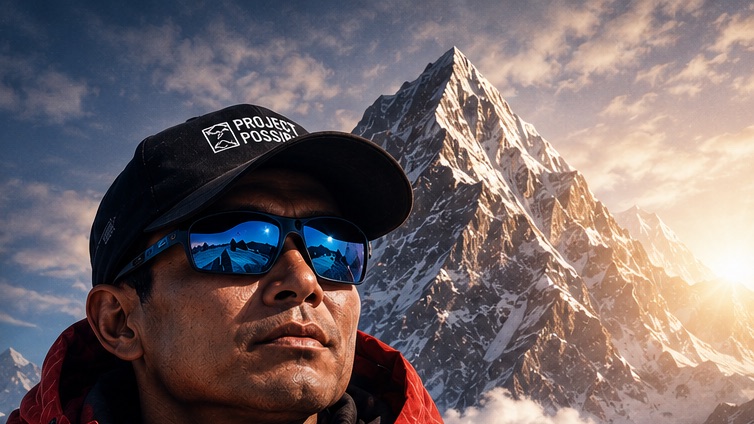
Images: the banner illustration at the top of this page is an artist's depiction by the BriefNepal Travel Desk, not a photograph of him. The photograph in the Project Possible section is Nirmal Purja in Kathmandu, 30 October 2019, by Thaneswar, via Wikimedia Commons, licensed CC BY-SA 4.0. The social share image for this page is a scaled and padded crop of the same photograph, shared under the same licence.
Frequently Asked Questions
Who was Nims Dai?
Nims Dai was the nickname of Nirmal Purja MBE (1983-2026), a Nepali-British mountaineer from Myagdi district in western Nepal. A former Gurkha and the first Gurkha to serve in the British Special Boat Service, he climbed all 14 of the world's 8,000-metre peaks in a record six months and six days in 2019, led the first winter ascent of K2 in 2021, and later climbed all 14 without supplemental oxygen. "Dai" means older brother in Nepali and is used as a term of respect and affection.
How did Nims Dai die?
He was killed by an avalanche on Broad Peak (8,051 m) in Pakistan's Karakoram range at about 9 a.m. local time on Thursday 30 July 2026, while his Elite Exped team was moving between Camp 2 and Camp 3 at around 6,660 m. All ten climbers caught in the avalanche died. Elite Exped confirmed his death on 1 August 2026. He was 43, and Broad Peak would have left him one peak short of becoming the first person to climb all 14 eight-thousanders twice without supplemental oxygen.
How many mountains did Nims Dai climb?
He recorded 50 successful summits of 8,000-metre peaks, more than anyone else, reaching that milestone on Nanga Parbat on 3 July 2025. Twenty-two of those 50 were climbed without supplemental oxygen. He climbed all 14 of the world's eight-thousanders twice over: once in the record run of 2019 and again, without bottled oxygen, by 4 October 2024. He also held 18 Guinness World Records.
Was Nims Dai from Nepal?
Yes. He was born on 25 July 1983 in Dana, a village in Myagdi district in western Nepal, and grew up mainly in Chitwan in the Terai lowlands. He later held British citizenship as well, after serving about 16 years in the British Army and Royal Navy special forces, and he was consistently described, and described himself, as a Nepali climber.
What was Project Possible?
Project Possible 14/7 was Purja's 2019 attempt to climb all 14 of the world's 8,000-metre peaks in seven months, at a time when the fastest anyone had done it was just under eight years. He finished in six months and six days, from Annapurna on 23 April 2019 to Shishapangma on 29 October 2019. He left the military and remortgaged his house to fund the start of it, and the Netflix documentary 14 Peaks: Nothing Is Impossible tells the story.
Did Nims Dai use supplemental oxygen?
On the 2019 record run he used supplemental oxygen on most of the 14 peaks, which was the main criticism levelled at the achievement. He climbed K2 in winter without oxygen in 2021, and by 4 October 2024 he had completed all 14 eight-thousanders without supplemental oxygen, making him the only person to have done both versions of the feat.
Was Nims Dai a Sherpa?
No. Sherpa is the name of a Himalayan ethnic community, not a job title, and Purja was not from it. He came from Myagdi district in western Nepal, far from the Everest region, and part of his public argument was that Nepali excellence at high altitude is not confined to one community and that the climbers doing the work should be credited by name.
Can I visit the places connected to Nims Dai?
Yes, and without any climbing. His birthplace, Dana, lies on the lower stages of the Annapurna Circuit and the Jomsom-Muktinath trail in the Kali Gandaki gorge. The Dhaulagiri Circuit trek circles the mountain he climbed first in 2014. Chitwan, where he grew up, is a national park in the Terai. Everest Base Camp, Kanchenjunga Base Camp, Makalu Base Camp and Annapurna Base Camp all reach the foot of peaks from his 2019 run.
What is Nims Dai's most famous quote?
"Giving up is not in the blood, sir. It's not in the blood." He says it in the Netflix documentary 14 Peaks: Nothing Is Impossible, filmed on Annapurna in April 2019 while breaking trail through chest-deep snow on the first mountain of Project Possible. His other best-known lines are "I don't believe in one man's glory" and "Your extremes are my normality" from his book Beyond Possible. Note that "It is not the mountain we conquer, but ourselves", often shared with his name attached, is Sir Edmund Hillary's, not his.
What did Nims Dai change for Nepal?
He shifted Nepali climbers from being the uncredited support staff of foreign expeditions to being the principals. The first winter ascent of K2 in January 2021 by an all-Nepali team was the clearest statement of that, and Nepali-owned operators and Nepali record holders have since taken a much larger share of high-altitude mountaineering. He also campaigned, through the Nimsdai Foundation, for better pay, insurance and recognition for Nepal's high-altitude workers, and the Netflix film gave Nepal's mountains global exposure as trekking restarted after the pandemic.
Official sources
Fees and rules on this page come from the bodies that set them. They do change, sometimes mid-season, so check the primary source before you pay anything.
- Dept. of National Parks & Wildlife Conservation National park & conservation area entry feesdnpwc.gov.np

By the BriefNepal Travel Desk
Researched and maintained by our Nepal-based editorial team and reviewed for accuracy. Last updated September 3, 2026. Prices, permits and conditions change, always verify before you travel. Spotted something out of date? Let us know.
Nepal Currency Converter
Live exchange rates for the Nepalese Rupee (NPR) against every world currency, handy for budgeting the prices in our guides.
Live mid-market rates. For information only, banks and exchanges apply their own margins.
Planning a trip to Nepal?
Join the BriefNepal Travel list for seasonal tips, new guides and our free Nepal trip-planning checklist. No spam, unsubscribe anytime.
Explore More of Nepal
 Kami Rita SherpaThe guide from Thame who has stood on the summit of Everest 32 times — more than anyone alive or dead.
 Dhaulagiri CircuitA demanding wilderness circuit around the world's seventh-highest peak.
 Everest Base CampThe world's most famous trek to the foot of Sagarmatha.
 Annapurna CircuitThe classic Himalayan circuit over the Thorong La to Muktinath.
 Kanchenjunga Base CampA remote trek to both base camps of the world's third-highest peak.Makalu Base CampA remote, wild trek to the foot of the world's fifth-highest peak.
 Manaslu CircuitA wild restricted-area circuit around the world's eighth-highest peak.
 Island PeakA classic 6,189 m trekking peak (Imja Tse) usually combined with Everest Base Camp.🏔️Altitude Sickness GuideAMS, HAPE and HACE explained — symptoms, prevention, Diamox and the golden rules for trekking safely at altitude in Nepal.
 ChitwanJungle safaris, one-horned rhinos and the wild Terai.