


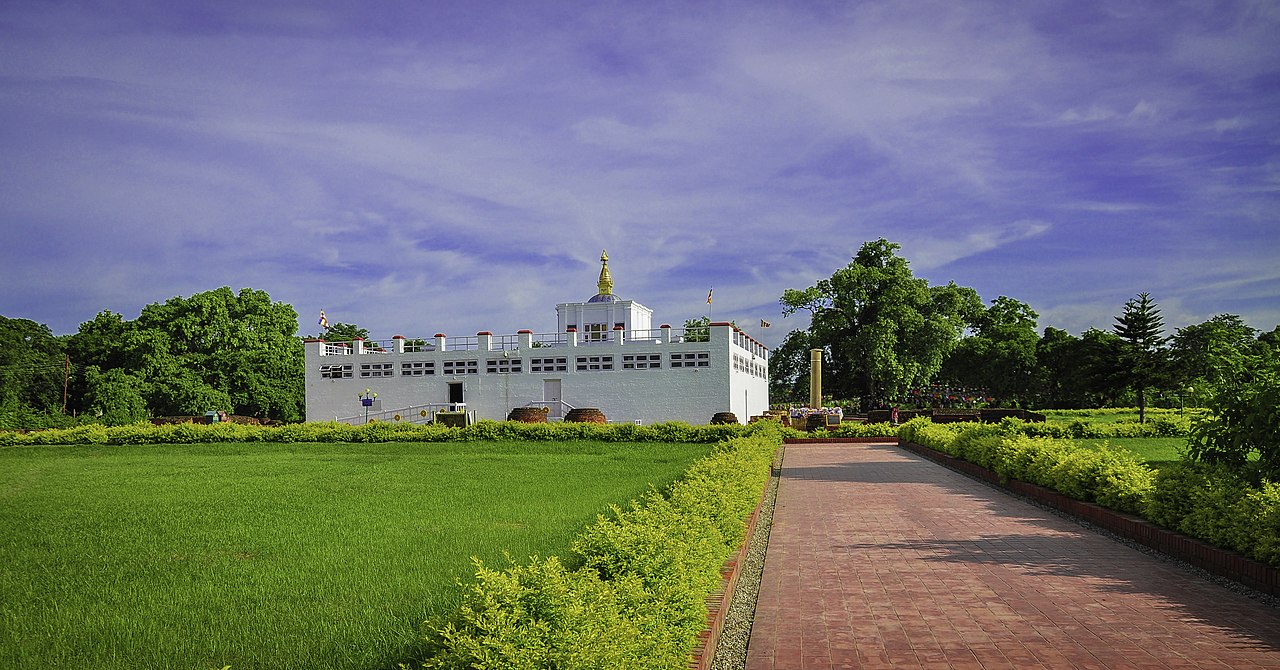


Kami Rita Sherpa: The Man Who Has Climbed Everest 32 Times
On 17 May 2026, a 56-year-old guide from a village in the Khumbu stood on the summit of Everest for the thirty-second time. No one else has done it more than thirty-one. This is the story of Kami Rita Sherpa, the work the record is really made of, and the village that produced him.

Meet Kami Rita Sherpa, Nepal’s legendary mountain guide and the record-holder for the most successful ascents of Mount Everest. From his humble beginnings in the Himalaya…
▶ Listen on SpotifyShow notes & transcript →Follow the show →
🎧 Also on Apple Podcasts Castbox iHeartRadio
Overview
Kami Rita Sherpa has stood on the summit of Mount Everest thirty-two times. The number is worth pausing on, because it is not a number anyone set out to reach. It accumulated one working season at a time, across three decades, on a mountain where most people who succeed at all succeed once.
He was born in Thame, a village high in the Khumbu region of Solukhumbu district, in January 1970. He started on expeditions in 1992 carrying loads, made his first summit in 1994 at twenty-four, and has been going back most springs since. He has held the outright record for the most Everest ascents since 2018, and has extended it against himself every year he has climbed.
The press calls him "Everest Man". He has been consistent, in interview after interview, that the summits are his job rather than his adventure, and that the guide who fixes the rope gets there before the client who clips into it. That distinction is the most useful thing about his story, and it is the thread this guide follows.
Thame: The Village That Produces Everest Climbers
Thame sits at roughly 3,800 metres in the upper Khumbu, west of the main Everest Base Camp trail, on the old trading route towards the Nangpa La pass into Tibet. It is small, and it is cold, and it has an entirely disproportionate reputation in world mountaineering. Several of the most decorated Everest climbers in history came from this one valley.

That is not coincidence. Households here have worked on expeditions for three generations, which means the knowledge travels the way trades travel anywhere: from a father who has done it to a son who watches. Kami Rita's father, Mingma Tshering Sherpa, was among the first Sherpas to work professionally as a mountain guide. Growing up in Thame, an expedition job was not an exotic ambition. It was what the adults did for money.

From Carrying Loads to the First Summit
He joined his first expedition in 1992, not as a climber but as support: carrying loads and helping in the base camp kitchen. This is the ordinary entry point, and it is worth being clear about what it involves. Before anyone summits anything, tents, food, fuel, oxygen and rope have to be moved up a mountain by people, repeatedly, through the most dangerous ground on the route.

His first summit came in 1994, at twenty-four. At that point it was one summit among the few hundred that had been recorded on Everest, and there was nothing to suggest a record in it. He went back the next season, and the one after, because that was the work.
The pattern that produced the record is almost boringly consistent: a spring season on Everest most years, in a professional role, on the standard South Col route from the Nepal side. Consistency over thirty years, rather than a single spectacular push, is the entire mechanism.
How the Record Accumulated
By 2018 the count had reached the point where he held the outright record for the most ascents of Everest by any person. Since then, each season he has climbed has extended a record he already owned. There is no rival number to beat; the only previous holder of the mark is himself.

The counting itself is less tidy than a single number suggests. Summit records on Everest are compiled from expedition reports, government liaison officers and independent chroniclers, and they are occasionally revised. What is not in dispute is the order of magnitude: no one else in the sport's history has been to the top of Everest anything like as often.
The 32nd Summit, May 2026
On 17 May 2026, at 10:12 in the morning Nepal time, Kami Rita Sherpa reached the summit of Everest for the thirty-second time. He was fifty-six. It broke his own record of thirty-one, set the previous spring.

For a climber in his fifties to keep operating at 8,000 metres in a working role, not a supported one, is the part of this that other mountaineers tend to find most striking. Altitude does not get kinder with age, and the margin between a professional day and a fatal one on the upper mountain is thin at any age.
The Peaks That Are Not Everest
The Everest number is so large that it hides a substantial career on other mountains. He has summited Cho Oyu (8,188 m) eight times and Manaslu (8,163 m) five times, and has climbed both K2 (8,611 m) and Lhotse (8,516 m).

K2 is the one to notice. It is the second-highest mountain on earth and by broad agreement the hardest of the eight-thousanders, with a death rate that has historically run far above Everest's. A single K2 summit is a serious career line on its own.
What the Record Actually Measures
It is easy to read "32 summits" as a sporting achievement, like a batting record. It is more accurately a record of labour, and understanding that changes how the whole Everest industry reads.
On a commercial expedition, Nepali climbing staff go up before the clients and stay up longer. They carry the loads through the Khumbu Icefall, the collapsing river of glacier ice above base camp that is the most lethal section of the route. They fix the rope that everyone else clips into. They set the camps, move the oxygen, and are the people who turn round and go back down for someone who is in trouble. A climber with thirty-two summits has made all of those journeys many times over, not thirty-two times.

This is why the distribution of risk on Everest has been argued about for years. The people with the most exposure to the mountain are, overwhelmingly, the Nepali staff, and they are exposed on behalf of paying clients who each pass through once. Kami Rita's record is the clearest single illustration of that asymmetry available, which is part of why he is asked about it so often.
He has generally answered without drama: the mountain is a workplace, the work supports families in the Khumbu, and he would like the people who do it to be paid and insured properly. That is a more useful message for a visitor to take away than any summit count.
August 2024: When the Village Was Washed Away
On 16 August 2024, glacial lakes above Thame burst and sent a flood down the Thame valley. It ran through the middle of the village. Homes, guesthouses, a school, a health post and a bridge were destroyed, and a large part of Thame was left uninhabitable.

Nepal's Department of Hydrology and Meteorology attributed the outburst to rising temperatures combined with sustained rain. A glacial lake outburst flood, usually shortened to GLOF, happens when the natural dam holding back a meltwater lake fails and releases the lake at once. Warming has both created more of these lakes across the Himalaya and made them less stable.
The detail that lands hardest is the ordinariness of it: the village that has sent more people to the top of Everest than almost anywhere on earth was itself half destroyed, in August, by water. For travellers, it is the most direct answer to what Himalayan climate risk means in practice. It is not an abstraction about 2100. It arrived in Thame on an afternoon in 2024.
Where He Sits Among the Record Holders
Everest records come in several shapes, and they are easy to confuse.
- Most ascents overall is Kami Rita Sherpa, at 32.
- Most ascents by a woman is held by Lhakpa Sherpa, a Nepali climber who has summited repeatedly since 2000.
- Ascents without supplemental oxygen is a separate category entirely, historically associated with Ang Rita Sherpa, a different climber known as the "Snow Leopard", who died in 2020. He is frequently mixed up with Kami Rita because of the shared name; they are not the same person.
- Speed and consecutive-peak records across the eight-thousanders belong to a different tradition again, the one Nims Dai was known for.
Kami Rita's record is the endurance one. It is not the fastest or the boldest line on the mountain. It is the most times.
Walking the Ground He Comes From

You do not need to be a mountaineer to see his part of the Khumbu. The trails through it are ordinary trekking routes.
- Thame itself is a side trip from Namche Bazaar, usually a day each way, on the route towards the Nangpa La. It is quieter than the main Base Camp trail. Please remember the village is still recovering from the 2024 flood; spend money locally and ask before photographing rebuilding work or people's homes.
- Everest Base Camp is the standard trek through the same region, and the one on which you will see the Icefall and the working end of the mountain from below.
- Gokyo Lakes and the Three Passes route cover the wider Khumbu with far fewer people on the trail.
Whichever you walk, read the altitude sickness guide first. The Khumbu takes you above 3,400 m within days, and acclimatisation is not optional.
Timeline
- 17 January 1970 — born in Thame, Solukhumbu.
- 1992 — first expedition work, carrying loads and supporting base camp.
- 1994 — first Everest summit, aged 24.
- 2018 — becomes the outright record holder for most Everest ascents.
- 2024 — 30th summit.
- 16 August 2024 — a glacial lake outburst flood destroys much of Thame, his home village.
- 2025 — 31st summit.
- 17 May 2026 — 32nd summit, at 10:12 Nepal time, aged 56.
Sources & Photo Credits
Biography and records. Summit counts, dates and the 2026 ascent are drawn from Nepali and international reporting of the 2026 spring season, including Nepal News and Gripped, with biographical detail cross-checked against his Wikipedia entry.
The 2024 Thame flood. Cause and damage per the Kathmandu Post and ICIMOD.
Photographs. All images are from Wikimedia Commons and are reused under their stated licences: Kami Rita Sherpa on the Everest summit, May 2010, by Vlvescovo (CC BY-SA 4.0); summit sunrise by Mountainhorst (CC BY-SA 4.0); Thame village and Thame Gompa by Moralist (CC BY-SA 3.0); Thame bridge, 1999, by Albert Backer (CC BY-SA 4.0); Everest Base Camp at night by Iamthanes, the Khumbu Icefall by Goutam1962 and Namche Bazaar by Nirojsedhai (all CC BY-SA 4.0); K2 by Svy123 (CC BY 3.0). No image here carries a non-commercial restriction, which would be incompatible with a monetised site.
Kami Rita Sherpa is a living person. If you are him, or represent him, and anything on this page is wrong, tell us and we will correct it.
Frequently Asked Questions
How many times has Kami Rita Sherpa climbed Everest?
Thirty-two, as of his ascent on 17 May 2026. That is more than any other person in history. He has held the outright record since 2018 and has broken his own mark repeatedly since.
Who holds the record for the most Everest summits?
Kami Rita Sherpa, with 32. The previous mark of 31 was also his, set in 2025.
How old is Kami Rita Sherpa?
He was born on 17 January 1970 in Thame, Solukhumbu, which made him 56 at the time of his 32nd summit in May 2026.
Is Kami Rita Sherpa the same as Ang Rita Sherpa?
No, and the two are often confused. Ang Rita Sherpa, known as the "Snow Leopard", was a different climber celebrated for summiting Everest repeatedly without supplemental oxygen; he died in 2020. Kami Rita Sherpa holds the record for the most ascents overall.
What other mountains has Kami Rita Sherpa climbed?
Cho Oyu eight times, Manaslu five times, and K2 and Lhotse once each. K2 is widely considered the most dangerous of the 8,000-metre peaks.
Where is Thame, and can you trek there?
Thame is a village at around 3,800 m in the upper Khumbu, roughly a day's walk from Namche Bazaar on the route towards the Nangpa La. It is an established, quiet side trip from the main Everest Base Camp trail. Much of the village was destroyed by a glacial lake outburst flood in August 2024 and is still rebuilding, so travel there with that in mind.
Why do Sherpa climbers hold so many Everest records?
Because for Nepali climbing staff Everest is a workplace rather than a one-off ambition. They fix the ropes, carry the loads through the Khumbu Icefall and set the camps, which means far more trips onto the mountain, and far more accumulated risk, than any client takes on.
Official sources
Fees and rules on this page come from the bodies that set them. They do change, sometimes mid-season, so check the primary source before you pay anything.
- Nepal Tourism Board Official Nepal tourism informationntb.gov.np

By the BriefNepal Travel Desk
Researched and maintained by our Nepal-based editorial team and reviewed for accuracy. Last updated September 3, 2026. Prices, permits and conditions change, always verify before you travel. Spotted something out of date? Let us know.
Nepal Currency Converter
Live exchange rates for the Nepalese Rupee (NPR) against every world currency, handy for budgeting the prices in our guides.
Live mid-market rates. For information only, banks and exchanges apply their own margins.
Planning a trip to Nepal?
Join the BriefNepal Travel list for seasonal tips, new guides and our free Nepal trip-planning checklist. No spam, unsubscribe anytime.
Explore More of Nepal
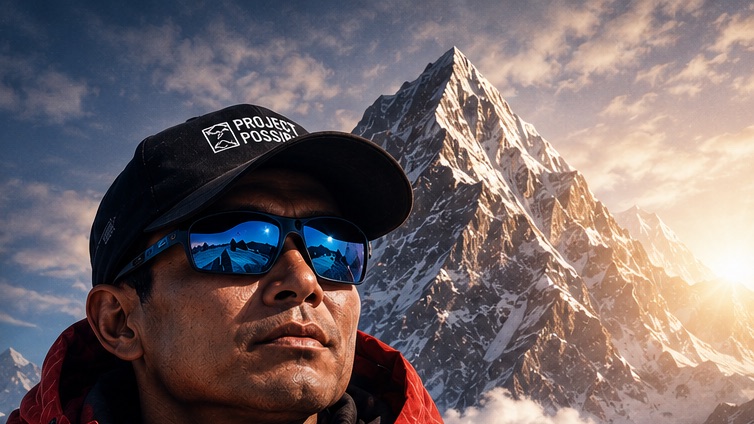 Nims Dai (Nirmal Purja)The Gurkha soldier from Myagdi who climbed all 14 eight-thousanders in six months and changed who gets the credit in the Himalaya.
 Kili Pemba SherpaBeding to the summit of K2 in winter — the Rolwaling climber who finished all 14 eight-thousanders four weeks before he died.
 Everest Base CampThe world's most famous trek to the foot of Sagarmatha.
 Gokyo LakesTurquoise glacial lakes and a four-8,000m panorama from Gokyo Ri in the Khumbu.
 Everest Three PassesThe ultimate Khumbu loop over Kongma La, Cho La and Renjo La.🏔️Altitude Sickness GuideAMS, HAPE and HACE explained — symptoms, prevention, Diamox and the golden rules for trekking safely at altitude in Nepal.