


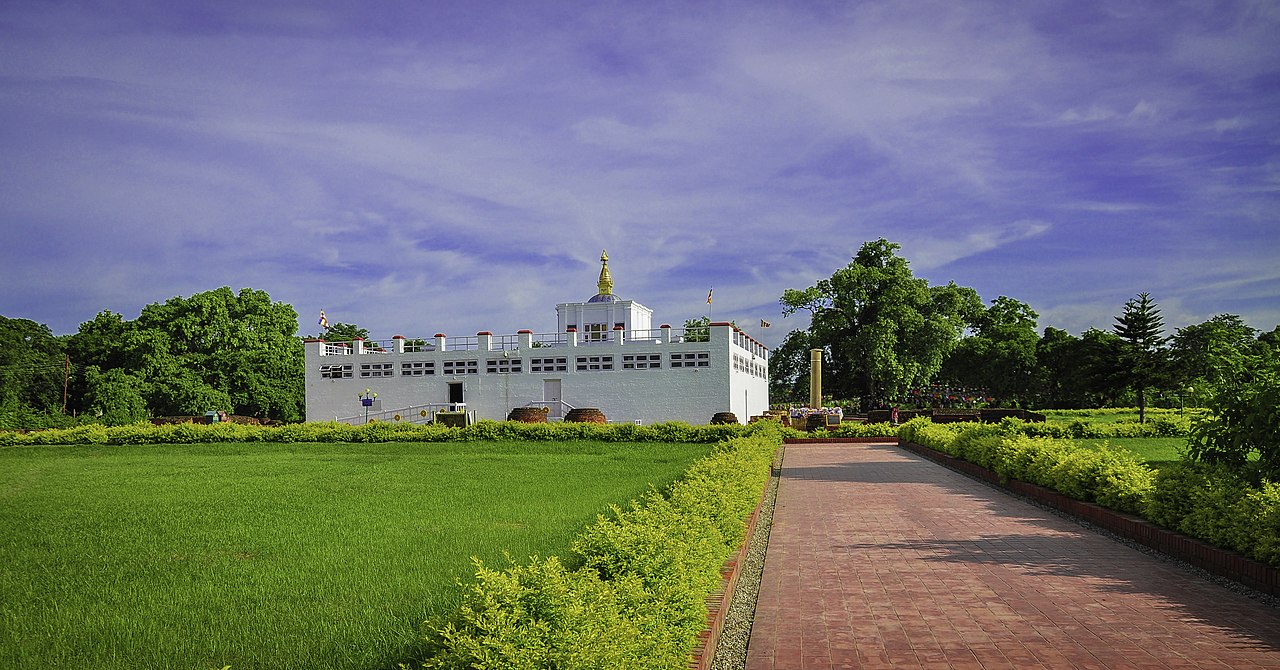
Lumbini Travel Guide
In a quiet corner of Nepal's Terai plains lies Lumbini, the birthplace of Lord Buddha and one of the most sacred pilgrimage sites on earth, a UNESCO World Heritage Site of temples, ruins and gardens.
A glimpse of Lumbini


Introduction
Lumbini is the birthplace of Siddhartha Gautama, the Buddha, and one of the four great pilgrimage sites of Buddhism alongside Bodh Gaya, Sarnath and Kushinagar in India. Set on the flat, fertile plains of the Terai in south-western Nepal, close to the Indian border, it is a place of extraordinary calm, a sprawling sanctuary of ancient ruins, sacred ponds, mature trees and the monasteries of a dozen Buddhist nations, all spread across more than three square kilometres of protected gardens. For the world\'s roughly 500 million Buddhists it is hallowed ground; for everyone else it is simply one of the most peaceful and moving places to visit in Nepal.
UNESCO inscribed Lumbini as a World Heritage Site in 1997, recognising it as "one of the holiest places of one of the world\'s great religions." Unlike the temple-crowded streets of Kathmandu or the lakeside bustle of Pokhara, Lumbini asks visitors to slow down. The grounds were laid out according to a Master Plan designed in 1978 by the renowned Japanese architect Kenzo Tange, who organised the site into three zones connected by a long central canal: the Sacred Garden in the south, where the Buddha was born; the Monastic Zone in the middle, where the world\'s Buddhist communities have built their temples; and the New Lumbini Village and cultural facilities in the north, crowned by the World Peace Pagoda.
This guide covers everything you need to plan a visit: the meaning and history of the site, the temples and ruins to see, how to get around the vast complex, the best time to come, how to reach Lumbini from Kathmandu, Pokhara or the Indian border, what things cost, where to eat and sleep, and the practical tips that make a pilgrimage here smoother and more rewarding.
Top Attractions
Maya Devi Temple
The spiritual heart of Lumbini and the exact spot where Queen Maya Devi gave birth to Siddhartha Gautama, the future Buddha. Inside the white temple a glass case protects the marker stone that archaeologists identify as the precise birthplace, alongside the ancient brick foundations of earlier shrines and a worn stone nativity sculpture depicting Maya Devi grasping a tree branch as she gives birth. Visitors enter in silence and walk a quiet circuit around the ruins; photography inside the temple is not permitted.
The Ashoka Pillar
Standing just beside the Maya Devi Temple, this sandstone pillar was erected by the Mauryan Emperor Ashoka in 249 BCE to mark his pilgrimage to the Buddha\'s birthplace. Its Brahmi inscription, the oldest dated record of Lumbini, states that the emperor came in person, paid homage, and exempted the village from taxes because "here the Buddha was born." When the German archaeologist Alois Anton Führer and General Khadga Shumsher located the pillar in 1896, the inscription confirmed beyond doubt that this was indeed Lumbini, the birthplace named in ancient texts.
The Sacred Pond (Puskarini)
The serene rectangular pool beside the Maya Devi Temple is the Puskarini, the holy pond where Queen Maya Devi is said to have bathed before giving birth, and where the infant Siddhartha received his first purifying bath. Its stepped terraces have been carefully restored, and the still water mirroring the temple and prayer flags is one of the most photographed and peaceful scenes in all of Lumbini.
The Bodhi Tree & Prayer Flags
Beside the Sacred Garden stands a great Bodhi tree draped in thousands of colourful Tibetan prayer flags, beneath which monks, nuns and pilgrims from across the world sit to meditate and chant. The murmur of mantras, the flutter of flags and the scent of incense make this the most atmospheric corner of the garden, bring a mat or shawl and join the quiet circle for a few minutes.
The Monastic Zone
North of the Sacred Garden stretches the vast Monastic Zone, divided by a long central canal into an Eastern (Theravada) sector and a Western (Mahayana) sector. Here Buddhist nations have built dozens of magnificent monasteries, each in its own architectural style: the gilded Thai monastery, Myanmar\'s golden pagoda, the Chinese Zhonghua temple, the German Lotus Stupa, and monasteries gifted by Sri Lanka, South Korea, Vietnam, France and more. Cycling or taking an e-rickshaw between them is like a tour of the entire Buddhist world in a single afternoon.
Lumbini World Peace Pagoda
At the far northern end of the complex rises the gleaming white World Peace Pagoda (Shanti Stupa), built by the Japanese Buddhist organisation Nipponzan-Myohoji as a monument to global peace. A golden Buddha statue marks the spot where the Buddha was born, set into the brilliant white dome. The pagoda is surrounded by gardens and is especially striking at sunrise and sunset; a crane sanctuary nearby is home to the rare sarus crane.
Lumbini Museum & Eternal Peace Flame
The Lumbini Museum displays archaeological finds, coins, manuscripts and models tracing the site\'s history and the spread of Buddhism, while the adjacent research institute holds one of the world\'s finest Buddhist libraries. Near the entrance to the Sacred Garden burns the Eternal Peace Flame, lit in 1986 during the International Year of Peace and kept perpetually alight as a symbol of world harmony.
Kapilvastu (Tilaurakot)
About 27 km west of Lumbini lie the excavated ruins of Tilaurakot, widely believed to be ancient Kapilvastu, the palace where Prince Siddhartha spent the first 29 years of his life before renouncing the world. Wander the brick foundations, gateways and moat among quiet woodland and farmland; it is far less visited than Lumbini and gives a moving sense of the Buddha\'s early royal life. Other nearby sites include Niglihawa and Gotihawa, both marked by further Ashokan pillars.
History & Religious Significance
According to Buddhist tradition, Queen Maya Devi of the Shakya kingdom was travelling from Kapilvastu to her parents\' home to give birth when she stopped to rest in the pleasant grove of Lumbini. There, around 563 BCE (some scholars place it nearer 480 BCE), holding onto the branch of a tree beside the Puskarini pond, she gave birth to Prince Siddhartha Gautama, the child who would renounce his royal life, attain enlightenment, and become the Buddha, "the awakened one." The infant is said to have taken seven steps and proclaimed his final birth. Lumbini is therefore the very beginning of the Buddha\'s story, the first of the four places he himself named as worthy of pilgrimage.
The most important historical confirmation of the site came from Emperor Ashoka, the great Mauryan ruler who converted to Buddhism. In 249 BCE he made a pilgrimage to Lumbini and erected a stone pillar there, inscribing on it that the Buddha had been born at this spot, the earliest dated and most authoritative evidence for Lumbini\'s identity. Chinese pilgrim-monks Faxian (5th century) and Xuanzang (7th century) later visited and described the pillar and shrines in their travel records.
Over the centuries Buddhism declined in the region, the jungle reclaimed the site, and Lumbini was effectively lost for around a thousand years. It was rediscovered in 1896, when the archaeologist Alois Anton Führer, working with the Nepali governor General Khadga Shumsher Rana, identified the long-buried Ashoka Pillar and read its inscription, confirming that the grove described in ancient texts had finally been found. Excavations through the 20th and 21st centuries uncovered the temple foundations, the marker stone of the birthplace, and remains of brick structures dating back over 2,000 years; in 2013 archaeologists even found evidence of a wooden shrine that may predate Ashoka, pushing the site\'s sacred history back further still.
In 1967, UN Secretary-General U Thant, himself a devout Burmese Buddhist, visited and championed Lumbini\'s development, leading to the international Master Plan and decades of careful restoration. UNESCO declared Lumbini a World Heritage Site in 1997. Today it stands not only as the cradle of Buddhism but as a living symbol of peace, drawing pilgrims, monks and travellers from every corner of the globe.
What to See & Do
Lumbini is large and contemplative; the joy of a visit lies in moving slowly between its sacred spots and absorbing the atmosphere. Here are the experiences worth building into your time:
- Pay homage at the Maya Devi Temple. The exact birthplace of the Buddha, with the marker stone, nativity sculpture and ancient ruins. Enter in silence and walk the quiet circuit.
- See the Ashoka Pillar and Sacred Pond. Read about the 249 BCE inscription, then sit by the still waters of the Puskarini, perhaps the most peaceful corner of the garden.
- Meditate under the Bodhi tree. Join pilgrims beneath the prayer-flag-draped tree; many monasteries also offer guided meditation and chanting sessions open to visitors.
- Cycle or take an e-rickshaw through the Monastic Zone. Distances are large, so rent a bicycle or hire an electric rickshaw to glide between the Thai, Myanmar, Chinese, German, Korean, Sri Lankan and other national monasteries, each a complete world of architecture and devotion.
- Walk to the World Peace Pagoda. The gleaming white Japanese stupa at the northern tip of the canal, with its golden Buddha and surrounding crane sanctuary.
- Visit the Lumbini Museum and Eternal Peace Flame. For the archaeology and the history of how the site was found, lost and found again.
- Take a boat down the central canal. When water levels allow, gondola-style "pumpa" boats ferry visitors along Kenzo Tange\'s central canal between the Sacred Garden and the Peace Pagoda.
- Day-trip to Kapilvastu (Tilaurakot). The ruins of the palace where the Buddha grew up, about 27 km west, far quieter and deeply atmospheric.
If you have time and want to pair Lumbini with more of southern Nepal, the wildlife of Chitwan National Park lies a few hours east, and the great Hindu pilgrimage temple of Janaki Mandir in Janakpur sits further along the Terai, together they make a rich cultural and natural circuit of the plains.
Best Time to Visit
The best time to visit Lumbini is the cool, dry season from October to March. During these months the Terai plains enjoy comfortable daytime temperatures, clear skies and pleasant conditions for cycling and walking the large complex. October and November, just after the monsoon, are especially green and fresh, while December and January can be cool and misty in the early mornings.
The most spiritually charged time to visit is Buddha Jayanti (Buddha Purnima), the festival marking the Buddha\'s birth, which falls on the full moon of April or May. Thousands of pilgrims, monks and devotees gather for prayers, processions and chanting, and the whole site comes alive with butter lamps and ceremony, unforgettable, but also the busiest time, so book accommodation well ahead.
Summer (April–June) is very hot on the Terai plains, with temperatures often soaring above 40°C, making midday sightseeing exhausting. The monsoon (June–September) brings heavy rain, humidity and mosquitoes, though the gardens turn lush and crowds thin out. If you must visit in the hot months, plan your sightseeing for early morning and late afternoon and rest through the midday heat.
How to Reach Lumbini
By air
The newest and fastest way to reach Lumbini is via Gautam Buddha International Airport (BWA) at Bhairahawa, just 22 km from the Sacred Garden, Nepal\'s second international airport, opened in 2022, with a growing number of domestic and select international flights. Domestic flights also connect Bhairahawa with Kathmandu in around 35–40 minutes, a huge time-saver compared with the road. From the airport a taxi to Lumbini takes about 30–40 minutes.
By road
Lumbini lies about 22 km west of Bhairahawa (Siddharthanagar), the nearest large town and transport hub. By road from Kathmandu the journey is roughly 280 km and takes 7–8 hours by tourist or night bus; from Pokhara it is around 180 km and 6–7 hours. Frequent local buses, micros and taxis shuttle between Bhairahawa\'s bus park and Lumbini throughout the day, taking 30–45 minutes. Many travellers combine Lumbini with Chitwan en route between Kathmandu and Pokhara.
From the India border
Lumbini is very close to the Sunauli–Belahiya border crossing with India, only about 25 km away. Overland travellers from Gorakhpur and Varanasi in Uttar Pradesh cross at Sunauli, take a short ride to Bhairahawa, then continue to Lumbini, making it an easy and popular first or last stop on a Nepal–India Buddhist pilgrimage circuit that includes Bodh Gaya, Sarnath and Kushinagar.
Getting around the site
The Lumbini complex is huge, more than 3 km from the Sacred Garden to the World Peace Pagoda, so walking it all is impractical, especially in the heat. Rent a bicycle (the most pleasant option), hire an electric rickshaw or take a battery-powered tour cart to move between zones and monasteries.
Costs & Tips
Lumbini is an affordable destination, with most of the major sites free or very cheap to enter. Approximate daily costs per person (2026 estimates, in Nepali rupees):
| Travel style | Per day | What it covers |
|---|---|---|
| Backpacker | NPR 2,500–4,000 | Monastery guesthouse or budget room, local food, bicycle rental, entry fee |
| Mid-range | NPR 6,000–11,000 | Comfortable hotel in Lumbini or Bhairahawa, mix of meals, e-rickshaw and a guide |
| Comfort | NPR 12,000+ | Resort or 4-star hotel, full board, private car, guided pilgrimage tour |
Entry fees: entry to the wider Lumbini development zone and the monastic gardens is generally free; the Maya Devi Temple charges a modest fee for foreign visitors (around NPR 500, with discounts for SAARC nationals; free or reduced for Nepalis and pilgrims). The Lumbini Museum charges a small separate fee. Bicycle rental costs only about NPR 100–300 for the day, and an e-rickshaw tour of the monasteries runs about NPR 500–1,000 depending on duration. Carry cash, most vendors and rickshaw drivers do not accept cards, and ATMs are easier to find in Bhairahawa than at the site itself.
Food & Where to Eat
As elsewhere in Nepal, the staple is dal bhat, rice with lentil soup, curried vegetables and pickle, usually with free refills, and you will find good, cheap versions at the small restaurants near the site\'s entrance and in Bhairahawa. Because Lumbini sits on the Terai plains near India, the local cuisine leans toward North Indian and Bhojpuri flavours: expect excellent puri-sabzi, samosas, sweets, lassi and rich curries.
Many of the monasteries serve simple vegetarian meals, and several have canteens or guesthouse dining halls open to visitors, a peaceful, wholesome way to eat. The bigger hotels and resorts around the development zone offer multi-cuisine menus, including continental breakfasts and momos. Note that out of respect for the sacred site, alcohol and meat are discouraged or unavailable in the immediate vicinity of the monastic zone, so plan accordingly.
Food safety: drink bottled, filtered or treated water, eat freshly cooked hot food, and ease gently into street snacks. A reusable bottle with a filter cuts plastic waste in this protected area. The Terai heat means staying well hydrated is essential.
Where to Stay
You have three broad choices of base in and around Lumbini, to suit every budget and style:
- Hotels and resorts near Lumbini: a growing cluster of guesthouses, mid-range hotels and a few upscale resorts has sprung up around the development zone, offering the convenience of being walking or cycling distance from the Sacred Garden. These range from simple budget rooms (NPR 700–1,800) to comfortable resorts with gardens and pools (NPR 8,000+).
- Monastery guesthouses: a uniquely Lumbini experience, several monasteries in the monastic zone, such as the Korean, Sri Lankan and Burmese temples, offer simple, inexpensive lodging to pilgrims and travellers. Expect basic, clean rooms, early mornings, a peaceful atmosphere and often the chance to join meditation; donations or modest fees apply.
- Bhairahawa (Siddharthanagar): the nearby town, 22 km away, has the widest range of standard hotels, banks and transport links, and is convenient if you arrive late by bus or fly into Gautam Buddha International Airport. It is busier and less serene than staying at the site itself.
Book well ahead around Buddha Jayanti (April/May) and the autumn peak, when pilgrim numbers surge. If you want the full contemplative experience, staying overnight at or near the site lets you visit the Sacred Garden at dawn before the day-trippers arrive.
Travel Tips
- Distances are large, get wheels. The complex spans over 3 km; rent a bicycle or hire an e-rickshaw rather than trying to walk it all, especially in the heat.
- Prepare for Terai heat. From April to June it can exceed 40°C; carry water, a hat and sunscreen, and sightsee in the cooler early morning and late afternoon.
- Dress modestly. Cover shoulders and knees as a sign of respect at this sacred site and inside monasteries; you will be asked to remove shoes and hats before entering temples.
- Keep silence in the Maya Devi Temple. Speak softly or not at all, switch phones to silent, and do not photograph inside the temple where signs forbid it.
- Walk clockwise around stupas, shrines and the marker stone, and pass prayer wheels on your left, following Buddhist custom.
- Respect worship. Monks, nuns and pilgrims come here to pray and meditate, keep a respectful distance, ask before photographing people, and avoid disturbing ceremonies.
- Carry small cash. Entry fees, bicycle and rickshaw rentals and small vendors are cash-only; load up on rupees in Bhairahawa.
- Mind mosquitoes and the sun on the plains, particularly in and after the monsoon; bring repellent and any usual precautions.
- Allow enough time. A rushed half-day barely scratches the surface; a full day, or better an overnight, lets you experience the site\'s extraordinary peace.
- Combine your trip. Lumbini pairs naturally with Chitwan and the wider Terai; see our 7-day Nepal itinerary to fit it into a longer journey.
Frequently Asked Questions
Why is Lumbini famous?
Lumbini is famous as the birthplace of Siddhartha Gautama, the Buddha, who was born here around 563 BCE. It is one of the four holiest pilgrimage sites in Buddhism and was declared a UNESCO World Heritage Site in 1997. The Maya Devi Temple marks the exact spot of his birth.
When was the Buddha born in Lumbini?
The Buddha, Siddhartha Gautama, was born in Lumbini around 563 BCE, though some scholars place the date closer to 480 BCE. His birth is celebrated each year on the full moon of April or May during the festival of Buddha Jayanti, also known as Buddha Purnima.
What is the Maya Devi Temple?
The Maya Devi Temple stands on the exact spot where Queen Maya Devi gave birth to the Buddha. Inside, a glass case protects a marker stone identifying the precise birthplace, along with ancient brick ruins and a stone nativity sculpture showing Maya Devi holding a tree branch as she gives birth. Visitors enter in silence and photography inside is not allowed.
What is the Ashoka Pillar in Lumbini?
The Ashoka Pillar is a sandstone column erected by the Mauryan Emperor Ashoka in 249 BCE to mark his pilgrimage to the Buddha's birthplace. Its Brahmi inscription is the oldest dated record confirming that the Buddha was born at Lumbini, and its rediscovery in 1896 proved the site's identity.
How do I reach Lumbini?
The fastest way is to fly into Gautam Buddha International Airport at Bhairahawa, 22 km from Lumbini. By road, Lumbini is 7–8 hours from Kathmandu and 6–7 hours from Pokhara by bus. Buses, micros and taxis link Bhairahawa with Lumbini in 30–45 minutes.
What is the best time to visit Lumbini?
The best time to visit Lumbini is October to March, when the Terai plains are cool, dry and pleasant. Buddha Jayanti in April or May is the most spiritually vibrant time but also the busiest. Summer is very hot and the monsoon brings heavy rain.
How many days do you need in Lumbini?
One full day is enough to see the main sights, the Maya Devi Temple, Ashoka Pillar, Sacred Garden and several monasteries. Staying overnight lets you visit the Sacred Garden at dawn and explore the monastic zone at a slower pace, and a second day allows a trip to nearby Kapilvastu (Tilaurakot).
What is the monastic zone in Lumbini?
The monastic zone is a large area north of the Sacred Garden, divided by a central canal into an Eastern (Theravada) sector and a Western (Mahayana) sector. Buddhist nations including Thailand, Myanmar, China, Germany, Sri Lanka, South Korea and Vietnam have built monasteries here, each in its own distinctive architectural style.
Is there an entry fee for Lumbini?
Entry to the wider Lumbini development zone and the monastic gardens is generally free. The Maya Devi Temple charges a modest fee for foreign visitors (around NPR 500, with discounts for SAARC nationals), and the Lumbini Museum has a small separate fee. Bicycle and rickshaw rentals cost only NPR 100–500.
How far is Lumbini from Kathmandu?
Lumbini is about 280 km from Kathmandu, roughly a 7–8 hour journey by tourist or night bus. Alternatively, you can take a domestic flight to Bhairahawa in around 35–40 minutes and then a 30–40 minute taxi ride to the Sacred Garden.
How far is Lumbini from the India border?
Lumbini is only about 25 km from the Sunauli–Belahiya border crossing with India. Many travellers arrive overland from Gorakhpur or Varanasi, cross at Sunauli, and continue via Bhairahawa, making Lumbini an easy stop on a Nepal–India Buddhist pilgrimage circuit.
What is the World Peace Pagoda in Lumbini?
The Lumbini World Peace Pagoda, or Shanti Stupa, is a gleaming white stupa built by the Japanese Buddhist organisation Nipponzan-Myohoji at the northern end of the complex. It features a golden Buddha statue and stands as a monument to world peace, surrounded by gardens and a nearby crane sanctuary.
Who designed the Lumbini complex?
The layout of Lumbini follows a Master Plan designed in 1978 by the renowned Japanese architect Kenzo Tange. It organises the site into three zones connected by a central canal: the Sacred Garden in the south, the Monastic Zone in the middle, and the New Lumbini Village and cultural facilities in the north.
Can you stay overnight in Lumbini?
Yes. Lumbini offers hotels and resorts near the development zone, simple monastery guesthouses run by temples such as the Korean and Burmese monasteries, and a wider range of standard hotels in nearby Bhairahawa. Staying overnight lets you experience the Sacred Garden at sunrise.
What is Kapilvastu and how is it linked to Lumbini?
Kapilvastu, identified with the excavated ruins of Tilaurakot about 27 km west of Lumbini, is believed to be the palace where Prince Siddhartha spent the first 29 years of his life before renouncing the world. It is far quieter than Lumbini and offers a moving glimpse of the Buddha's early royal life.
Reviews & Ratings
No reviews yet. Be the first to share your experience of Lumbini!
Official sources
Fees and rules on this page come from the bodies that set them. They do change, sometimes mid-season, so check the primary source before you pay anything.
- Dept. of National Parks & Wildlife Conservation National park & conservation area entry feesdnpwc.gov.np

By the BriefNepal Travel Desk
Researched and maintained by our Nepal-based editorial team and reviewed for accuracy. Last updated September 3, 2026. Prices, permits and conditions change, always verify before you travel. Spotted something out of date? Let us know.
Nepal Currency Converter
Live exchange rates for the Nepalese Rupee (NPR) against every world currency, handy for budgeting the prices in our guides.
Live mid-market rates. For information only, banks and exchanges apply their own margins.
Planning a trip to Nepal?
Join the BriefNepal Travel list for seasonal tips, new guides and our free Nepal trip-planning checklist. No spam, unsubscribe anytime.
Explore More of Nepal
 Janaki MandirThe birthplace of Sita and a marble marvel in Janakpur.
 ChitwanJungle safaris, one-horned rhinos and the wild Terai.
 Pashupatinath TempleNepal's holiest Shiva shrine on the sacred Bagmati.
 MuktinathSacred to Hindus and Buddhists alike, at 3,710m in Mustang.7 Days in NepalThe classic loop: Kathmandu, Pokhara and Chitwan jungle.