


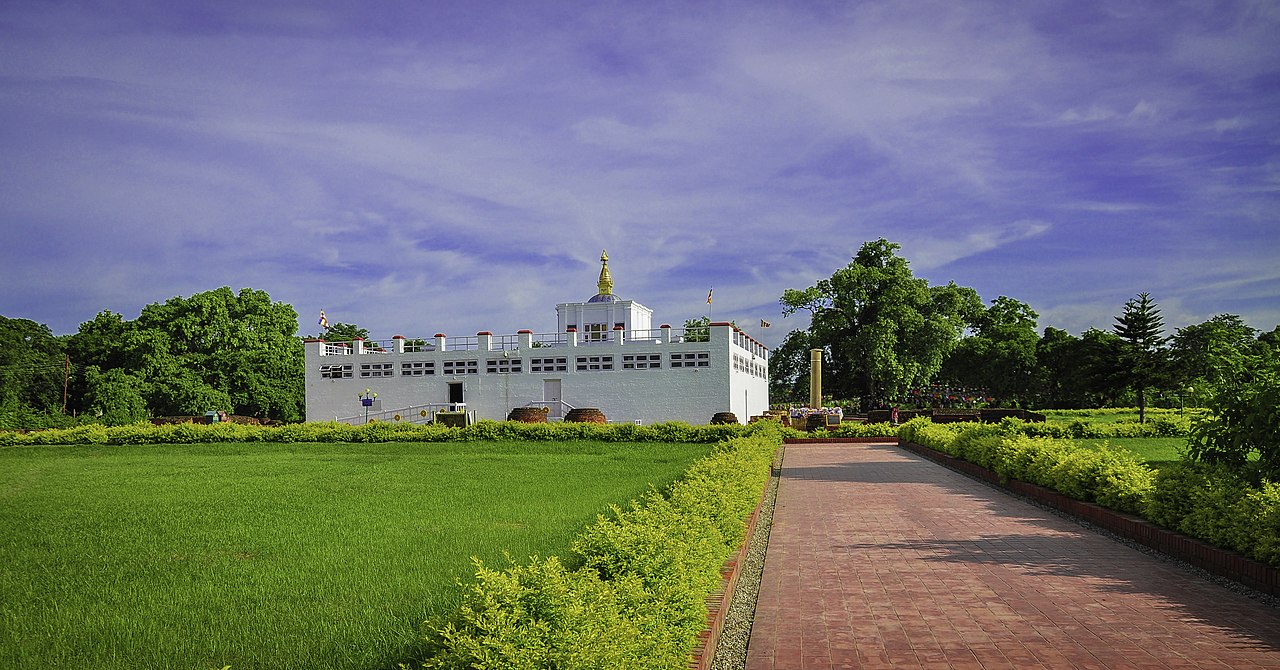


Pokhara Travel Guide
Nepal's lakeside adventure capital, where the snow-capped Annapurnas mirror in calm Phewa Lake and every trek into the high Himalaya begins.
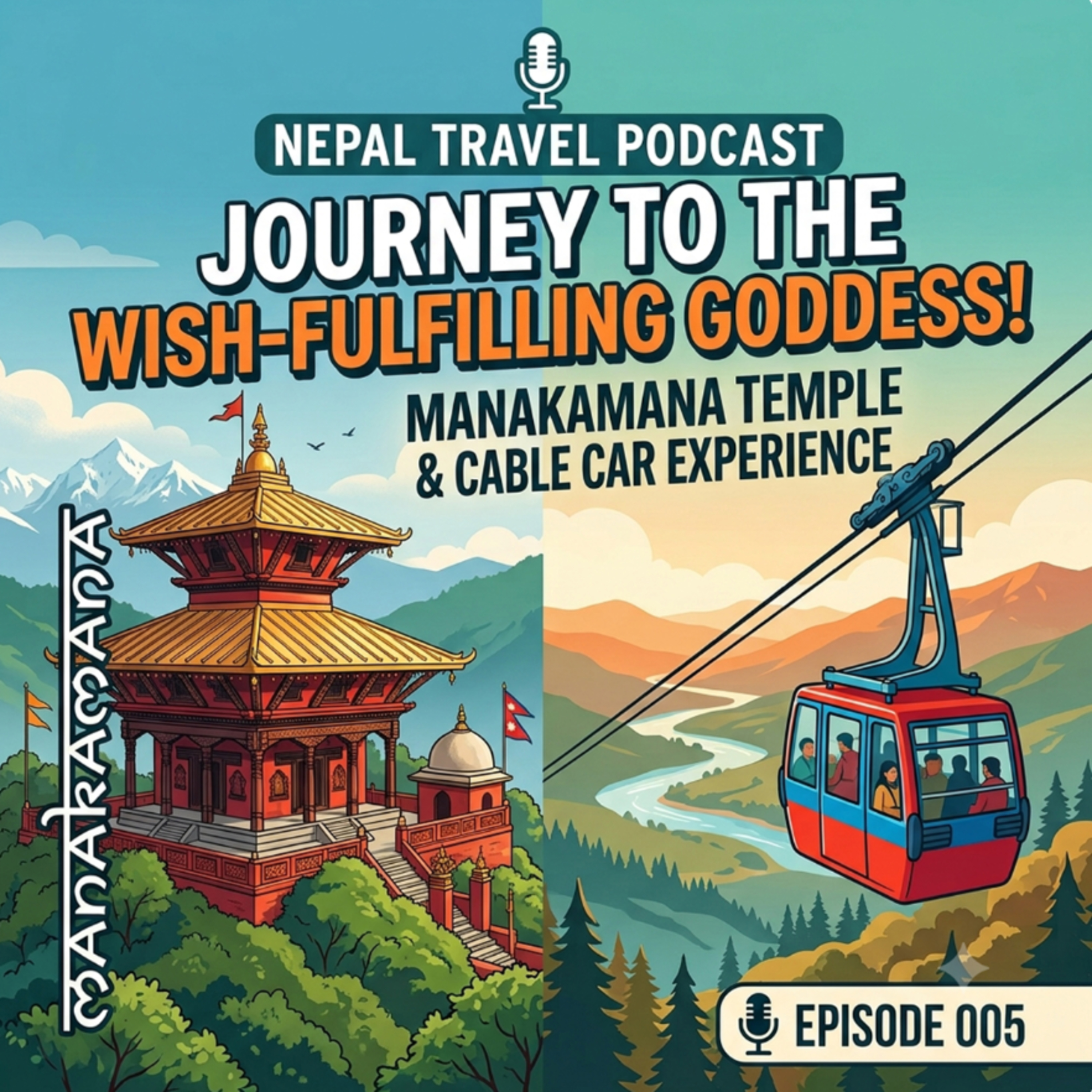
Discover the spiritual beauty of Manakamana Temple, one of Nepal's most iconic pilgrimage destinations, where thousands of devotees travel every year with the belief that…
▶ Listen on SpotifyShow notes & transcript →Follow the show →
🎧 Also on Apple Podcasts Castbox iHeartRadio
A glimpse of Pokhara


Introduction
Pokhara is Nepal's second city and its undisputed adventure capital, a relaxed lakeside town of around half a million people, set in a green valley roughly 200 km west of Kathmandu and a world apart in mood. Where the capital is dense, dusty and medieval, Pokhara is open, laid-back and wrapped in nature: a chain of freshwater lakes, forested ridges, and an extraordinary wall of Himalayan giants rising almost straight up to the north. The Annapurna range, Dhaulagiri and the unmistakable fishtail summit of Machhapuchhre (Machapuchare) loom over the town, so close that on a clear morning the snow seems to begin just behind the rooftops.
For most travellers, Pokhara is the place to slow down, to drift across Phewa Lake in a rowboat, watch paragliders wheel over the water, cycle quiet back lanes, and sip coffee on a sunny café terrace with an 8,000 m peak in view. But it is also Nepal's great launchpad for the mountains: nearly every trek in the central Himalaya, the Poon Hill → sunrise walk, Annapurna Base Camp →, Mardi Himal, the Annapurna Circuit and the trails on to Mustang →, starts with a jeep or bus ride from Pokhara. This guide covers everything you need: the top sights, how long to stay, the best time to visit, how to get here, what things cost, where to eat and sleep, and the practical tips to make the most of Nepal's most loveable town.
The town stretches along a north–south axis: the old bazaar and Bindhyabasini Temple sit at the northern end, the tourist hub of Lakeside (Baidam) hugs the eastern shore of Phewa Lake in the middle, and Davis Falls, the Mountain Museum and the southern dam lie at the bottom of the valley. Sarangkot ridge rises to the northwest, and the Annapurna foothills climb away to the north. It is an easy place to orient yourself, and unlike Kathmandu the air is clean, the pace is gentle, and the loudest sound is usually birdsong over the water. Many visitors plan only a night or two and end up staying a week.
Top Attractions
Phewa Lake & Boating
The shimmering heart of Pokhara, Phewa Lake is Nepal's second-largest lake and the reason the city exists as a travellers' haven. Hire a brightly painted wooden doonga (rowboat), paddle yourself or take a boatman, to glide out to the island temple of Tal Barahi in the middle of the lake. On still mornings the Annapurna and Machhapuchhre (Fishtail) peaks reflect perfectly on the surface. The eastern shore is the lively Lakeside (Baidam) strip; the quieter western shore is wooded and wild.
Sarangkot (Sunrise & Paragliding)
The hilltop village of Sarangkot, about 1,600 m and a 30–45 minute drive up from Lakeside, is Pokhara's premier sunrise viewpoint: an unbroken panorama of Dhaulagiri, the Annapurnas, Machhapuchhre and Manaslu turning gold at dawn. By day Sarangkot is the launch site for tandem paragliding, one of the best places in the world to fly, soaring over the lake on thermals with the Himalaya as backdrop. Get there before 5:30 am for sunrise; flights run mid-morning to early afternoon.
World Peace Pagoda (Shanti Stupa)
A gleaming white Buddhist stupa perched on a forested ridge on the southern shore of Phewa Lake, built by Japanese Buddhist monks. The reward for the climb is a sweeping view back over the lake, the city and the entire Annapurna massif. Reach it by a short boat crossing and a 30–45 minute uphill walk through forest, by taxi up the back road, or as part of a half-day hike, sunset here is unforgettable.
Davis Falls (Patale Chhango)
A dramatic waterfall on the southern edge of town where the Pardi Khola plunges into a deep, narrow gorge and vanishes underground. Named after a Swiss tourist swept away here in the 1960s, it is most thunderous during and just after the monsoon. The site is paired naturally with the Gupteshwor cave directly across the road, into which the same waters disappear.
Gupteshwor Mahadev Cave
A long, dimly lit limestone cave sheltering a revered Shiva (Mahadev) shrine, opposite Davis Falls. Pilgrims and visitors descend a stairway into the damp, atmospheric chambers, deep inside which you can see the underground continuation of the Davis Falls torrent crashing through the rock. Bring sturdy footwear, the floor is slippery, and modest dress for the shrine.
Begnas Lake
About 15 km east of the city centre, Begnas is the larger and far quieter of Pokhara's lakes, a green, terraced retreat with far fewer crowds than Phewa. It is a lovely spot for boating, lakeside fish meals, gentle walks along the dam and ridge, and a real glimpse of rural Pokhara life. Pair it with neighbouring Rupa Lake for a peaceful half-day escape.
International Mountain Museum
On the southern side of town, this large museum tells the story of the Himalaya, the world's great peaks and the mountaineers who climbed them, alongside exhibits on the cultures and ecology of Nepal's mountain regions. There is a climbing wall and a model of Manaslu in the grounds. It is an excellent half-day primer before heading off on a trek such as Annapurna Base Camp →.
Bindhyabasini Temple
Pokhara's oldest and most important Hindu temple, set on a small hilltop in the old bazaar at the northern end of town and dedicated to the goddess Bhagwati (a form of Durga). It is a living place of worship, busiest on Saturdays and during festivals, with views over the city and a glimpse of the older, more traditional Pokhara away from the lake.
History
Pokhara sits in a broad, fertile valley carved by the Seti Gandaki river, whose milky glacial water tears through deep gorges in the very middle of the city, in places the river is barely visible, hidden in canyons just metres wide. The valley's lakes, Phewa, Begnas and Rupa among them, are the legacy of ancient geological events and the run-off of the Annapurna snows, and they have shaped both the landscape and the local economy for centuries.
Historically, Pokhara was an important trading post on the salt-and-grain caravan routes between the Tibetan plateau to the north and the lowland plains to the south, with Thakali, Gurung, Magar and Newar communities all playing their part. The Gurung and Magar hills around Pokhara are also the traditional recruiting heartland of the famed Gurkha soldiers, and many families here have deep ties to military service in the British and Indian armies.
The modern town took shape only in the 20th century. Until the 1950s and 60s Pokhara had no road link to the outside world and was reached on foot; the completion of the Prithvi Highway to Kathmandu and the Siddhartha Highway to the Indian border transformed it. From the 1970s the lakeside neighbourhood of Baidam grew into the traveller's hub now simply called Lakeside, riding the wave of the hippie trail and then the global trekking boom. Today tourism is Pokhara's lifeblood, and the 2023 opening of the new Pokhara International Airport signalled the town's ambition to draw visitors from across Asia and beyond.
Pokhara also has strong Tibetan roots: refugees who fled Tibet in the 1950s and 60s settled in camps on the edge of town, and their handicraft and carpet-weaving communities remain a quiet part of the city's character. The combination of Gurung and Magar hill culture, Tibetan-Buddhist tradition and Hindu temples gives Pokhara a relaxed, layered identity that feels distinct from anywhere else in Nepal, a place shaped as much by mountains and migration as by tourism.
Things to Do
Pokhara is a town for doing as much or as little as you like, a place to recover before or after a trek, or an adventure base in its own right. Few destinations in Nepal pack so much variety into such a small, walkable area: within a single day you can fly off a mountain ridge, paddle a quiet lake and watch the sun set behind an 8,000 m peak. Here are the experiences worth building into your days:
- Boat on Phewa Lake. Hire a colourful rowboat to the island temple of Tal Barahi, paddle the quiet western shore, or take a peaceful sunset row as the peaks turn pink.
- Catch sunrise at Sarangkot. Drive or hike up before dawn for the classic Annapurna and Machhapuchhre panorama, the signature Pokhara experience.
- Go tandem paragliding. Launch from Sarangkot and soar over the lake on thermals; Pokhara is rated among the world's top flying sites, with no experience needed.
- Hike to the World Peace Pagoda. Cross the lake by boat and climb through forest to the white stupa for the best all-round view of the valley.
- Trek into the Annapurnas. Use Pokhara as your launchpad for Poon Hill →, Annapurna Base Camp →, Mardi Himal or the Annapurna Circuit, most trailheads are a 1–3 hour drive away.
- Visit Davis Falls and Gupteshwor Cave. See the river vanish underground at the falls, then follow it into the lamplit Mahadev cave across the road.
- Escape to Begnas Lake. Swap the Lakeside buzz for a quiet, terraced lake with fresh fish meals and easy ridge walks.
- Get the adrenaline going. Beyond paragliding, Pokhara offers zip-lining (one of the world's steepest), ultralight flights, white-water rafting and kayaking, mountain biking and bungee.
- Learn the mountains. Spend a half-day at the International Mountain Museum, or rent a bicycle and explore the back lanes, caves and viewpoints at your own pace.
- Push further north. Pokhara is the gateway to the desert kingdom of Mustang → and the sacred temple of Muktinath →, both reached by road or short flight up the Kali Gandaki valley.
Best Time to Visit
The best time to visit Pokhara is autumn (October to November) and spring (March to April). Autumn delivers the clearest skies of the year and the sharpest mountain views, with warm days and cool nights, perfect for sunrise at Sarangkot, lake days and the start of a trek. Spring is warm and pleasant, with rhododendrons blooming in the hills, though afternoons can grow hazy and visibility softer than in autumn.
Winter (December–February) is mild by Himalayan standards, Pokhara sits at only about 800 m, so daytime highs stay around 15–20°C, with chilly but rarely freezing nights. Skies are often crisp and clear, crowds are thinner and prices lower; bring a warm layer for early mornings and the boat. Summer/monsoon (June–September) is hot, humid and very wet, Pokhara is one of the rainiest places in Nepal, and the mountains often hide behind cloud, but the valley turns brilliantly green, waterfalls thunder, and it is the cheapest, quietest season.
If trekking is part of your plan, aim for the same windows: October–November and March–April are the prime months for Annapurna treks, so most travellers see Pokhara at its dazzling best either side of the mountains.
One quirk worth knowing: mountain visibility in Pokhara is best in the very early morning, before the day's haze and cloud build up. Even in spring and summer, the peaks often appear crisp at dawn and then vanish by mid-morning, which is exactly why Sarangkot sunrise tours leave so early. If you arrive and the mountains are hidden, don't despair; be ready at first light the next day and the wall of white may well be there.
How to Reach Pokhara
By air
The quickest route from Kathmandu is a 25–30 minute domestic flight, a spectacular hop with the whole Himalaya laid out along the right-hand windows (book a right-side seat flying west). Several airlines run frequent daily flights; fares run roughly NPR 5,500–8,500 one way depending on season and how far ahead you book. Pokhara has two airports: the older domestic airport near Lakeside, and the larger Pokhara International Airport (opened 2023) on the eastern side of town, intended for regional international and chartered flights.
By road
The classic overland option is the tourist bus from Kathmandu, taking about 6–8 hours over roughly 200 km along the Prithvi Highway, which follows the Trishuli river through the hills. Comfortable tourist coaches (and pricier deluxe/sofa-seat services) leave Kathmandu's Sorhakhutte/Kanti Path area each morning; a basic ticket is around NPR 1,000–1,800, deluxe more. A private car or jeep covers the same route in 6–7 hours with stops. From Chitwan in the south it is about 4–5 hours by road. The highway is scenic but winding and can be slow during festivals, landslide season or roadworks, build in buffer time.
Getting around Pokhara
Lakeside is compact and very walkable, and renting a bicycle (NPR 300–700/day) or scooter is the most enjoyable way to explore the lake road, caves and viewpoints. For trips up to Sarangkot, out to Begnas, or to the airport and bus park, use taxis (agree the fare first) or ride-hailing apps such as Pathao and InDrive, which work in Pokhara. Local buses are cheap but slow and confusing for first-timers.
Budget Guide
Pokhara is relaxed on the wallet as well as the mind. Approximate daily costs per person (2026 estimates, in Nepali rupees):
| Travel style | Per day | What it covers |
|---|---|---|
| Backpacker | NPR 2,500–4,500 | Guesthouse/budget room, local food, a boat hire, a bicycle, public transport |
| Mid-range | NPR 6,000–12,000 | Comfortable lakeside hotel, mix of local and tourist restaurants, taxis, an activity |
| Comfort | NPR 15,000+ | Boutique or resort hotel with mountain views, fine dining, private car and guide |
Typical prices: a plate of momos NPR 150–300; a dal bhat set NPR 300–550; a tourist-restaurant main NPR 500–1,000; a budget room NPR 800–2,000; a comfortable double NPR 3,500–8,000; a lakeview resort NPR 10,000+. Key activities: a tandem paragliding flight runs about NPR 8,000–11,000 (with photos/video extra); an hour of boat hire on Phewa Lake costs around NPR 600–800 rowed yourself, more with a boatman; a Sarangkot sunrise taxi (return, with waiting) is roughly NPR 1,800–2,500. There is no entry fee for Lakeside itself, but small charges apply at Davis Falls, Gupteshwor Cave and the Mountain Museum. Carry cash, many small vendors don't take cards, and use the ATMs along Lakeside, which dispense Nepali rupees with a per-transaction fee. Adventure activities and a domestic flight are the big-ticket items; the lakeside lifestyle itself, boating, cycling, café-hopping and walking to viewpoints, costs very little.
Food & Where to Eat
Lakeside has the most cosmopolitan dining scene in Nepal outside the capital, with a long strip of restaurants and cafés facing the water. The national staple is dal bhat, rice with lentil soup, curried vegetables, pickle and often meat, usually served with free refills and the trekker's mantra "dal bhat power, 24 hour." Don't miss momos (steamed or fried dumplings) and warming thukpa noodle soup, perfect on a cool lakeside evening.
Because so many travellers pass through, Lakeside cafés serve a genuinely good spread of international food: wood-fired pizza and pasta, Israeli and Korean dishes, Tibetan and Newari plates, fresh trout from the lakes, espresso, smoothies and famous lakeside bakeries and breakfast spots. For something local and special, head out to Begnas Lake for grilled or fried fresh-water fish, or explore the old bazaar near Bindhyabasini Temple for everyday Nepali eateries. In the evening, the lake-facing terraces and a handful of live-music bars give Lakeside a gentle buzz.
Pokhara is also a great place to take a cooking class, several Lakeside guesthouses and small schools teach travellers to make momos, dal bhat and curries, a fun rainy-afternoon activity and a skill to take home. For sweets, look out for sel roti (a ring-shaped rice doughnut) and seasonal Nepali treats around festivals.
Food safety: drink bottled, filtered or treated water (avoid tap and ice of unknown origin), eat freshly cooked hot food, and stock up on snacks before a trek. A reusable bottle with a filter cuts plastic waste and costs, and many Lakeside cafés offer safe refill stations.
Hotels & Accommodation
Almost all visitors stay in Lakeside (Baidam), the long lake-facing strip where hotels, restaurants, trekking agencies, rental shops and money changers are all within walking distance. The northern end of Lakeside (sometimes called Lakeside North or Khahare) is quieter and leafier; the central stretch is the liveliest, closest to the bars and boat jetties. Damside (Pardi), near the southern dam, is calmer and a little cheaper, with good mountain views, while a handful of upscale resorts sit on the hills and ridges above town for the widest Himalayan panoramas.
- Budget (NPR 800–2,000): clean guesthouses and hostels throughout Lakeside, many with garden seating, rooftop cafés and reliable Wi-Fi.
- Mid-range (NPR 3,500–8,000): comfortable lakeside hotels with hot showers, breakfast, and often a balcony or rooftop facing the water or the mountains.
- Boutique & resort (NPR 10,000+): design hotels and hillside resorts with pools, spas and sweeping Annapurna views, ideal for a relaxed start or finish to a trek.
Book ahead for the autumn peak (October–November) and around major festivals. Many hotels will store a bag of city clothes for free while you are away trekking, and most can arrange airport or bus-park pickup.
Travel Tips
- For sunrise, go early. Leave Lakeside for Sarangkot by around 4:30–5:00 am to be in position before the sun crests the peaks; bring a warm layer even in summer.
- Book paragliding with a licensed operator. Choose a reputable, insured pilot, fly in the calm mid-morning window, and skip flying right after heavy rain.
- Use Pokhara to rest and resupply. It is the perfect place to recover before and after a high trek, buy or rent gear, store extra luggage and stock up on snacks.
- Get your trekking permits here. The TIMS card and Annapurna Conservation Area Project (ACAP) permit can be arranged in Pokhara before heading to the trailheads.
- Carry small cash. Many cafés, boats, taxis and temples are cash-only; keep small notes for entry fees, boat hire and tips.
- Agree taxi fares first or use an app like Pathao or InDrive, meters are uncommon, and Sarangkot or Begnas trips should be negotiated as a return with waiting time.
- Altitude isn't an issue here, Pokhara sits at only about 800 m, lower than Kathmandu, so it is an easy, comfortable place to relax before going high.
- Power & SIM: buy an Ncell or Nepal Telecom SIM with your passport and load a data pack; coverage is good in town but patchy on remote trails.
- Respect temple etiquette. Dress modestly and remove shoes at Bindhyabasini and Gupteshwor; walk clockwise around stupas such as the World Peace Pagoda.
- Mind the lake and rivers. Wear the life jacket on boats, and be cautious near the Seti gorge and Davis Falls, where currents are deceptively strong in the wet season.
Frequently Asked Questions
How many days do you need in Pokhara?
Two to three days is enough for the main highlights: a sunrise at Sarangkot, a boat trip on Phewa Lake to Tal Barahi and the World Peace Pagoda, and a half-day around Davis Falls, Gupteshwor Cave and the Mountain Museum. Add more days if you plan to paraglide, visit Begnas Lake, or use Pokhara as the base for an Annapurna trek.
What is Pokhara famous for?
Pokhara is famous for Phewa Lake, the spectacular Annapurna and Machhapuchhre mountain views, sunrise from Sarangkot, world-class paragliding, and as Nepal's adventure capital and the main gateway for treks like Poon Hill, Annapurna Base Camp and the Annapurna Circuit.
What is the best time to visit Pokhara?
Autumn (October to November) and spring (March to April) are the best times to visit Pokhara, with clear skies and the sharpest mountain views. Winter is mild and pleasant with thinner crowds, while the monsoon (June to September) is hot, very wet and often cloudy but lush and cheap.
How far is Pokhara from Kathmandu and how do I get there?
Pokhara is about 200 km west of Kathmandu, roughly 6 to 8 hours by tourist bus or private car along the winding Prithvi Highway, or a scenic 25 to 30 minute domestic flight with Himalayan views from the right-side windows.
How much does paragliding in Pokhara cost?
A tandem paragliding flight from Sarangkot costs roughly NPR 8,000–11,000 for about 25–30 minutes in the air, with photos and video usually charged as an extra. No experience is needed, and Pokhara is rated one of the best paragliding sites in the world.
Is Pokhara safe for tourists?
Yes, Pokhara is one of the safest and most relaxed destinations in Nepal, including for solo and female travellers, with very low rates of violent crime. The main concerns are petty theft, road safety, and adventure activities, so use licensed operators and normal travel precautions.
Where should I stay in Pokhara?
Lakeside (Baidam) is the best base, with hotels, restaurants, trekking agencies and rental shops all within walking distance of Phewa Lake. The northern end of Lakeside and the Damside area are quieter, while hillside resorts above town offer the widest Annapurna views.
Can you see the Himalayas from Pokhara?
Yes. On clear days, especially in autumn and winter, you can see the Annapurna range, Dhaulagiri, Manaslu and the distinctive fishtail peak of Machhapuchhre directly from the lakeshore, and even better from viewpoints like Sarangkot and the World Peace Pagoda.
Which treks start from Pokhara?
Pokhara is the launchpad for most central Himalaya treks, including the short Poon Hill (Ghorepani) trek, Annapurna Base Camp, Mardi Himal, the Annapurna Circuit, and onward routes to Mustang and the Muktinath pilgrimage. Most trailheads are a 1 to 3 hour drive from the city.
Is Sarangkot sunrise worth it?
Yes, the Sarangkot sunrise is one of Nepal's most famous views, with the Annapurna and Machhapuchhre peaks glowing gold over Pokhara and Phewa Lake. Leave Lakeside by around 5 am, dress warmly, and combine it with a tandem paragliding flight later in the morning if you wish.
How much does boating on Phewa Lake cost?
Hiring a wooden rowboat on Phewa Lake costs around NPR 600–800 per hour if you row yourself, and more with a boatman, with full-day rates also available. A short trip out to the island temple of Tal Barahi is a Pokhara must-do.
Do I need permits for trekking from Pokhara?
Yes. For Annapurna-region treks you need a TIMS card and an Annapurna Conservation Area Project (ACAP) permit, both of which can be arranged easily in Pokhara before you set off; trekking agencies can also handle the paperwork for you.
What food should I try in Pokhara?
Try dal bhat (the national rice-and-lentil set), momos, and warming thukpa noodle soup, plus fresh-water fish from Phewa or Begnas Lake. Lakeside cafés also serve excellent international food, bakeries and coffee with mountain and lake views.
Is Pokhara better than Kathmandu?
They are very different: Kathmandu is dense, historic and full of UNESCO temples, while Pokhara is relaxed, scenic and adventure-focused around its lakes and mountains. Most travellers visit both, using Kathmandu for culture and Pokhara to unwind and start treks.
What can I do in Pokhara besides trekking?
Beyond trekking you can boat on Phewa Lake, watch sunrise at Sarangkot, go tandem paragliding, zip-line, raft or kayak, visit Davis Falls and Gupteshwor Cave, escape to quiet Begnas Lake, and explore the World Peace Pagoda, Mountain Museum and Bindhyabasini Temple.
Reviews & Ratings
No reviews yet. Be the first to share your experience of Pokhara!
Official sources
Fees and rules on this page come from the bodies that set them. They do change, sometimes mid-season, so check the primary source before you pay anything.
- National Trust for Nature Conservation Annapurna Conservation Area (ACAP) permitsntnc.org.np
- Trekking Agencies' Association of Nepal TIMS card rules & feeswww.taan.org.np
- Dept. of National Parks & Wildlife Conservation National park & conservation area entry feesdnpwc.gov.np
By the BriefNepal Travel Desk
Researched and maintained by our Nepal-based editorial team and reviewed for accuracy. Last updated September 3, 2026. Prices, permits and conditions change, always verify before you travel. Spotted something out of date? Let us know.
Nepal Currency Converter
Live exchange rates for the Nepalese Rupee (NPR) against every world currency, handy for budgeting the prices in our guides.
Live mid-market rates. For information only, banks and exchanges apply their own margins.
Planning a trip to Nepal?
Join the BriefNepal Travel list for seasonal tips, new guides and our free Nepal trip-planning checklist. No spam, unsubscribe anytime.
Explore More of Nepal
 KathmanduLiving temples, medieval squares and the gateway to Nepal.
 MuktinathSacred to Hindus and Buddhists alike, at 3,710m in Mustang.3 Days in PokharaLakeside, sunrise at Sarangkot and a taste of the Annapurnas.
 Annapurna Base CampInto the Annapurna Sanctuary, ringed by 7,000m+ giants.
 Poon HillNepal's classic short trek, sunrise over the Annapurnas.