




In Memory of the Broad Peak Ten: A Tribute to the Climbers We Lost
On the morning of 30 July 2026, an avalanche on Broad Peak in Pakistan killed all ten climbers in its path. Six were Nepali. This page is for all ten of them, because most of the world heard their story as one famous name and nine others.
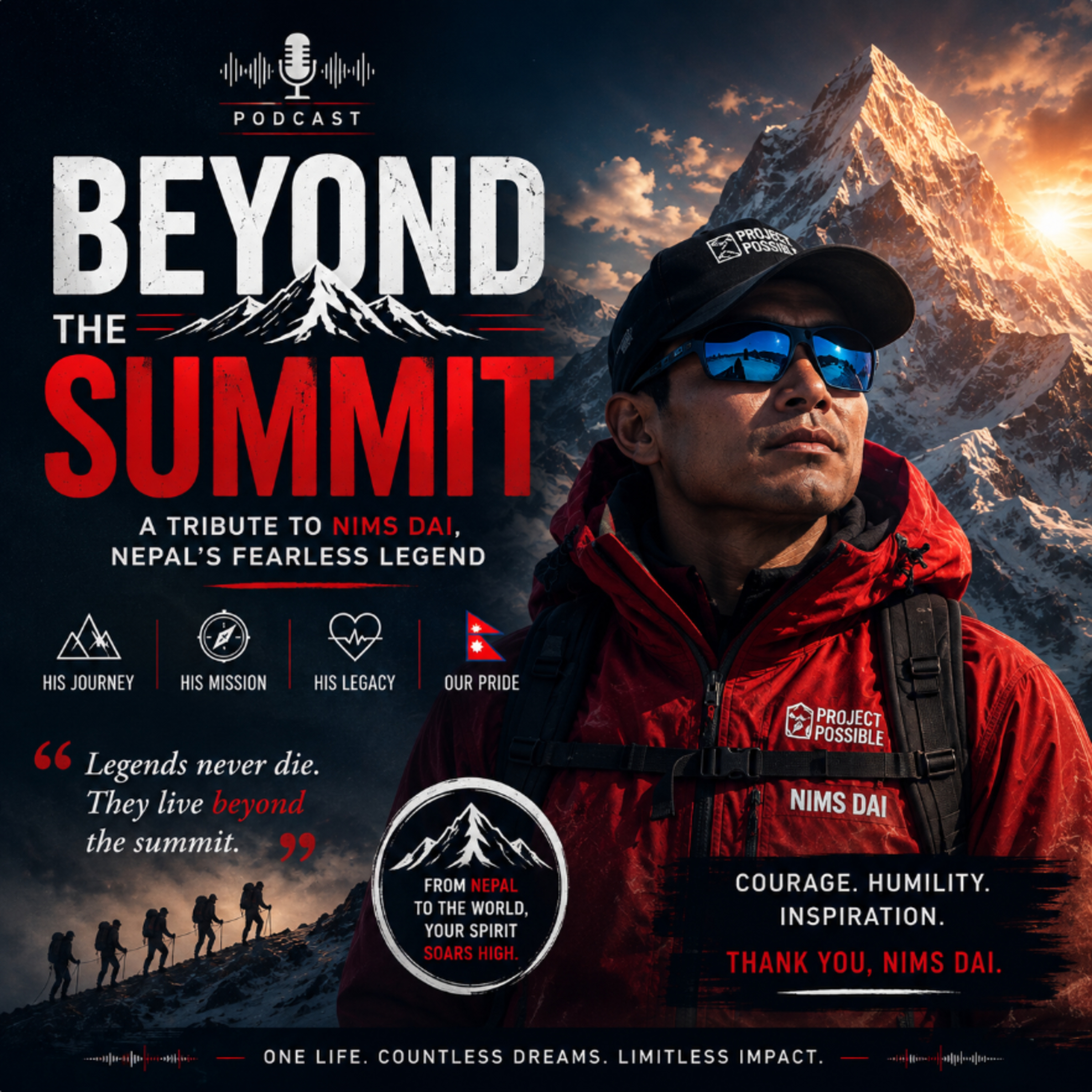
Some people climb mountains. Others redefine what is possible.In this special tribute episode, we celebrate the extraordinary life and legacy of Nims Dai (Nirmal Purja)…
▶ Listen on SpotifyShow notes & transcript →Follow the show →
🎧 Also on Apple Podcasts Castbox iHeartRadio
Introduction
On the morning of Thursday 30 July 2026, an avalanche released on Broad Peak (8,051 m) in Pakistan's Karakoram range and swept ten climbers down the mountain. There were no survivors. It is the deadliest single day in the recent history of eight-thousand-metre climbing, and the worst loss the Nepali guiding community has suffered in one incident.
Almost every headline led with one name, because Nirmal "Nims Dai" Purja was the most famous mountaineer alive. The other nine were widely reported as "and nine others". Among those nine were a man who had stood on the summit of K2 in winter, a woman who was the first from her country to climb Everest, a guide who held a Guinness World Record, a photographer on what was meant to be his last big mountain, and a 29-year-old from a family of climbers who had summited Makalu three months earlier.
Six of the ten were Nepali. Between them they had climbed Everest more than thirty-five times. This page is an attempt to give each of the ten a life rather than a line.
Why this has hit Nepal so hard. Nepal loses climbers most years, and the country has a long, hard-earned vocabulary for it. What made this different is the concentration. These were not beginners caught out; they were among the most experienced high-altitude workers in the world, several of them at the very top of the profession, and they were lost in a single slope-load of snow. As one Nepali mountaineering figure put it, an international-standard mountain guide cannot be produced overnight: it takes years of training, repeated expeditions and practical experience. Nepal did not just lose ten people. It lost decades of accumulated skill that cannot be replaced quickly, in an industry that a large part of the country's economy depends on.
The Broad Peak Avalanche
Broad Peak (Falchan Kangri, 8,051 m) is the twelfth-highest mountain in the world. It stands in the Karakoram in Gilgit-Baltistan, Pakistan, on the border with China, a few kilometres from K2, and shares the Godwin-Austen glacier approach with it. It has a reputation as one of the more straightforward eight-thousanders, which is a relative judgement: it is a serious high-altitude mountain with a long summit ridge and heavily loaded slopes.
Three operators had teams involved: Elite Exped, the company Purja co-founded, along with Seven Summit Treks and Imagine Nepal. The ten who died were on the mountain together as a summit-bound group drawn from those teams.
The conditions
The mountain had been loading with snow for over a week. Climbers on Broad Peak that month reported a major wind storm around 18 July, then heavy snowfall from about 22 July that continued through the end of the month. Most teams left base camp around 25 July. The calculation experienced climbers described afterwards is a simple one: after heavy snowfall you do not only want good weather, you want several days of it, so that the new snow either bonds to the slope or slides off on its own.
What happened
At around 9.30 a.m. local time the group was moving between Camp 2 and Camp 3, at roughly 6,600 m, when the avalanche released into the mountain's main west-facing gully. It carried all ten of them down. Purja's GPS tracker recorded a fall of around 800 m; Nadhira Al Harthy was carried almost to the foot of the mountain. Early reports gave the time of the slide as anywhere between 9 a.m. and midday, and it may be revised again.
Nobody on the slope survived. There is no useful purpose in second-guessing, from a desk, decisions taken by some of the most experienced high-altitude climbers in the world in conditions none of us were standing in. The mountains do not always give a reason.
The Search and the Confirmation
The rescue call went out hours after the slide. Weather and altitude then did what they usually do in the Karakoram: they made the search slow, dangerous and partly impossible.
- 30 July. The alarm is raised. Helicopters cannot reach the site in the conditions.
- 31 July. Helicopter searches begin at first light, with ground parties working up from Camp 1 and drones flying the debris field. Four bodies are located and three recovered, from below the mountain opposite Broad Peak base camp. The Alpine Club of Pakistan, coordinating the operation, confirms the first three identifications: Nadhira Al Harthy, Pur Bahadur Gurung and Mallory Geis. Drone footage locates more, though identification at that altitude is not possible from the air.
- 1 August. Elite Exped confirms publicly that Purja and every other member of the group have died. "Today it is with profound sadness and immense heartbreak that we confirm that Nirmal 'Nimsdai' Purja tragically lost his life following the avalanche on Broad Peak."
- Early August. Recovery continues. Wang Zhong's body is found below Camp 1, along with others including Purja.
Two things about the response deserve recording. Teams on neighbouring K2 abandoned their own summit pushes — the culmination of months of preparation and, for many, a great deal of money — and came across to help with the search. And Elite Exped flew additional Nepali climbers from Kathmandu to Pakistan to join the recovery, to bring their colleagues home.
Oman's Ministry of Foreign Affairs issued a statement of condolence, praising Al Harthy's work in strengthening ties between Oman and Nepal. Nepal's prime minister, Balendra Shah, said the deaths had shocked the country and that the climbers' "courage, dedication, and contributions will always remain inspiring". Tributes came from Prince William, who knew Purja through his Gurkha service, and from climbers around the world.
The Climbers We Remember
Ten climbers from five countries: Nepal, Oman, Pakistan, China and the United States. They are listed here beginning with the expedition's leader and then the Nepali guides and climbers, followed by the international climbers. The order implies no ranking. Where sources spell a name differently, both spellings are given.
Nirmal "Nims Dai" Purja, 43 — Nepal
Born in Dana, Myagdi, raised in Chitwan; a Gurkha and the first Gurkha to serve in the British Special Boat Service. He climbed all 14 eight-thousanders in six months and six days in 2019, led the first winter ascent of K2 in 2021 without supplemental oxygen, and by 2024 had climbed all 14 again without bottled oxygen at all. He held 18 Guinness World Records and 50 summits of eight-thousand-metre peaks, more than anyone. He was two mountains from becoming the first person to climb all fourteen twice without oxygen. He spent his public life insisting that Nepali climbers be named, paid and credited. Read his full story →
Pur Bahadur "Yukta" Gurung — Nepal
From Laprak in Dharche, Gorkha, in the hills below the Manaslu massif. An IFMGA-certified guide with Elite Exped, and the first Gurung climber to summit Everest ten times — the tenth on 20 May 2026, ten weeks before he died. He had climbed 12 of the 14 eight-thousanders, including K2, Makalu, Annapurna and Lhotse, and first stood on Everest in 2011. He once described what took him back: "The moment I head for the mountains, my spirit soars; standing on the summit fills me with pure energy." His home valley is walked on the Manaslu Circuit. Read his full story →
Kili Pemba "Kilu" Sherpa, born 1980 — Nepal
From Beding, high in the Rolwaling valley in Dolakha. He started at 16, as a support worker on a Manaslu expedition in 1996, and spent thirty years becoming one of the most quietly accomplished climbers in the country. He was one of the ten Nepali climbers who made the first winter ascent of K2 on 16 January 2021. He had summited Everest 15 times. On 3 July 2026, on Nanga Parbat, he completed all 14 eight-thousanders — four weeks before Broad Peak.
Two things he did are worth more than any of the records. In 2021 he helped establish the route to the true summit of Manaslu with Mingma G, resolving a decades-old problem in which climbers had been stopping at a lower fore-summit. And he guided climbers most expeditions would not take: he led the Chinese double amputee Xia Boyu to the summit of Everest in 2018, and the Russian double amputee Rustam Nabiev to the summit of Manaslu in 2021. He climbed with Imagine Nepal. Read his full story →
Gyaljen "Gyalu" Sherpa — Nepal
From Okhaldhunga, in the hills south-west of the Everest region. He began climbing in 2015 and spent eight years with Seven Summit Treks. He held a Guinness World Record for summiting Kanchenjunga three times in a single season, an almost absurd feat of endurance on the world's third-highest mountain, and had climbed Everest several times along with Manaslu, Himlung Himal, Cholatse, Lobuche, Mera Peak and Lenin Peak. The Dudhkunda trek crosses his home district.
Nawang Thendu Sherpa, 29 — Nepal
Also written Nawang Thindu Sherpa. The youngest of the ten, unmarried, and from a family in which climbing is the trade: his father and three brothers are all veteran climbers. With Seven Summit Treks he had summited Everest, Lhotse, Manaslu, Kanchenjunga, Makalu and Ama Dablam, and he had stood on top of Makalu earlier in the 2026 season. An official from his village said his death "deprives our village of a courageous, honest and exceptionally promising young man".
Nima Sherpa — Nepal
From Chyakse Boda in Makalu Rural Municipality, Sankhuwasabha, in the far east of Nepal beneath the mountain the municipality is named for. He grew up in a farming family and climbed with Elite Exped, where he was known for being disciplined, honest and fearless. In the 2026 season alone, before Broad Peak, he had climbed four eight-thousanders. He was one of Purja's regular climbing partners. The trail into his home country is the Makalu Base Camp trek.
Nadhira Al Harthy, 39 — Oman
The first Omani woman to summit Everest, in 2019, and the first Omani of any gender to climb K2. She had also climbed Manaslu. Away from the mountains she held a master's degree in geography and was director of the Citizenship Department at Oman's Ministry of Education, and she had become the public face of mountaineering in a country with no mountaineering tradition to inherit. She was climbing with Seven Summit Treks. Oman's foreign ministry noted her work in strengthening relations between Oman and Nepal.
Sohail Sakhi — Pakistan
From Hunza in Gilgit-Baltistan, on his own country's side of the Karakoram. A guide with Moving Mountains, and also a geographer and high-altitude photographer — one of the small number of Pakistani climbers building a professional high-altitude industry in a range that has mostly been serviced by Nepali guides. Broad Peak was expected to be his last expedition on an eight-thousander. Searchers found his backpack and his broken Garmin. Mallory Geis was climbing as his client.
Wang Zhong, 52 — China
A Chinese mountaineer who had climbed 12 of the 14 eight-thousanders and was working steadily towards all of them. Broad Peak would have been his thirteenth. His body was recovered from below Camp 1 in the first days of August, and China's embassy in Pakistan activated its consular emergency response to bring him home.
Mallory Geis, 39 — United States
From San Antonio, Texas, and the only one of the ten for whom this was a first expedition to an eight-thousand-metre peak. She had recently closed the Pilates studio she ran to make the trip. She was the newcomer on a mountain of professionals, which is its own kind of courage, and she was among the first three climbers to be identified.
The Legacy of Nepal's Climbers
To understand why six Nepali names on that list matters so much, it helps to know how Himalayan climbing actually works.
Almost every ascent of an eight-thousander is made possible by Nepali high-altitude workers. They go up first and fix the ropes. They carry the oxygen, the tents and the food to the high camps, usually several times over, which means they do the hardest and most dangerous work on the mountain more often than any client does. They break trail through fresh snow. They make the judgement calls in the death zone, and when something goes wrong at 8,000 m they are the ones who go back up. The word "Sherpa" has been flattened in English into a job title, which is worth resisting: Sherpa is an ethnic community from the Himalayan valleys of eastern Nepal, and Nepal's high-altitude workers also come from Gurung, Magar, Tamang, Rai and many other communities — as this list of ten shows.
For most of the twentieth century that work was invisible in the record. Expedition accounts named the Western climbers and thanked the porters collectively. That has changed in the last decade, and the six Nepali climbers on this page were part of how it changed. Purja was the loudest voice, but the argument was made just as effectively by Kili Pemba Sherpa standing on the summit of K2 in winter with nine other Nepali climbers, by Pur Bahadur Gurung becoming an IFMGA-certified guide rather than remaining support staff, and by Gyaljen Sherpa's Guinness record on Kanchenjunga.
The loss is also, bluntly, an economic one. Nepal's tourism industry rests on trekking and climbing, and the top of that profession is a very small group of people. A guide of this calibre takes years of training, repeated expeditions and hard-won judgement to produce — you cannot recruit ten of them next season. Six of the best were lost on one slope, and their families have lost their income along with them.
If there is a practical way to honour them, it is the argument all of them were part of: that high-altitude work should be properly paid, properly insured and properly equipped, and that the people doing it should be named. When you book a trek or a climb in Nepal, that question — how does this operator treat and insure its staff — is worth asking out loud before you compare prices.
A Message from BriefNepal
The Himalaya have always tested the limits of human endurance, but they have also revealed the strength of the human spirit. The climbers we lost on Broad Peak were not defined solely by the mountains they climbed, but by the courage, humility and determination they carried into every expedition.
At BriefNepal we honour their legacy, and we extend our deepest condolences to their families, their friends, their teams and the global mountaineering community. May their stories continue to inspire future generations to pursue great heights — with respect for the mountains, and for one another.
To the families of Nirmal, Yukta, Kilu, Gyalu, Nawang, Nima, Nadhira, Sohail, Wang and Mallory: thank you for the men and women you shared with the mountains.
Sources & Updates
Names, ages, home districts and records on this page are drawn from contemporary reporting, principally the Kathmandu Post, Nepali Times, ExplorersWeb, Al Jazeera, National Geographic, NPR, NBC News, the Global Times, statements from Elite Exped and the Alpine Club of Pakistan, and Wikipedia's account of the avalanche.
Photograph: Broad Peak seen from Concordia, by Svy123 via Wikimedia Commons, CC BY 3.0.
This page will be corrected and expanded. Reporting was still developing when it was published in early August 2026: the transliteration of some Nepali names varies between sources, ages and biographical details for several of the ten are incomplete, and the sequence of the recovery may be revised. If you knew any of these climbers and something here is wrong, or you would like something added, please get in touch — we would rather be corrected than be approximately right about people's lives.
Frequently Asked Questions
What happened on Broad Peak in July 2026?
On the morning of Thursday 30 July 2026, at around 9.30 a.m. local time, an avalanche released into the main west-facing gully of Broad Peak (8,051 m) in Pakistan's Karakoram range and swept ten summit-bound climbers down the mountain from around 6,600 m, between Camp 2 and Camp 3. There were no survivors. The mountain had been loading with heavy snow since about 22 July, and most other teams had already left base camp.
How many climbers died in the Broad Peak avalanche?
Ten, from five countries. Six were Nepali, and there was one climber each from Oman, Pakistan, China and the United States. All ten were confirmed dead on 1 August 2026, when Elite Exped announced that Nirmal "Nimsdai" Purja and every other member of the group had died.
Who died in the Broad Peak avalanche?
Nirmal "Nims Dai" Purja (Nepal), Pur Bahadur "Yukta" Gurung (Nepal), Kili Pemba "Kilu" Sherpa (Nepal), Gyaljen "Gyalu" Sherpa (Nepal), Nawang Thendu Sherpa (Nepal), Nima Sherpa (Nepal), Nadhira Al Harthy (Oman), Sohail Sakhi (Pakistan), Wang Zhong (China) and Mallory Geis (United States).
Where is Broad Peak?
Broad Peak, known locally as Falchan Kangri, is 8,051 m high and the twelfth-highest mountain in the world. It stands in the Karakoram range in Gilgit-Baltistan, Pakistan, on the border with China and only a few kilometres from K2, which it shares a glacier approach with. It is not in Nepal — Nepal has eight of the fourteen eight-thousanders, but Broad Peak and K2 are Pakistani mountains.
Was Nims Dai one of the climbers who died?
Yes. Nirmal Purja, known worldwide as Nims Dai, was leading the expedition and died in the avalanche at the age of 43. He had added Broad Peak to his schedule because summiting it would have left him one mountain short, Cho Oyu, of becoming the first person to climb all fourteen eight-thousanders twice without supplemental oxygen.
Why were so many Nepali climbers on the mountain?
Because Nepali high-altitude workers make most eight-thousand-metre climbing possible, in Pakistan as well as in Nepal. They fix the ropes, carry loads to the high camps, break trail and lead the rescues, which means they are on the most dangerous ground more often than any client. Three Nepali-run operators had teams involved on Broad Peak: Elite Exped, Seven Summit Treks and Imagine Nepal.
Is trekking in Nepal dangerous after this?
Trekking and high-altitude mountaineering are very different activities. The Broad Peak avalanche happened at 6,600 m on an 8,000-metre peak in winter-like snow conditions, on terrain no trekker goes near. Nepal's teahouse treks, such as Everest Base Camp or Annapurna Base Camp, are walks on established trails where the main risk is altitude sickness, which is preventable by ascending slowly. Choose an operator that insures its staff, allow proper acclimatisation days, and read our altitude sickness guide before booking anything above 3,500 m.
How can I honour the climbers who died?
The most practical way is to support the conditions they campaigned for: when you book a trek or climb in Nepal, ask how the operator pays, insures and equips its Nepali staff, and choose accordingly. The Nimsdai Foundation, set up by Nirmal Purja, works on pay, insurance and recognition for high-altitude workers. Several of the ten leave families who depended on their income, and appeals for them have been organised through their employers and communities.
Official sources
Fees and rules on this page come from the bodies that set them. They do change, sometimes mid-season, so check the primary source before you pay anything.
- Nepal Tourism Board Official Nepal tourism informationntb.gov.np
By the BriefNepal Travel Desk
Researched and maintained by our Nepal-based editorial team and reviewed for accuracy. Last updated September 3, 2026. Prices, permits and conditions change, always verify before you travel. Spotted something out of date? Let us know.
Nepal Currency Converter
Live exchange rates for the Nepalese Rupee (NPR) against every world currency, handy for budgeting the prices in our guides.
Live mid-market rates. For information only, banks and exchanges apply their own margins.
Planning a trip to Nepal?
Join the BriefNepal Travel list for seasonal tips, new guides and our free Nepal trip-planning checklist. No spam, unsubscribe anytime.
Explore More of Nepal
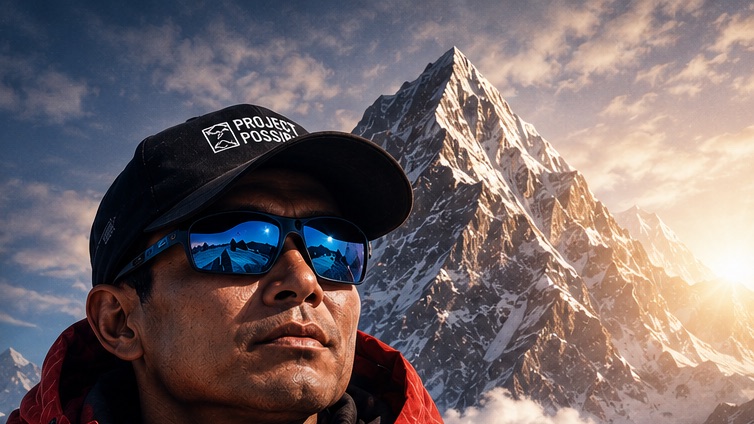 Nims Dai (Nirmal Purja)The Gurkha soldier from Myagdi who climbed all 14 eight-thousanders in six months and changed who gets the credit in the Himalaya.
 Kili Pemba SherpaBeding to the summit of K2 in winter — the Rolwaling climber who finished all 14 eight-thousanders four weeks before he died.
 Pur Bahadur GurungKnown as Yukta — the first Gurung climber to summit Everest ten times, from an earthquake-flattened village in Gorkha.
 Makalu Base CampA remote, wild trek to the foot of the world's fifth-highest peak.
 Rolwaling ValleyA wild sacred valley and the technical Tashi Lapcha pass to the Khumbu.
 Manaslu CircuitA wild restricted-area circuit around the world's eighth-highest peak.
 Kanchenjunga Base CampA remote trek to both base camps of the world's third-highest peak.Everest Base CampThe world's most famous trek to the foot of Sagarmatha.
 DudhkundaA sacred lake trek through Solu's Sherpa villages below Numbur Himal.🏔️Altitude Sickness GuideAMS, HAPE and HACE explained — symptoms, prevention, Diamox and the golden rules for trekking safely at altitude in Nepal.