


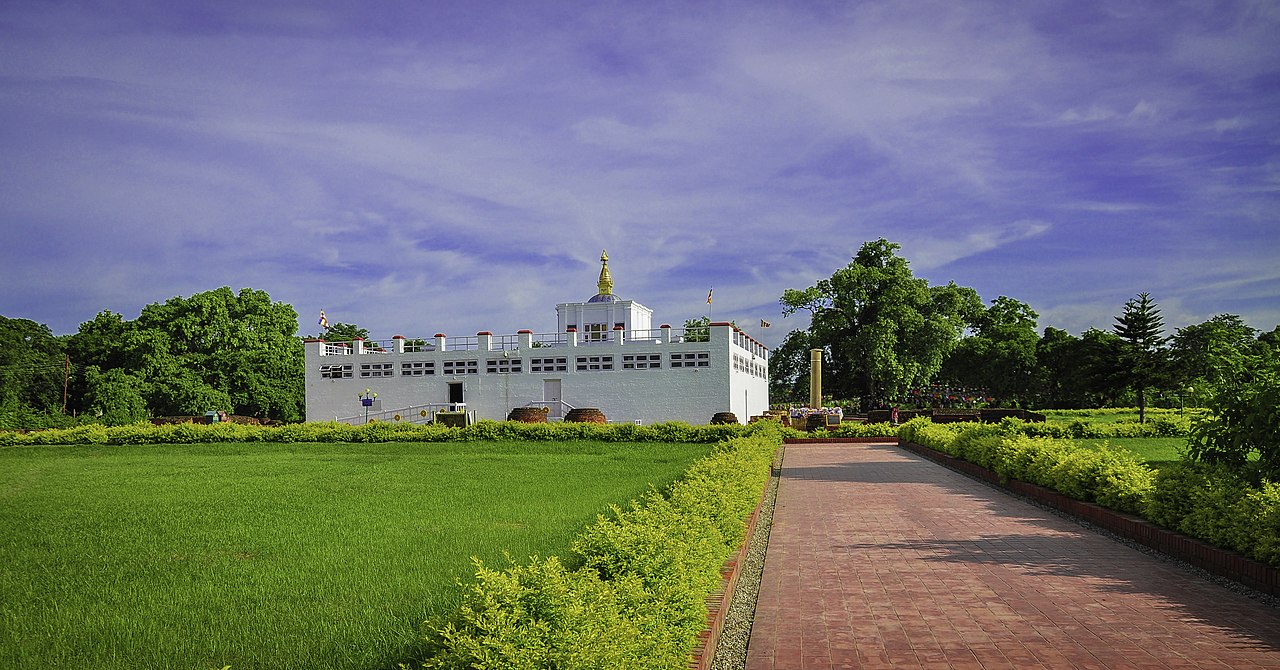


Kathmandu Travel Guide
Nepal's capital is an open-air museum of medieval temples, palace squares and living traditions, and the gateway to every Himalayan adventure.
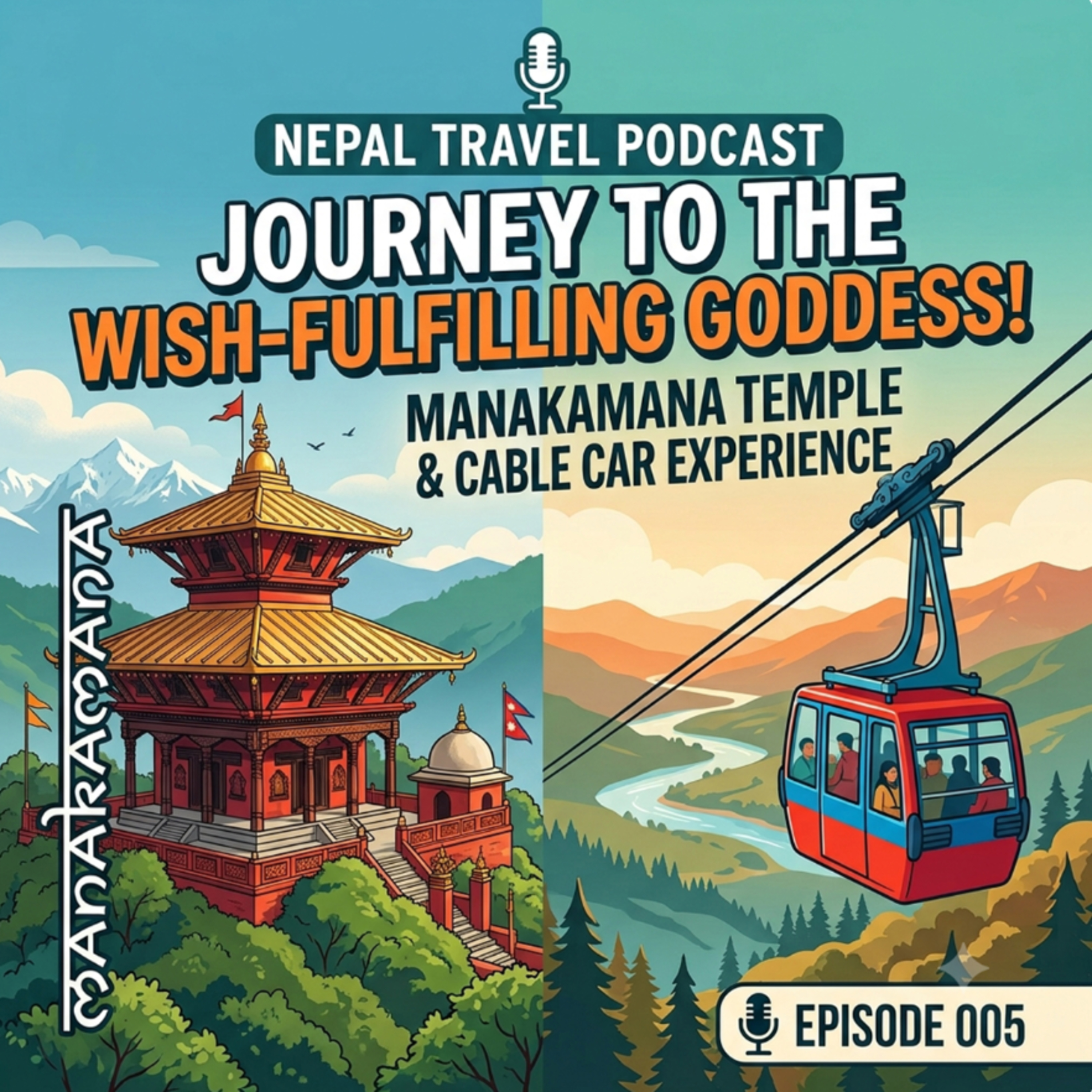
Discover the spiritual beauty of Manakamana Temple, one of Nepal's most iconic pilgrimage destinations, where thousands of devotees travel every year with the belief that…
▶ Listen on SpotifyShow notes & transcript →Follow the show →
🎧 Also on Apple Podcasts Castbox iHeartRadio
A glimpse of Kathmandu


Introduction
Kathmandu is the capital of Nepal and the beating heart of the country, a city of around 1.5 million people (and close to 3 million across the wider valley) where ancient and modern Nepal collide. Within a single morning you can stand before 1,500-year-old temples, watch saffron-robed sadhus by a cremation ghat, weave through traffic on a motorbike, and sip espresso in a rooftop café framed by Himalayan foothills. For almost every visitor to Nepal, Kathmandu is the first stop: it holds the only international airport, the embassies and trekking agencies, and seven of the country's UNESCO World Heritage monument zones in one valley.
The Kathmandu Valley has been continuously inhabited for over two thousand years and was once three rival kingdoms, Kathmandu, Patan and Bhaktapur, each with its own royal Durbar Square. That history left an astonishing density of art and architecture: pagoda temples, intricately carved wooden windows, hidden courtyards (bahals), stone water spouts and golden shrines, much of it the work of the valley's indigenous Newar people. Kathmandu is dusty, chaotic and intense, but for travellers who lean into it, few cities in Asia are as rewarding. This guide covers everything you need to plan a trip: the top attractions, how long to stay, the best time to visit, how to get around, what things cost, where to eat and sleep, and the practical tips that make a first visit smoother.
Top Attractions
Kathmandu Durbar Square (Hanuman Dhoka)
The historic royal heart of the old city, a UNESCO World Heritage Site crowded with pagoda temples, courtyards and the old royal palace of Hanuman Dhoka. Don't miss the Kumari Ghar, home of the Living Goddess, who occasionally appears at her carved window. Several monuments were damaged in the 2015 earthquake and rebuilt; the square is liveliest in the early morning and at dusk.
Pashupatinath Temple
The most sacred Hindu temple in Nepal, dedicated to Lord Shiva and set on the banks of the holy Bagmati River. Non-Hindus cannot enter the main shrine but can watch the riverside cremation ghats, sadhus and evening aarti from across the river. Read the full Pashupatinath guide →
Boudhanath Stupa
One of the largest spherical stupas in the world and the centre of Tibetan Buddhism in Nepal. Join pilgrims walking the kora (clockwise circuit), spin the prayer wheels, and watch the white dome glow at dusk from a rooftop café. The surrounding lanes are full of monasteries, thangka studios and Tibetan restaurants.
Swayambhunath (Monkey Temple)
An ancient hilltop stupa with the watchful painted eyes of the Buddha, reached by a steep stairway guarded by mischievous monkeys. The reward at the top is a sweeping panorama over the whole Kathmandu Valley, best at sunrise or sunset.
Thamel
Kathmandu's buzzing tourist quarter: a warren of lanes packed with trekking-gear shops, bookshops, bakeries, bars with live music, and budget-to-boutique hotels. It's the place to arrange treks and tours, change money, and refuel before or after the mountains.
Patan Durbar Square
Just across the river in Lalitpur, Patan is the valley's finest ensemble of Newar architecture, the Krishna Mandir, the Royal Palace and the excellent Patan Museum. The surrounding old town is a hub of metalwork and traditional crafts.
Bhaktapur Durbar Square
The best-preserved of the three royal cities, a largely traffic-free medieval town famous for the five-storey Nyatapola Temple, pottery square and the creamy "juju dhau" (king curd). Allow at least half a day; it rewards slow wandering.
Garden of Dreams
A restored neo-classical garden oasis on the edge of Thamel, pavilions, fountains and lawns that make a peaceful escape from the city noise, with a café for a quiet afternoon.
History
According to legend, the Kathmandu Valley was once a great lake, drained by the bodhisattva Manjushri with a single sweep of his sword to create the fertile bowl that exists today. The Swayambhunath stupa is said to mark the spot where a lotus flower floated on that primordial lake. Archaeology tells a more grounded story of settlement stretching back well over two millennia, with the Kirat dynasty among the earliest recorded rulers.
The valley's golden age came under the Licchavi (roughly 4th–9th century) and, above all, the Malla kings (12th–18th century), whose patronage produced the temples, palaces and Durbar Squares that draw visitors today. After the three Malla city-states fragmented into rivalry, Prithvi Narayan Shah of Gorkha conquered the valley in 1768–69 and made Kathmandu the capital of a unified Nepal, the foundation of the modern nation. The 19th and early 20th centuries were dominated by the hereditary Rana prime ministers, who built grand neo-classical palaces while keeping Nepal closed to the outside world.
Nepal opened to travellers only in the 1950s, and Kathmandu became a legendary stop on the 1960s "hippie trail." More recently the city has lived through the decade-long Maoist conflict, the 2006 movement that ended the monarchy, and the devastating April 2015 earthquake, which killed thousands and damaged or destroyed many heritage monuments. Reconstruction of the Durbar Squares and temples has been a long, painstaking and still-ongoing effort, much has been rebuilt, and visiting today both honours that heritage and supports its custodians.
Things to Do
Kathmandu rewards a mix of monument-hopping and slower, street-level exploring. Beyond the headline sights, here are the experiences worth building into your days:
- Walk the three Durbar Squares. Kathmandu, Patan and Bhaktapur each deserve a few hours. Together they tell the story of the valley's three medieval kingdoms.
- Do the Boudhanath kora at dusk. Circle the great stupa with Tibetan pilgrims as butter lamps are lit, one of the city's most atmospheric moments.
- Climb Swayambhunath for sunrise. Beat the crowds and the heat, and watch the valley wake up beneath the Buddha's eyes.
- Get lost in the old town. The lanes between Thamel, Asan and Indra Chowk are a living market, spice sellers, brassware, textiles and hidden courtyard shrines.
- Take a cooking class or food walk. Learn to make momos and dal bhat, or eat your way through Newari specialities in the backstreets.
- Shop for crafts and trekking gear. Thamel for outdoor equipment and souvenirs; Patan and Bhaktapur for metalwork, pottery and paubha/thangka paintings.
- Day-trip to the valley rim. Catch Himalayan sunrise views from Nagarkot, visit the hilltop temple of Changu Narayan, or the Hindu pilgrimage site of Dakshinkali.
- See it from above. Mountain-flight day tours and even ultralight and paragliding options run from the valley in clear weather.
Best Time to Visit
The best time to visit Kathmandu is autumn (late September to November) and spring (March to April). Autumn brings clear skies, comfortable temperatures and the great festivals of Dashain and Tihar, when the city is at its most colourful. Spring is warm and pleasant, with blossom and generally good visibility, though afternoons can grow hazy.
Winter (December–February) is cool, daytime highs around 18–20°C, nights near freezing, but often crisp and clear, with thin crowds and lower prices; pack a warm layer as many budget rooms are unheated. Summer/monsoon (June–August) is hot, humid and wet, with frequent afternoon downpours that snarl traffic and obscure mountain views, though the valley turns lush and green and it is the cheapest, least crowded season.
If your trip includes trekking, plan around the same windows: October–November and March–April are the prime trekking months, so most travellers see Kathmandu at its best either side of a trek.
How to Reach Kathmandu
By air
Almost all international visitors arrive at Tribhuvan International Airport (KTM), about 6 km east of the city centre, the only international gateway in central Nepal. There are direct flights from major hubs across India, the Gulf, Southeast Asia and China. Most nationalities can get a visa on arrival (15, 30 or 90 days); fill the form online beforehand to speed things up, and carry US dollars for the fee and a passport photo. A prepaid taxi or a ride-hailing app (InDrive, Pathao) into Thamel takes 20–40 minutes depending on traffic.
By road
Overland travellers come from India via the border crossings at Sunauli (Bhairahawa), Birgunj/Raxaul or Kakarbhitta, then connect by tourist bus or domestic flight. Tourist buses link Kathmandu with Pokhara (6–8 hours) and Chitwan (5–6 hours); the faster, pricier option on those routes is a short domestic flight. Roads in the hills are winding and can be slow, build in buffer time.
Getting around the city
Within Kathmandu, use ride-hailing apps (Pathao and InDrive for cars and motorbikes), metered or negotiated taxis, and your own two feet, the old city core is best explored on foot. Local buses and tempos are cheap but crowded and confusing for first-timers. Renting a scooter is possible but the traffic is chaotic and best left to confident riders.
Budget Guide
Kathmandu can be very affordable or quite comfortable depending on your style. Approximate daily costs per person (2026 estimates, in Nepali rupees):
| Travel style | Per day | What it covers |
|---|---|---|
| Backpacker | NPR 2,500–4,500 | Guesthouse dorm/budget room, local food, public transport, a few entry fees |
| Mid-range | NPR 6,000–12,000 | Comfortable 3-star hotel, mix of local and tourist restaurants, taxis, a guided tour |
| Comfort | NPR 15,000+ | Boutique or heritage hotel, fine dining, private car and guide |
Typical prices: a plate of momos NPR 120–250; a dal bhat set NPR 200–450; a tourist-restaurant main NPR 400–800; a budget room NPR 800–2,000; a comfortable 3-star double NPR 3,500–8,000. Heritage-site entry fees are charged separately and matter for budgeting: Kathmandu Durbar Square is around NPR 1,000 for foreigners, Bhaktapur around NPR 1,800 (SAARC nationals pay less). Carry cash, many small vendors don't take cards, and use ATMs in Thamel, which dispense Nepali rupees with a per-transaction fee.
Food & Where to Eat
Kathmandu is the best place in Nepal to eat widely. The national staple is dal bhat, rice with lentil soup, curried vegetables, pickle and often meat, typically served with free refills and the unofficial trekker's motto "dal bhat power, 24 hour." Don't miss momos (steamed or fried dumplings), the city's beloved snack, served with fiery achaar.
Seek out Newari cuisine, the valley's distinctive local food: bara (lentil patties), chatamari (the "Newari pizza"), choila (spiced grilled meat), samay baji (a ceremonial platter), and yomari during festivals. For variety, Thamel and Jhamsikhel ("Jhamel") offer everything from wood-fired pizza and Tibetan thukpa to Korean, Indian and excellent bakeries and coffee. Boudhanath is the place for authentic Tibetan and Himalayan food with a stupa view.
Food safety: drink bottled, filtered or treated water (avoid tap and ice of unknown origin), eat freshly cooked hot food, and ease into street food. A reusable bottle with a filter cuts plastic waste and costs.
Hotels & Accommodation
Most visitors base themselves in or near Thamel, where everything, trekking agencies, restaurants, gear shops and money changers, is on the doorstep. It's convenient and lively, though some streets can be noisy; look for rooms set back from the main lanes. Quieter alternatives include Jhamsikhel/Patan (leafy, foodie, more local), Boudhanath (serene, Tibetan-Buddhist atmosphere) and Bhaktapur (medieval calm, best as a one-night escape).
- Budget (NPR 800–2,000): clean guesthouses and hostels in and around Thamel, many with rooftop cafés and reliable Wi-Fi.
- Mid-range (NPR 3,500–8,000): comfortable 3-star hotels with hot showers, breakfast and often a garden or rooftop.
- Boutique & heritage (NPR 10,000+): restored Newari residences and design hotels in Patan, plus international-standard properties for a comfortable first or last night.
Book ahead for the autumn peak and around major festivals. If you're heading to a trek, many hotels will store a bag of city clothes for free while you're away.
Travel Tips
- Dress modestly at temples. Cover shoulders and knees, remove shoes and leather where asked, and never enter shrines closed to non-Hindus (such as the inner Pashupatinath temple).
- Walk clockwise around stupas and chortens, and pass mani walls and prayer wheels on your left.
- Mind the air. Kathmandu's traffic dust and winter smog can be heavy; a light mask helps sensitive travellers.
- Carry small cash. Many shops, taxis and temples are cash-only; keep small notes for entry fees and tips.
- Agree taxi fares first or use an app, meters are often "broken." Ride-hailing motorbikes are the fastest way through traffic.
- Acclimatise expectations, not altitude, Kathmandu sits at about 1,400 m, so altitude isn't an issue here, but it's a good place to rest before and after a high trek.
- Power & SIM: buy an NCELL or Ntelecom (Nepal Telecom) SIM at the airport or in town with your passport; load a data pack for cheap, reliable internet.
- Respect photography etiquette. Ask before photographing people, sadhus (who may request a tip) and cremation ceremonies.
- Bargain politely in markets, but fairly, and tip a few percent for good service in tourist restaurants.
Frequently Asked Questions
How many days do you need in Kathmandu?
Two to three days is enough to see the main highlights: one day for Kathmandu Durbar Square, Swayambhunath and the old town, and another for Pashupatinath, Boudhanath and either Patan or Bhaktapur. Add a day if you want a valley-rim day trip such as Nagarkot or to slow down and shop.
What is Kathmandu famous for?
Kathmandu is famous for its dense concentration of UNESCO-listed temples and Durbar Squares, the sacred Hindu temple of Pashupatinath, the great Buddhist stupas of Boudhanath and Swayambhunath, its Newar art and architecture, and as the gateway to Himalayan trekking and Mount Everest.
Is Kathmandu safe for tourists?
Yes, Kathmandu is generally safe for tourists, including solo and female travellers, with low rates of violent crime. The main concerns are petty theft in crowds, chaotic traffic, air pollution and occasional altitude or stomach issues. Use normal travel precautions and reputable agencies.
What is the best time to visit Kathmandu?
Autumn (late September to November) and spring (March to April) are the best times to visit Kathmandu, with clear skies and comfortable temperatures. Autumn also brings the major Dashain and Tihar festivals. Winter is cool but pleasant; the monsoon (June to August) is hot, wet and green.
Do I need a visa to visit Kathmandu, Nepal?
Most nationalities can get a visa on arrival at Tribhuvan International Airport for 15, 30 or 90 days; you can fill the application online in advance to save time. Indian citizens do not need a visa. Bring a passport photo and the fee in US dollars.
How do I get from Kathmandu airport to the city?
Tribhuvan International Airport is about 6 km from the centre. Take a prepaid airport taxi or use a ride-hailing app such as Pathao or InDrive into Thamel; the trip takes 20–40 minutes depending on traffic. Many hotels also offer airport pickup.
Can non-Hindus enter Pashupatinath Temple?
Non-Hindus cannot enter the main Pashupatinath shrine, but they can visit the wider temple complex and watch the riverside ghats, sadhus and the evening aarti from the eastern bank of the Bagmati River.
How much does a trip to Kathmandu cost per day?
Backpackers can manage on about NPR 2,500–4,500 a day, mid-range travellers on NPR 6,000–12,000, and comfortable travellers NPR 15,000 or more. Heritage-site entry fees (for example around NPR 1,000 for Kathmandu Durbar Square) are extra and worth budgeting separately.
What should I eat in Kathmandu?
Try dal bhat (the national rice-and-lentil set), momos (dumplings), and Newari specialities such as bara, chatamari, choila and samay baji. Boudhanath is great for Tibetan food, while Thamel and Jhamsikhel offer wide international choice.
Where should I stay in Kathmandu?
Thamel is the most convenient base for first-time visitors, with hotels, restaurants and trekking agencies together. Quieter options include Jhamsikhel and Patan, the Tibetan-Buddhist area around Boudhanath, and medieval Bhaktapur for a one-night escape.
Is Kathmandu walkable?
The historic core, from Thamel through Asan and Indra Chowk to Kathmandu Durbar Square, is best explored on foot, and Bhaktapur is largely traffic-free. For longer hops across the valley, use taxis or ride-hailing apps, as distances and traffic make walking impractical.
Did the 2015 earthquake destroy Kathmandu's monuments?
The April 2015 earthquake damaged or destroyed several monuments in the Durbar Squares and beyond, but most have since been reconstructed through long restoration projects. The heritage sites are open to visitors, and your entry fees help fund their upkeep.
How far is Kathmandu from Pokhara?
Pokhara is about 200 km west of Kathmandu, roughly 6–8 hours by tourist bus or private car along a winding highway, or a scenic 25-minute domestic flight. See our 5-day Kathmandu and Pokhara itinerary to combine the two.
Is altitude sickness a problem in Kathmandu?
No. Kathmandu sits at about 1,400 m, well below the altitude where sickness occurs, so it is a comfortable place to arrive, rest and acclimatise before heading to higher trekking regions.
What can I do as a day trip from Kathmandu?
Popular day trips include Nagarkot for Himalayan sunrise views, the medieval city of Bhaktapur, the hilltop temple of Changu Narayan, the Hindu pilgrimage site of Dakshinkali, and the cable car to the Manakamana temple a little further afield.
Reviews & Ratings
No reviews yet. Be the first to share your experience of Kathmandu!
Official sources
Fees and rules on this page come from the bodies that set them. They do change, sometimes mid-season, so check the primary source before you pay anything.
- Department of Immigration Nepal visa on arrival, fees & extensionswww.immigration.gov.np
By the BriefNepal Travel Desk
Researched and maintained by our Nepal-based editorial team and reviewed for accuracy. Last updated September 3, 2026. Prices, permits and conditions change, always verify before you travel. Spotted something out of date? Let us know.
Nepal Currency Converter
Live exchange rates for the Nepalese Rupee (NPR) against every world currency, handy for budgeting the prices in our guides.
Live mid-market rates. For information only, banks and exchanges apply their own margins.
Planning a trip to Nepal?
Join the BriefNepal Travel list for seasonal tips, new guides and our free Nepal trip-planning checklist. No spam, unsubscribe anytime.
