


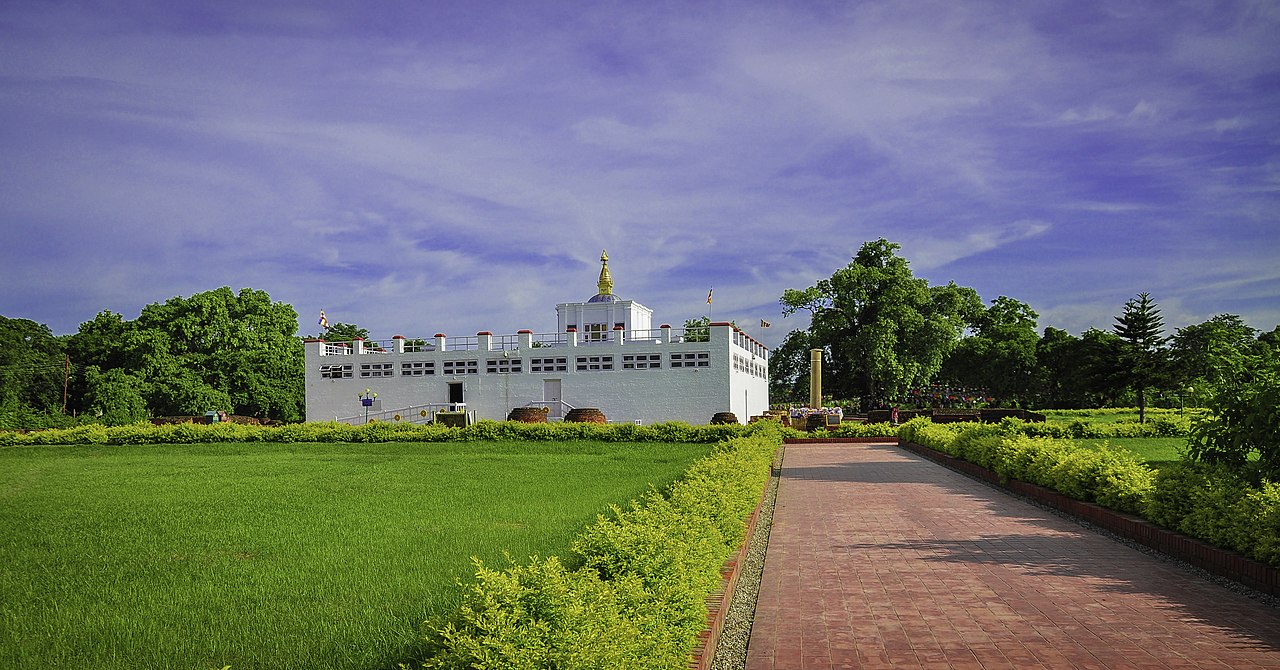


Darshan, Puja & Aarti at the Janaki Mandir
Worship at the Janaki Mandir centres on the image of Goddess Sita (Janaki) in the marble sanctum, but devotion spills far beyond it, into the Vivah Mandap where Ram and Sita were wed, and out to the ghats of Ganga Sagar and Dhanush Sagar. Here is how a visit works.
Temple Hours & the Aarti
The Janaki Mandir is an active place of worship, open from early morning until night, typically from around 5am to roughly 8–9pm, with the inner sanctum sometimes closing for a stretch in the middle of the day while the deity rests. Hours flex with the season and the festival calendar, so treat timings as a guide and confirm locally.
- Morning aarti is performed early, around dawn, when the courtyards are cool and the marble catches the first light, the most serene time for darshan.
- Evening aarti, typically around dusk (roughly 6–7pm depending on the season), is the emotional high point of the day, with lamps, bells and devotional singing filling the great courtyard.
- During Vivaha Panchami and other major festivals the temple stays busy from before dawn until late, and queues for the sanctum can be long, see the best-time guide.
Entry is free, this is a living temple, not a ticketed monument, though donations are welcome and small amounts may be asked for shoe-keeping.
The Inner Sanctum & Darshan of Janaki
At the heart of the three-storey marble complex lies the sanctum of Goddess Sita (Janaki), whose image is believed to be the golden murti discovered on this spot in the 17th century, enshrined alongside images of Ram and his brothers. Devotees queue through the arched verandahs for darshan, receiving prasad and tika from the temple priests after their moment before the goddess.
Unlike Pashupatinath in Kathmandu, the Janaki Mandir is generally welcoming to all respectful visitors, and non-Hindu travellers can usually explore the courtyards and view the shrine, one reason the temple draws cultural visitors as well as pilgrims. Follow the lead of the priests and pilgrims around you, and treat the sanctum area with the reverence of an active shrine.
Take time in the wider complex too: the temple has some 60 rooms arranged around its courtyards, decorated with coloured glass, engravings, paintings and latticed windows, and the upper galleries and gateways reward a slow wander after darshan.
Offerings & Puja
Stalls in the plaza outside the temple sell everything a pilgrim needs, so there is no need to bring offerings from home.
- Common offerings: flowers and garlands, coconut, sweets, fruit, incense, red cloth and sindoor for the goddess; vermilion and bangles are especially associated with Sita, and many married women pray here for the wellbeing of their families.
- Puja and blessings: temple priests can perform a short puja on your behalf; agree any dakshina (offering to the priest) beforehand. Newly married couples and those seeking a good marriage often come for blessings, fitting, in the city of the divine wedding.
- Prasad: after darshan you receive blessed sweets or fruit and a tika; the sweet shops around the temple also sell boxes of local mithai to carry home.
Costs are modest, typically small change for basic offerings and more for an arranged puja, and are covered in the cost & budget guide.
The Vivah Mandap & the Parikrama
No visit is complete without the Vivah Mandap, the ornate domed pavilion beside the main temple marking the spot where, in tradition, Ram and Sita were married. Inside, statues recreate the wedding party, Ram and Sita, his brothers and their brides, the sages and kings, and during Vivaha Panchami the divine marriage is re-enacted here before vast crowds. A small entry fee is sometimes charged for the mandap enclosure; it is worth every rupee.
Many pilgrims also perform a parikrama, a clockwise circumambulation, of the temple, and the devout undertake longer parikrama routes around the sacred sites of the city, especially during festival periods. Walk clockwise around shrines, keep the deity on your right, and do not step over offerings.
Beyond the walls, the holy geography continues: dozens of sacred ponds ring the city, with Ganga Sagar and Dhanush Sagar, both a short walk from the temple, the holiest. Pilgrims bathe, light lamps and offer prayers at their ghats, particularly at dawn; details are in the nearby attractions guide.
Dress Code, Photography & Etiquette
- Dress modestly. Cover shoulders and knees; saris, kurtas and long trousers are ideal. Janakpur is a conservative pilgrimage city and modest dress is expected around all its temples and ponds.
- Remove shoes before entering the temple; use the shoe-keeping stand near the gate for a small fee and keep the token safe.
- Photography: the exterior and courtyards are freely photographed, and the illuminated temple at night is spectacular, but photography of the deity or inside the inner sanctum is typically restricted. Look for signs, ask a priest if unsure, and never use flash near worshippers.
- Respect the queue and the rituals. Move with the darshan line, keep your voice low near the sanctum, and ask before photographing pilgrims, sadhus or bathing devotees at the ponds.
- Keep offerings and leather sensible: avoid bringing meat or alcohol anywhere near the precincts, and keep leather items discreet.
- Mind your belongings in festival crowds, and keep small notes handy for offerings, shoe-keeping and rickshaws.
Frequently Asked Questions
What are the Janaki Mandir opening hours?
The temple is open from early morning until night, typically from around 5am to roughly 8 to 9pm, with the inner sanctum sometimes closing for a period in the middle of the day. Morning aarti happens around dawn and evening aarti around dusk, roughly 6 to 7pm depending on the season. Hours flex with festivals, so confirm timings locally.
Can non-Hindus enter the Janaki Mandir?
Yes, in general the Janaki Mandir is welcoming to all respectful visitors, unlike some major temples in Nepal such as Pashupatinath. Non-Hindu travellers can usually explore the courtyards and view the shrine, provided they dress modestly, remove shoes and follow the temple's customs. Treat the sanctum area with the reverence of an active place of worship.
Is there an entry fee for the Janaki Mandir?
No, entry to the temple itself is free because it is an active place of worship rather than a ticketed monument. Donations are welcome, small fees apply for shoe-keeping, and a modest charge is sometimes collected at the Vivah Mandap enclosure beside the temple.
What offerings should I bring for darshan?
Stalls outside the temple sell everything you need: flowers, garlands, coconut, sweets, fruit, incense and red cloth. Sindoor and bangles are especially associated with Goddess Sita, and many married women offer them while praying for their families. After darshan you receive prasad and a tika from the priests.
Is photography allowed inside the Janaki Mandir?
Photography is generally fine in the outer courtyards and of the spectacular marble exterior, especially when the temple is illuminated at night. Photography of the deity and inside the inner sanctum is typically restricted, so watch for signs and ask a priest if you are unsure. Always ask before photographing pilgrims or bathing devotees at the ponds.
What is the Vivah Mandap?
The Vivah Mandap is the ornate domed pavilion beside the Janaki Mandir that marks the legendary spot where Lord Ram married Sita. Statues inside recreate the wedding party, and during the Vivaha Panchami festival in November or December the divine marriage is re-enacted here before enormous crowds. A small entry fee is sometimes charged.
Official sources
Fees and rules on this page come from the bodies that set them. They do change, sometimes mid-season, so check the primary source before you pay anything.
- Nepal Tourism Board Official Nepal tourism informationntb.gov.np

By the BriefNepal Travel Desk
Researched and maintained by our Nepal-based editorial team and reviewed for accuracy. Last updated September 3, 2026. Prices, permits and conditions change, always verify before you travel. Spotted something out of date? Let us know.
Nepal Trip Planning Tools
Estimate your costs and trekking permits in seconds, built on real, current Nepali prices.
💰 Trip Cost Calculator
🎫 Trek Permit Calculator
Estimates only, fees and prices change with season and policy. Confirm with a registered agency and the Nepal Tourism Board before you travel.
Nepal Currency Converter
Live exchange rates for the Nepalese Rupee (NPR) against every world currency, handy for budgeting the prices in our guides.
Live mid-market rates. For information only, banks and exchanges apply their own margins.
Planning a trip to Nepal?
Join the BriefNepal Travel list for seasonal tips, new guides and our free Nepal trip-planning checklist. No spam, unsubscribe anytime.
Explore More of Nepal
 JanakpurThe Mithila cultural capital and birthplace of Sita in the southern Terai.Janakpur Pilgrimage TourA devotional journey through the land of Sita and the Ramayana.
 Pashupatinath TempleNepal's holiest Shiva shrine on the sacred Bagmati.Ramayana Circuit NepalA devotional journey through Janakpur and the land of Sita and Ram.