




Manakamana Temple Guide
High on a Gorkha ridge above the Trishuli and Marsyangdi rivers sits Manakamana, the wish-fulfilling goddess of Nepal, reached by the country's very first cable car.
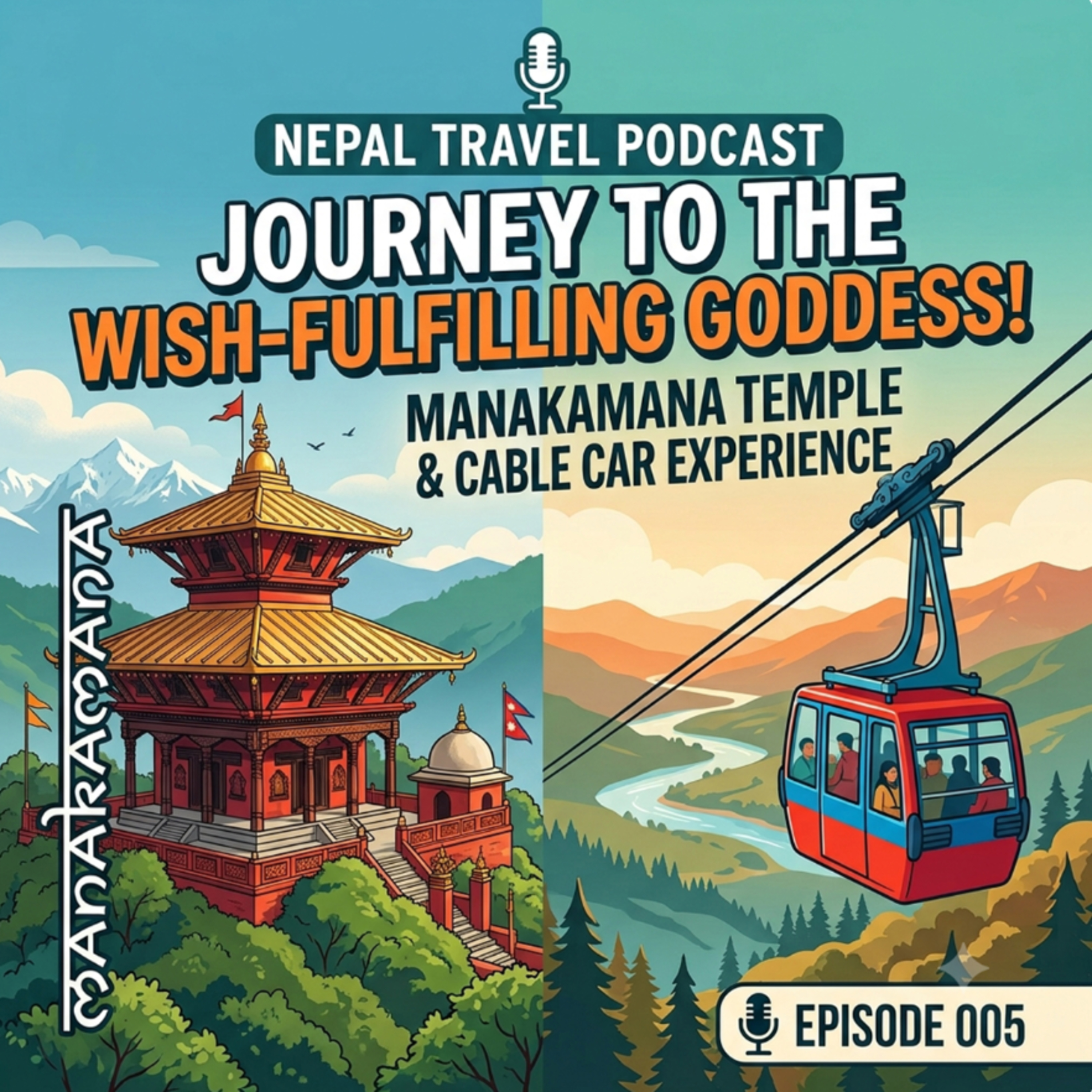
Discover the spiritual beauty of Manakamana Temple, one of Nepal's most iconic pilgrimage destinations, where thousands of devotees travel every year with the belief that…
▶ Listen on SpotifyShow notes & transcript →Follow the show →
🎧 Also on Apple Podcasts Castbox iHeartRadio
A glimpse of Manakamana


Introduction
Manakamana is one of Nepal\'s most beloved Hindu pilgrimage sites, the temple of a wish-fulfilling goddess perched on a ridge in Gorkha district, roughly halfway along the highway that links Kathmandu and Pokhara. For Nepalis the name is almost synonymous with hope: mana means "heart" and kamana means "wish," and the goddess Bhagwati, worshipped here as an incarnation of Parvati, is believed to grant the heartfelt desires of those who come in faith. Each year hundreds of thousands of devotees make the journey, many returning a second time to fulfil a vow once their wish has been answered.
What sets Manakamana apart from other shrines, and what makes it such a popular stop for travellers, is how you get there. In 1998 Nepal\'s very first cable car opened here, sweeping pilgrims from the valley floor at Kurintar up more than a thousand metres to the temple in about ten minutes, a ride that turned a strenuous half-day climb into a thrilling scenic glide over the Trishuli gorge. The combination of an ancient, living pilgrimage and a modern engineering marvel makes Manakamana equally rewarding for the devout and the simply curious.
Because it sits squarely on the Kathmandu–Pokhara highway, Manakamana is perfectly placed as a break in the long road journey between Nepal\'s two biggest tourist hubs. Many travellers stop here to stretch their legs, ride the cable car, take in the views and offer a quiet wish before continuing on. This guide covers the temple and its legend, the cable car and its fares, how to reach it from either city, the best time to visit, costs, food, where to stay and the practical tips that make a visit smooth.
Top Attractions
Manakamana Temple
The heart of the pilgrimage: a 17th-century pagoda shrine to the goddess Bhagwati, revered as an incarnation of Parvati, consort of Lord Shiva. The name itself carries the promise that draws crowds from across Nepal and India, mana meaning "heart" and kamana meaning "wish." Devotees believe the goddess grants the heartfelt wishes of those who come with faith, and many return to fulfil vows once a wish has been answered. The four-storey temple stands on a saddle-shaped ridge at around 1,300 m, its tiered roofs and brass finial visible across the surrounding hills.
Manakamana Cable Car
Nepal\'s first cable car, opened in 1998, transformed a hard day-long climb into a ten-minute ride and made Manakamana one of the country\'s most visited shrines. The Austrian-built gondola runs from the base station at Cheres, near Kurintar on the Kathmandu–Pokhara highway, up roughly 2.8 km to the hilltop, rising more than 1,000 m in altitude. The cabins glide over terraced fields, forest and the deep gorge of the Trishuli River, delivering some of the finest valley views in central Nepal along the way.
The Hilltop Bazaar & Viewpoints
From the upper cable-car station a short, lively lane of shops, tea stalls and offering stands climbs toward the temple, packed with vendors selling flowers, coconuts, vermilion, prasad and souvenirs. Beyond the bustle, the ridge opens to sweeping panoramas over the confluence of the Trishuli and Marsyangdi valleys, the surrounding Gorkha hills and, on a clear day, distant Himalayan peaks including the Manaslu and Annapurna ranges.
Pagoda Architecture & the Sacred Tree
The shrine is a classic example of Nepali pagoda temple architecture, a multi-tiered structure with carved wooden struts, a copper-gilt roof and a small courtyard worn smooth by generations of pilgrims. Beside the temple stands a venerable sacred tree, a focus of worship and shade where devotees rest, tie offerings and wait their turn for darshan (the auspicious sight of the deity).
The Goddess's History & King Ram Shah
The temple\'s origins are bound to the 17th-century Gorkha court of King Ram Shah and the legend of his queen, whose divine power was revealed after her death. The story links the goddess to the warrior-devotee Lakhan Thapa, traditionally honoured as the first priest of Manakamana, and his descendants are said to have served the shrine ever since, a continuous thread of worship stretching back centuries.
The Animal Sacrifice Tradition
As at many Bhagwati shrines in Nepal, animal sacrifice (chiefly goats, pigeons and roosters) has long been part of worship at Manakamana, offered by devotees in thanksgiving when a wish is fulfilled. The practice is most visible during festivals and on busy weekend days, with a designated area near the temple. Visitors who find it distressing can keep their distance; many pilgrims today also choose symbolic or vegetarian offerings of flowers, coconut and sweets instead.
Gorkha Durbar (Nearby Excursion)
Further into the district lies Gorkha Durbar, the hilltop fort-palace that was the birthplace of Prithvi Narayan Shah, the king who unified Nepal in the 18th century. It pairs naturally with Manakamana for travellers exploring the historic Gorkha heartland, though it is a separate trip up a winding hill road rather than a quick add-on from the temple itself.
The Old Pilgrim Foot Trail
Before the cable car, pilgrims reached the goddess on foot, a steep three-to-four-hour climb on stone steps from the valley floor. The old trail still exists and is walked by the devout and by hikers who want the journey as well as the destination; it can also serve as a memorable way down for those who prefer to ride up and walk back through villages and forest.
Cable Car Timings, Fares & Ride Duration
The questions every visitor asks first, answered up front. The Manakamana cable car runs daily, typically from around 9:00 a.m. to about 5:00 p.m., with the last ascent usually before closing time and hours often extended during Dashain and other major festivals. The ride takes about 10 minutes each way, covering roughly 2.8 km and climbing more than 1,000 m from the base station at Cheres (Kurintar) to the hilltop.
| Quick fact | Answer |
|---|---|
| Operating days | Daily, year-round (weather permitting) |
| Typical hours | ~9:00 a.m. – 5:00 p.m.; often extended on festival days |
| Ride duration | About 10 minutes each way (~2.8 km, 1,000 m+ climb) |
| Round-trip fare (foreigners) | Approx. NPR 800+; confirm at the counter |
| Nepali / SAARC nationals | Reduced fares; children pay less again |
| Base station | Cheres, near Kurintar, on the Kathmandu–Pokhara highway |
| Busiest times | Saturdays, Tuesdays, weekends and festivals (long queues) |
Fares and hours are reviewed periodically by the operator, so treat these as reliable guides rather than guarantees and confirm the current schedule at the ticket counter — especially around festivals, when both queues and running hours change. Arrive early on busy days: soon after opening you will walk almost straight on; by mid-morning on a Saturday the wait can stretch past an hour.
Going deeper: the complete cable car guide → · how to reach Manakamana → · full cost breakdown →
History & Religious Significance
The story of Manakamana reaches back to the 17th century and the court of King Ram Shah of Gorkha. According to the most widely told legend, Ram Shah\'s queen possessed hidden divine powers, known only to her devoted attendant, the warrior Lakhan Thapa. When the king died, the queen committed sati on his funeral pyre, but before doing so she is said to have assured Lakhan Thapa that she would reappear. Some months later a farmer ploughing his field struck a stone that began to flow with blood and milk; worship at the spot stemmed the flow, and the site was recognised as the goddess made manifest. Lakhan Thapa is honoured as the first priest of Manakamana, and tradition holds that his descendants have tended the shrine ever since.
The goddess of Manakamana is a form of Bhagwati, identified with Parvati, the consort of Lord Shiva and a fierce mother-goddess in her own right. Devotees come to ask for the fulfilment of specific, deeply held wishes, a child, a marriage, success in business, recovery from illness, safe passage, and the temple\'s enduring fame rests on countless stories of those wishes being granted. The expectation of return is part of the devotion: pilgrims who receive what they asked for are expected to come back and complete their vow with offerings and worship, which keeps a steady stream of visitors flowing year-round.
Manakamana also belongs to the wider sacred geography of Gorkha, the ancestral kingdom from which Prithvi Narayan Shah launched the 18th-century campaign that unified modern Nepal. The Shah dynasty held the goddess in particular reverence, and her shrine remained an important focus of royal and popular devotion through the centuries. That historical weight, layered onto a living tradition of wish-making, gives Manakamana a significance out of all proportion to its modest size, and explains why a hilltop temple in rural Gorkha became one of the most visited religious sites in the country once the cable car made it easy to reach. For travellers interested in Nepal\'s Hindu heritage, it pairs naturally with the great Shiva temple of Pashupatinath in Kathmandu.
What to See & Do
A visit to Manakamana is short and focused, but there is more to it than touching the temple and turning back. Here is what is worth doing on the hill:
- Ride the cable car both ways. The ascent and descent over the Trishuli gorge are an experience in themselves, sit by the window for terraced hillsides, forest and river views, and keep an eye out for distant snow peaks on a clear day.
- Make an offering and take darshan. Buy flowers, a coconut, vermilion or sweets from the bazaar stalls, join the queue and offer your wish to the goddess. Early morning is the most atmospheric time, with bells, incense and chanting.
- Walk the hilltop bazaar. The lively lane of shops and tea stalls between the cable-car station and the temple is full of colour, a good place to soak up the pilgrim atmosphere and pick up prasad or souvenirs.
- Soak in the viewpoints. Find a quiet spot on the ridge for sweeping panoramas over the Trishuli and Marsyangdi valleys and the surrounding Gorkha hills.
- Rest by the sacred tree. The old tree beside the temple is a shaded gathering point where pilgrims sit, tie offerings and pause between worship.
- Hike the old pilgrim trail. For those with time and energy, the historic stone-step trail from the valley floor (or walking down it after riding up) adds a rewarding journey through villages and forest.
- Extend to Gorkha Durbar. If you have a full day or more, the fort-palace birthplace of Prithvi Narayan Shah deeper in the district is a memorable historical excursion.
Most visitors spend two to four hours on the hill, long enough to ride up, worship, eat and enjoy the views before riding back down to the highway.
Best Time to Visit
The best time to visit Manakamana is during the cooler, clearer months of October to April, the same dry season that suits travel across central Nepal. Skies are generally clear, the cable car ride offers the best views of the Trishuli valley and distant peaks, and the weather on the ridge is pleasant. The monsoon (June–August) brings heavy rain, haze and the occasional landslide on the highway, though the hills turn lush and green and crowds thin out.
Timing also matters for crowds. Manakamana is busiest during major Hindu festivals, especially Dashain in autumn, when sacrifices and offerings peak, and Nag Panchami, as well as auspicious days through the year. Within any week, Saturdays and Tuesdays are the most crowded, as these are considered especially auspicious for worship at the goddess\'s shrine, and weekends in general draw heavy local traffic. Queues for both the cable car and the temple can become long on these days.
For a calmer experience, plan a visit on a weekday outside festival season and arrive early in the morning, ideally soon after the cable car starts running. You will beat both the queues and the midday heat, and have the temple and the views to enjoy at a gentler pace.
How to Reach Manakamana
Manakamana sits on a ridge above the Kathmandu–Pokhara highway (the Prithvi Highway), with the cable car base station at Cheres, near Kurintar. Reaching the temple is a two-stage journey: road to the valley floor, then cable car up the hill.
From Kathmandu
Kurintar is roughly three hours\' drive west of Kathmandu (about 100 km) along the Prithvi Highway, which follows the Trishuli River. You can drive yourself, hire a private car or take any Pokhara-bound tourist or local bus and ask to be dropped at the Manakamana cable car station. Many travellers visit as a day trip from Kathmandu, or simply break their onward journey here.
From Pokhara
From Pokhara the base station is about three and a half hours\' drive east (roughly 110 km), again along the Prithvi Highway. The same options apply: private car, or a Kathmandu-bound bus dropped at Kurintar.
A natural stop between the two cities
Because Manakamana lies almost exactly on the route between Nepal\'s two biggest tourist hubs, the most efficient way to see it is to build it into the road journey between Kathmandu and Pokhara rather than as a separate trip. Stop at Kurintar, ride the cable car up and back, then continue on your way, a memorable break in an otherwise long highway drive.
The cable car
From the base station the gondola climbs more than 1,000 m in about ten minutes, covering roughly 2.8 km up to the hilltop near the temple. The round-trip fare for foreign visitors is approximately NPR 800 or more (Nepali and SAARC nationals pay less, and there are reduced rates for children); fares are reviewed periodically, so confirm the current price at the ticket counter. Those who prefer the traditional approach can still walk up the old pilgrim trail in about three to four hours.
Costs & Cable Car
Manakamana is an inexpensive half-day outing; the main cost is the cable car. Approximate prices (2026 estimates):
| Item | Approx. cost | Notes |
|---|---|---|
| Cable car round trip (foreigner) | NPR 800+ | Reduced rates for Nepali and SAARC nationals and for children; confirm current fare at the counter |
| Offerings (flowers, coconut, vermilion, sweets) | NPR 100–500 | Sold by bazaar stalls near the temple |
| Meal on the hill or at Kurintar | NPR 200–600 | Dal bhat, momos, snacks and tea |
| Private car from Kathmandu/Pokhara (day) | NPR 8,000–15,000 | Split between a group; tourist/local buses are far cheaper |
The cable car runs daily, typically from early morning (around 9 a.m.) until late afternoon (around 5 p.m.), with hours sometimes extended on festival days, always check on arrival. There is usually no separate entry fee to worship at the temple itself; budget instead for the cable car, any offerings you wish to make, and a meal. Carry cash in Nepali rupees, as small vendors and the ticket counter may not accept cards.
Food & Where to Eat
Eating at Manakamana is simple, pilgrim-style fare rather than fine dining. The hilltop bazaar and the area around the cable-car stations have plenty of small eateries (bhattis) serving the Nepali staple dal bhat, rice with lentil soup, vegetable curry and pickle, along with momos (dumplings), noodles, fried snacks (pakora, sel roti) and endless glasses of milk tea.
Many stalls also sell prasad and sweets connected to the temple, as well as fresh fruit and the coconuts and offerings pilgrims buy for worship. Down at Kurintar on the highway, the riverside resorts and roadside restaurants offer a slightly wider menu and a comfortable place to eat before or after the cable car, with views over the Trishuli.
Food safety: stick to freshly cooked, hot food, drink bottled or treated water rather than tap, and choose busy stalls with high turnover. A simple dal bhat or a plate of momos with hot tea is the classic Manakamana meal.
Where to Stay
Most people visit Manakamana as a day trip or a short stop on the Kathmandu–Pokhara road and do not stay overnight. If you do want to linger, to catch the temple at dawn, walk the old trail, or simply rest by the river, there are two main options.
- On the hilltop: a handful of basic guesthouses and pilgrim lodges near the temple offer simple rooms, convenient for early-morning darshan before the day-trip crowds arrive. Standards are modest; bring a warm layer in the cooler months.
- At Kurintar / by the river: the valley floor around the cable-car base station has comfortable riverside resorts on the banks of the Trishuli, popular with travellers breaking the journey and with rafting and adventure groups. These are the more comfortable choice and a pleasant place to overnight.
For most itineraries, though, it makes more sense to sleep in Kathmandu or Pokhara and treat Manakamana as a few-hour highlight along the way.
Travel Tips
- Go early to beat the queues. Arrive soon after the cable car opens, especially on weekends and around festivals, when waits for both the gondola and the temple can be long.
- Avoid Saturdays and Tuesdays if you can. These auspicious days, along with Dashain and other festivals, draw the heaviest crowds; a weekday visit is far calmer.
- Dress modestly. Cover shoulders and knees out of respect at the temple, and remove shoes where required before entering the shrine area.
- Buy offerings at the bazaar. Flowers, coconut, vermilion and sweets are sold near the temple; agree the price first.
- Carry small cash. The cable car counter and stalls deal in Nepali rupees and may not take cards.
- Be prepared for animal sacrifice. It is part of traditional worship here and most visible on busy days; if it troubles you, keep your distance or visit on a quieter weekday morning, and consider symbolic offerings instead.
- Build it into your road trip. The smartest way to visit is as a break on the Kathmandu–Pokhara drive rather than a dedicated journey.
- Mind the weather. Skies are clearest October–April; the monsoon brings rain, haze and slower roads. The ridge can be cool and breezy, so bring a light layer.
- Watch your belongings in the crowded bazaar and cable-car queues, as you would at any busy site.
Frequently Asked Questions
What is Manakamana Temple famous for?
Manakamana is famous as the temple of a wish-fulfilling goddess in Gorkha, Nepal. Worshipped as a form of Bhagwati, an incarnation of Parvati, the goddess is believed to grant the heartfelt wishes of devotees who visit in faith. The temple is also famous for being reached by Nepal's first cable car.
What does the name Manakamana mean?
The name Manakamana comes from two words: mana, meaning heart, and kamana, meaning wish. Together they refer to the goddess who fulfils the heartfelt wishes of her devotees.
How much is the Manakamana cable car fare?
The round-trip cable car fare for foreign visitors is approximately NPR 800 or more, with reduced rates for Nepali and SAARC nationals and for children. Fares are reviewed from time to time, so check the current price at the ticket counter.
How long does the Manakamana cable car ride take?
The cable car ride takes about ten minutes each way. It covers roughly 2.8 km and climbs more than 1,000 metres from the base station at Kurintar up to the hilltop near the temple.
How do I reach Manakamana from Kathmandu?
Drive about three hours (around 100 km) west from Kathmandu along the Prithvi Highway to the cable car base station at Kurintar, then ride the cable car up. You can take a private car or any Pokhara-bound bus and get off at the Manakamana cable car station.
How do I reach Manakamana from Pokhara?
From Pokhara it is about a three-and-a-half-hour drive (roughly 110 km) east along the Prithvi Highway to the cable car base station at Kurintar, then up by cable car. A private car or any Kathmandu-bound bus dropping you at Kurintar both work.
Is Manakamana on the way between Kathmandu and Pokhara?
Yes. Manakamana sits almost exactly on the Kathmandu–Pokhara highway, so the easiest way to visit is to stop at Kurintar and ride the cable car up and back as a break in the road journey between the two cities.
Can you hike up to Manakamana instead of taking the cable car?
Yes. Before the cable car opened in 1998, pilgrims climbed the old stone-step trail from the valley floor, which takes about three to four hours. The trail still exists and is used by the devout and by hikers, and you can also ride up and walk back down.
What are the Manakamana cable car opening hours?
The cable car typically runs daily from around 9 a.m. to about 5 p.m., with hours sometimes extended on festival days. Always confirm the current timings when you arrive, as they can change.
What is the best time to visit Manakamana?
The best time is October to April, when skies are clear and the cable car ride offers the best valley and mountain views. To avoid crowds, visit on a weekday outside festival season and arrive early, as Saturdays, Tuesdays, weekends and festivals such as Dashain are very busy.
Is there animal sacrifice at Manakamana Temple?
Yes, animal sacrifice has long been part of traditional worship at this Bhagwati shrine, mainly goats, pigeons and roosters offered in thanksgiving. It is most visible on busy days and during festivals. Visitors who find it distressing can keep their distance, and many pilgrims today make symbolic offerings of flowers, coconut and sweets instead.
How old is Manakamana Temple?
The temple dates to the 17th century. Its origins are tied to the Gorkha court of King Ram Shah and the legend of his queen, with the warrior Lakhan Thapa honoured as the first priest of the shrine.
Is there an entry fee for Manakamana Temple?
There is usually no separate fee to worship at the temple itself. The main cost is the cable car round-trip fare; budget also for any offerings you wish to make and for food on the hill.
How much time do you need at Manakamana?
Most visitors spend about two to four hours on the hill, enough to ride up, take darshan at the temple, eat, enjoy the views and ride back down to the highway.
What can I do near Manakamana?
Deeper in Gorkha district you can visit Gorkha Durbar, the fort-palace birthplace of Prithvi Narayan Shah who unified Nepal. Manakamana also pairs naturally with stops in Kathmandu and Pokhara, and with the riverside resorts and rafting at Kurintar.
Reviews & Ratings
No reviews yet. Be the first to share your experience of Manakamana!
Official sources
Fees and rules on this page come from the bodies that set them. They do change, sometimes mid-season, so check the primary source before you pay anything.
- Nepal Tourism Board Official Nepal tourism informationntb.gov.np
By the BriefNepal Travel Desk
Researched and maintained by our Nepal-based editorial team and reviewed for accuracy. Last updated September 3, 2026. Prices, permits and conditions change, always verify before you travel. Spotted something out of date? Let us know.
Nepal Currency Converter
Live exchange rates for the Nepalese Rupee (NPR) against every world currency, handy for budgeting the prices in our guides.
Live mid-market rates. For information only, banks and exchanges apply their own margins.
Planning a trip to Nepal?
Join the BriefNepal Travel list for seasonal tips, new guides and our free Nepal trip-planning checklist. No spam, unsubscribe anytime.
