


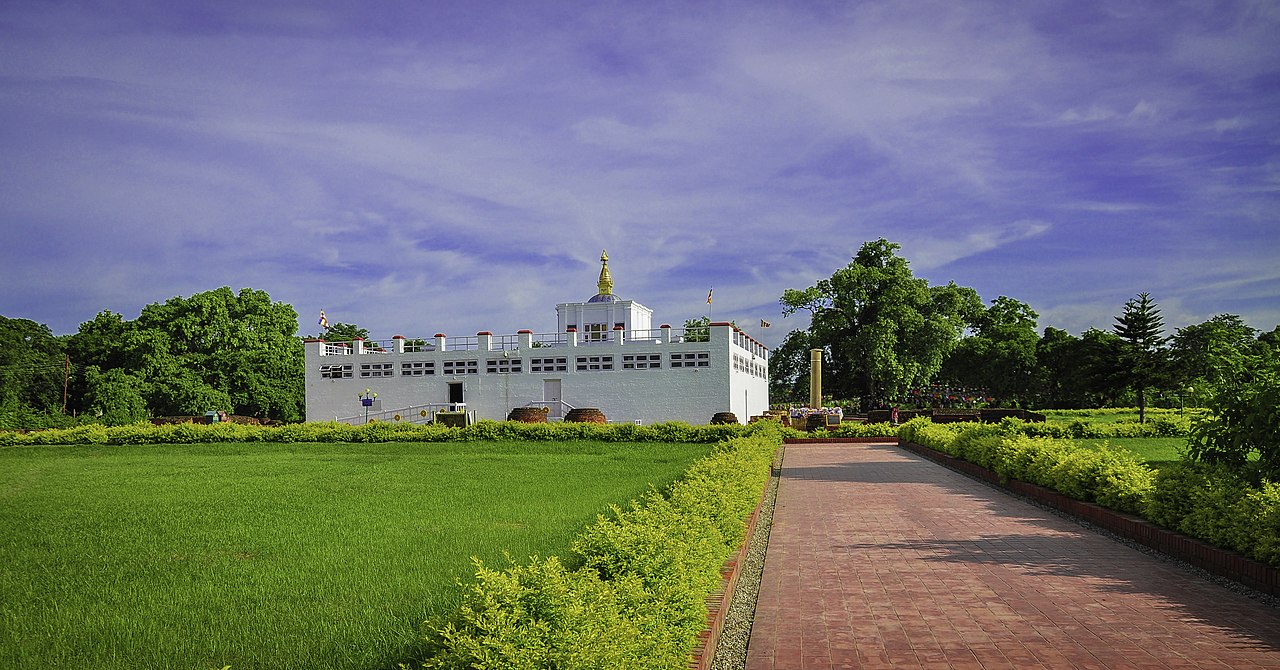

Manakamana Temple Nepal | Cable Car Journey to Nepal's Wish-Fulfilling Goddess
▶ Listen on Spotify Follow the show →
🎧 Also on Apple Podcasts Castbox iHeartRadio
About This Episode
Discover the spiritual beauty of Manakamana Temple, one of Nepal's most iconic pilgrimage destinations, where thousands of devotees travel every year with the belief that the Goddess Bhagwati fulfills sincere wishes. Perched atop a scenic hill in Gorkha District, the temple is famous not only for its deep cultural and religious significance but also for Nepal's first cable car ride, offering breathtaking views of the Trishuli River, lush green hills, and the Himalayan landscape.
In this episode of Nepal Travel Podcast, we explore the fascinating history and legends of Manakamana Temple, the unforgettable cable car experience from Kurintar, practical travel tips, the best time to visit, ticket information, nearby attractions, and everything you need to plan your journey with confidence.
Whether you're planning your first trip to Nepal, exploring Nepal's spiritual heritage, or searching for unique places beyond Kathmandu and Pokhara, this episode is your complete guide to one of the country's most cherished destinations.
📍 In This Episode
History and legend of Manakamana Temple
Why it is called the Wish-Fulfilling Goddess
Nepal's famous Manakamana Cable Car experience
How to reach Manakamana from Kathmandu and Pokhara
Best time to visit
Travel tips for pilgrims and tourists
Nearby attractions and scenic viewpoints
📖 Read the complete travel guide: https://briefnepal.com/travel/pilgrimage/manakamana
🎙️ Listen to more episodes: Nepal Travel Podcast
Full Transcript
Auto-generated transcript — may contain small errors.
Imagine, um, for just a moment that you carry this single burning wish like a desire so profound that it just occupies every quiet corner of your mind, you know? And now imagine that to even ask for this wish to be granted. You have to, well, you have to embark on a literal physical trial. Yeah, like a real test of endurance.
Exactly. You find yourself standing at the base of a Himalayan mountain, staring up at this near vertical path of just uneven stone steps. And for the next three or four hours, it is just you, the punishing incline, the elements and this desperate hope that whoever is waiting at the top is actually listening. I mean, it's the ultimate physical manifestation of devotion, really, the grueling nature of that climb.
It acts as a sort of like a psychological crucible. Right. You suffer, your muscles are burning, you literally sweat out your worldly comforts. And by the time you actually reach the summit, your dedication is just unquestionable.
As you earned it. Exactly. The struggle itself is, it's almost like a down payment on the miracle you're asking for, which is how it worked for centuries. But here is where the story pivots in a really wild way.
Because today, you can bypass that four hour sweat drenched trial entirely. Oh, completely. You can just step off a busy highway, climb into a sleek Austrian engineered gondola and glide effortlessly over this massive river gorge. And like 10 minutes later, you step out at that exact same sacred summit, ready to make your wish without a single drop of sweat on your brow, which creates one of the most fascinating cultural collisions in the modern world.
If you ask me, it really does. You have this ancient, deeply rooted mysticism coming face to face with the sheer convenience of, you know, late 20th century alpine infrastructure. It forces us to examine what happens to a sacred space when the barrier to entry is completely removed. And that collision is our focus for this deep dies.
Today, we're immersing ourselves in a comprehensive 2026 travel and temple guide from brief Nepal. And it's all about the Manicamana temple in Nepal's Gorkha district. It's such a great source. It is.
And for you, the listener, we are bypassing those surface level tourist bullet points. We want to really explore the mechanics of this pilgrimage, the centuries old royal secret at its foundation. And you know, the architectural and logistical realities of visiting a wish fulfilling goddess who just happens to have a world class cable car in her front yard. Yeah, but to truly understand the gravity of that summit, we, we can't start with the cable car.
Right, we have to go back. We have to start with psychology of the destination itself. So the name of the temple, Manicamana, it's actually a combination of two Nepali words. Okay.
Mana translates to the heart or like the mind's inner core. And kamana translates to a wish or a desire. So it's literally the wish of the heart. Exactly.
It tells you right away that this isn't a place for casual observance. You're not just popping in to say hi. No, not at all. The temple is dedicated to the Hindu goddess Bhagwati.
And in this specific context, Bhagwati is revered as a really powerful incarnation of Parvati, the divine consort of Lord Shiva. Okay, got it. But she isn't worshiped here as just a general all-purpose deity. She's highly specialized.
Devotees travel to this specific ridge because she's renowned for granting highly consequential, tangible requests. So we're talking about the big stuff. The biggest. We're talking about the desire to conceive a child, the search for a prosperous marriage, recovery from a really severe illness, or even, you know, the success of a life altering business venture.
Wow. So people are literally climbing into the clouds to negotiate the most pivotal moments of their lives. They really are. But I guess the obvious question is why this specific spot?
Because I mean, there are thousands of shrines in the Himalayas. Absolutely. So the origin story tethered to this specific 1300 meter ridge. It's rooted in the 17th century Gorkha court of King Ram Shah.
Right. And that historical legend is built entirely on a foundation of hidden identity, which makes it so compelling. Yeah. King Ram Shah was a prominent ruler, sure, but the true power in his court resided quietly in his queen.
According to the tradition, the queen actually possessed immense divine powers. She was an earthly manifestation of the goddess herself. Wait, really? Yes.
But she kept this entirely concealed from the king and the public. That is wild. And the only person who knew the truth was this man named Lakhan Thapa, right? Exactly.
Lakhan Thapa. He was a trusted attendant and a warrior in the royal court. And it is just such a fascinating dynamic to consider like, think about it, you are a royal bodyguard responsible for protecting the queen's physical safety. Yeah.
But you are simultaneously the sole keeper of the most profound cosmic secret in the kingdom. It's almost like a like a superhero's secret identity. Oh, that's a great way to put it. Right.
Like you see her true divine nature while the rest of the court, including the king, just sees regular royalty. It creates this bond of profound spiritual intimacy and loyalty between them. But that loyalty is severely tested when King Ram Shah actually passes away. Adhering to the aristocratic traditions of that era, the queen commits Sati, which means she chooses to sacrifice herself on her husband's funeral pyre, which to an outsider just seems like a tragic definitive end to her story.
Like the divine presence has just gone in a column of smoke. It would seem that way. Yes. But before she steps into the flames, she pulls Lakhan Thapa aside.
Okay. And she assures her devoted warrior that this physical death is just an illusion. She explicitly promises him that she will return. And the mechanism of that return, according to the guide, is incredibly vivid.
So months pass, right? And a local farmer is out working his terraced fields on this high ridge. He's driving his plow through the earth when the blade strikes a stone. But the stone doesn't chip.
Instead begins to bleed, which is just a striking image. It is blood and milk, literally pour out of the earth from this rock. And the symbolism of that moment is immense in Hindu cosmology. Blood represents the vital life force lake, the raw visceral energy of existence and sacrifice.
And the milk milk represents maternal purity, sustenance, and divine grace. So the convergence of those two things from a single stone is an undeniable marker of the goddess's dual nature. She is both fierce and nurturing. And the farmer is just terrified to understand about completely the locals eventually realized that by worshiping at the stone, the miraculous flow of blood and milk is actually stemmed.
And then Lakhan Thapa, who has been waiting all this time for the queen to fulfill her promise, he recognizes this stone. He knows it's her. Exactly. It is her.
The goddess is manifested exactly as she said she would. And because Lakhan Thapa was the only one who truly knew her in life, he is recognized as the only one fit to serve her in this new form. So he becomes the very first priest of the Manicomana shrine. But the detail that really grounds this entire legend in reality, the thing that blew my mind, is that the story doesn't stay trapped in the 17th century.
No, it doesn't. If you walk into that temple courtyard today in 2026, the priest conducting the rituals is a direct descendant of Lakhan Thapa. It's an unbroken 400 year lineage. It's just incredible.
One family has guarded this manifestation of divine power generation after generation. It lends just this incredible weight to the site. It absolutely anchors the mysticism in a continuous human reality. And because the descendants remained and the goddess's reputation for granting wishes grew over the years, Manicomana became a massive epicenter for pilgrimage, which brings us back to the geography.
Because for hundreds of years, to ask the goddess for a favor, you had to conquer that brutal three to four hour climb from the Trishulli River Valley all the way up to the ridge. Right. Until 1998, that is the year Nepal introduced its very first cable car system built specifically to connect the valley floor to the Manicomana Summit. Built by the Austrians, right?
Yep. Constructed by the Dopelmere Group, an Austrian company famous for Alpine ski lifts. Yeah. And the engineering achievement here really cannot be overstated.
The logistics of the construction are staggering. They didn't just build a lift up a gentle hill, you know. The bay station sits in a town called Chairs. And from there, the gondola line stretches for 2.8 kilometers.
It has to cross directly over the massive raging gorge of the Trishulli River and then scale a near vertical ascent over dense forests and terraced farmland. It rises more than 1000 meters in altitude. So it literally turned a half day physical ordeal into a scenic, ten minute glide. But I actually have to push back a little on the philosophical implications of this.
Okay. Let's hear it. Because earlier, we talked about the four hour climb being a crucible, right? Doesn't completely removing the struggle kind of commodify the divine.
Like if I could just buy a ticket, float over the river and demand my wish, doesn't that inherently dilute the spiritual currency of the pilgrimage? Doesn't the struggle validate the wish? Well, it is a really compelling argument. And it's a tension that echoes across a lot of modernized sacred sites globally.
Yeah. But it's very easy to romanticize the necessity of physical struggle when you have healthy knees and a strong heart, you know? Oh, that's a fair point. Consider the reality of who is actually seeking out a wish fulfilling goddess.
Often it's the elderly, the profoundly sick people with severe mobility issues or families carrying young infants. The people who are in the most desperate need of Bagwadi's grace were precisely the ones physically locked out by that four hour climb. Wow. That completely reframes the entire infrastructure for me.
It isn't about luxury at all. It's about democratization. Exactly. The cable car didn't cheapen the devotion.
It removed an ablest barrier. It allowed the grandmother who has worshipped the goddess from afar her entire life to finally see the shrine with her own eyes. That's beautiful. And it created this unique duality because for the purists who genuinely believe the physical sacrifices integral to their vow, the ancient stone path is still there.
You can hike it tomorrow if you want. Right. They didn't pave over it. No.
But the gondola ensures that the sanctuary is accessible to anyone whose heart requires it. It actually turned Manacamana into one of Nepal's most visited shrines. So you can literally choose your own spiritual adventure. Yeah.
But regardless of whether you spent four hours sweating on the stone slopes or 10 minutes taking photos in the gondola, the destination is identical. Yes. The destination remains the same. And the sensory transition when you arrive at the summit is jarring in the best way possible.
From what the guide says, you don't step out into this silent meditative monastery. No, not at all. You step directly into a vibrant chaotic hilltop bazaar. The whole pathway leading from the cable car station to the temple is entirely aligned with vendors.
It sounds like an explosion of color and sound. You have shops selling vibrant vermilion powder, marigold garlands, and coconuts for offerings. Yeah, super lively. And interspersed among the religious vendors are traditional body's local Nepali tea houses and eateries.
You can literally smell steam rising from fresh momos and the rich earthy scent of Dalbot, the traditional rice and lentil soup, just mixing with heavy clouds of incense. It is the sound of life happening right on the edge of the sacred. You navigate this bustling corridor and it slowly funnels you into the central courtyard. And there, standing in stark contrast to the modern bazaar is the Manacamana temple itself.
And the architecture is just a breathtaking example of a classic Nepali pagoda style. It's a four story structure. Right. And those multiple tiers aren't just decorative, right?
They traditionally serve to elevate the structure toward the heavens while simultaneously protecting the inner sanctum from the harsh mountain elements. Yeah, every detail is intentional. The structure supported by these intricately carved wooden struts and each one details different deities and mythological scenes. It is crowned with a brilliant copper guilt roof that just catches the Himalayan sun.
Oh, I bet that's stunning. It really is culminating in a shining brass finial at the very top. And the stone courtyard surrounding it has literally been worn smooth and concave by the bare feet of millions of pilgrims over the centuries. And nestled right beside this imposing pagoda is a massive venerable sacred tree.
Yes. And that tree serves a dual purpose. Spiritually, it acts as a living anchor for the site. It's a place where devotees tie strings and leave offerings.
Practically, practically, it provides a massive canopy of shade. The weight for Darshan, which is the auspicious moment of viewing and interacting with the deity in the inner sanctum, can take hours on busy days. So the tree offers a communal gathering space to rest. And while you sit under that tree, you are surrounded by one of the most dramatic landscapes on Earth.
Because you are perched 1300 meters up on this saddle shaped ridge, the vistas are unbelievable. Breasttaking. You're looking down at the confluence of the Trishuli and Marsangi River valleys. And if you time your trip for a clear day, you can look out across the horizon and actually see the jagged snow-capped peaks of the Manaslu and Annapurna mountain ranges.
It really is a profound environment to make a wish. But we have to examine the specific mechanics of making a wish at Manacamana, because it operates on a very strict spiritual economy. Okay, what do you mean by that? Well, it is a binding contract.
So you don't just like drop a coin in a well and hope for the best. Not at all. You are making a solemn vow. The implicit agreement when you approach Pagwadi is that if she marshals her divine energy to grant your specific desire, you are obligated to return.
The fulfillment of the wish demands a journey of Thanksgiving. This cycle of petition and gratitude is basically the engine that drives a massive percentage of the temple's daily visitors. In the nature of that Thanksgiving can be incredibly visceral, as the text notes. When people return to fulfill their vows, it frequently involves traditional animal sacrifice.
It does, yeah. The guide specifically mentions goats, pigeons, and roosters being offered to the goddess. And I think for a lot of international visitors, or even just modern urbanites, walking out of a sleek gondola and encountering a blood sacrifice on a Tuesday morning could be a deeply shocking experience. It can be very jarring, but it's important to understand the why behind the practice.
In Hindu traditions, concerning fierce manifestations of the divine feminine-like Bhagwadi blood sacrifice is not viewed as cruelty. It's an energetic exchange. The vital life force of the animal is offered to appease the fierce energy of the goddess, basically thanking her for utilizing that same formidable power to alter the course of the pilgrim's life. It's like an ancient technology of devotion, but what is fascinating is how the tradition demonstrates flexibility.
The text points out that if a visitor is distressed by the sacrifices, the designated area is easily avoided. You can just keep your distance. Absolutely. More importantly, it notes a rising trend of pilgrims opting for symbolic vegetarian offerings instead, showing how ancient traditions can kind of adapt to different comfort levels.
Yeah. Devotees will offer sweets, flowers, or most commonly, coconuts. Smashing a coconut is an incredibly powerful symbolic substitute. Oh, how so?
Well, the hard fibrous outer shell represents the human ego and worldly attachment. By forcefully breaking it open to reveal the pure white fruit and water inside, you are symbolically shattering your ego and offering your purest self to the goddess. Wow. The tradition bends to accommodate modern sensibilities without breaking its core covenant.
A 17th century goddess, accommodating 21st century values, accessed by 20th century Austrian engineering. It is just brilliant. It's a perfect synthesis. So if you, our listener, are actually traversing a poll in 2026, how does visiting this remarkable paradox fit into your real world itinerary?
Yeah. Geographically, it sounds like it was perfectly positioned. It really is. The cable car's base station at shares sits directly on the Prithvi highway.
And if you know anything about navigating Nepal, you know, the Prithvi highway is the absolute jugular vein of the country's tourism and transit. Right. It is the primary artery connecting the capital city of Kathmandu in the east with the lakeside hub of Pokhara in the west, roughly three hours from Kathmandu and three and a half from Pokhara, which makes Manakamana the ultimate road trip fit stop. Anyone who has traveled over land in Nepal knows how physically exhausting the roads can be completely exhausting.
Instead of just pulling over at a dusty gas station to stretch your legs, you pull off the highway, buy a ticket, and literally launch into the clouds. You eat incredible local food in the bazaar, make a wish with a goddess, interact with 400 years of history, and then glide back down to your car and get back on the highway. It completely disrupts the monotony of transit. And logistically, it is highly accessible.
The guide notes that as of 2026, a round-trip ticket for a foreigner is roughly 800 Nepali rupees, which the source's currency converter shows is roughly five or six US dollars. That is an astonishing value for a world-class alpine lift. It is. The pricing is tiered, offering reduced rates for Nepali citizens and travelers from neighboring South Asian countries.
This ensures it remains economically accessible for the local population who really rely on it for spiritual purposes. That's great. And beyond the ticket and whatever offerings or food you purchase, there is no entry fee for the temple courtyard itself. But the timing of your visit requires some strategic planning.
The guide is very explicit about when to go to actually optimize the experience. Because weather dictates everything in the Himalayas. Of course. The optimal window is the dry season stretching from October to April.
The skies are crisp, meaning your chances of actually seeing the Annapurna and Manasulu ranges are incredibly high. If you go during the monsoon season from June to August, not only is the highway travel precarious, but the mountaintop is often entirely swallowed by thick, impenetrable clouds. So, October to April is the sweet spot. But even in the perfect weather of, say, November, there is a massive caveat in the text about which day of the week you pull off the highway.
Yes. This is perhaps the most vital logistical advice in the guide. Avoid visiting on Tuesdays and Saturdays. Wait, why those two days specifically?
It ties back to Hindu astrology and tradition. Tuesday is ruled by Mars and Saturday is ruled by Saturn. In Vedic astrology, these planets represent intense, challenging, and often fierce energies. Oh, interesting.
Consequently, these days are traditionally designated as highly auspicious days for worshipping fierce deities like Bhagwati to appease those planetary influences. So, because they are the most spiritually potent days, they draw the most intense local crowds. Exactly. On a Tuesday or Saturday, or during a major autumn festival like Deshaen or Nagpanchami, that quick 10-minute convenience completely vanishes.
The line just aboard the gondola at the base station can stretch for over an hour. Oh, wow. And once you reach the top, the cue to enter the inner sanctum for Darshan can take equally as long. And if you were using this as a transit break between Kathmandu and Pokhara, spending four hours standing in a line kind of defeats the purpose of the pitstop.
Yeah, it does. So, the strategy is to go on a Wednesday or Thursday, right? Arrive right when the lift opens around 9 a.m. to beat the midday heat and carry small denominations of Nepali cash, because the hilltop vendors and tea stalls probably don't swipe credit cards.
Definitely bring cash. And arriving early on a weekday allows you to actually absorb the atmosphere of the site rather than just navigating a massive crush of humanity. It lets you hear the bells instead of the crowds. You know, when you step back and look at the entirety of Manicamana, it really is a beautiful contradiction.
It is. It's a deeply rooted 17th century spiritual site that didn't retreat from the modern world. It embraced late 20th century infrastructure to share its wish fulfilling promise with millions of people. It took a legend of a bleeding stone and a hidden queen, and it strung a steel cable across a gorge to ensure that anyone, regardless of their physical limitations, could reach out and ask for hope.
Because traditions do not survive by remaining frozen in amber. They survive by adapting. Manicamana proves that ancient vowels in Austrian engineering can exist in the same breath, serving the exact same human need. The need to know that someone is listening when you ask for your heart's wish.
Before we wrap up today, I want to leave you, the listener, with a final thought to mull over based on the text. Oh, this is a good one. We talked about the direct descendants of La Campapa, the queen 17th century warrior attendant, who still serve as the high priests of the temple today. Put yourself in their shoes for just a moment.
You belong to a family tasked with guarding an intimate 400 year old royal secret. Your ancestor watched a queen step into a fire and return in stone. But today, in 2026, your office is located at the summit terminal of a high-speed gondola. Every single day, you watch thousands of tourists, vloggers, and casual travelers step out of a machine, buy a coconut, and ask your family's goddess for a favor.
How does a family preserve the quiet magic of a sacred vow in the face of mass 10-minute convenience? It's a huge question. It's an incredible psychological tightrope, and that family has been walking it flawlessly for centuries. Thank you for joining this deep dive.
Keep questioning the world around you, look for the ancient stories hiding behind modern infrastructure, and keep exploring.
Guides Mentioned in This Episode
 KathmanduLiving temples, medieval squares and the gateway to Nepal.
 PokharaLakeside calm beneath the Annapurna and Machhapuchhre peaks.
 GorkhaThe hilltop cradle of modern Nepal — birthplace of Prithvi Narayan Shah and the Gurkhas.
 ManakamanaThe wish-fulfilling goddess, reached by Nepal's first cable car.
Planning a trip to Nepal?
Join the BriefNepal Travel list for seasonal tips, new guides and our free Nepal trip-planning checklist. No spam, unsubscribe anytime.