


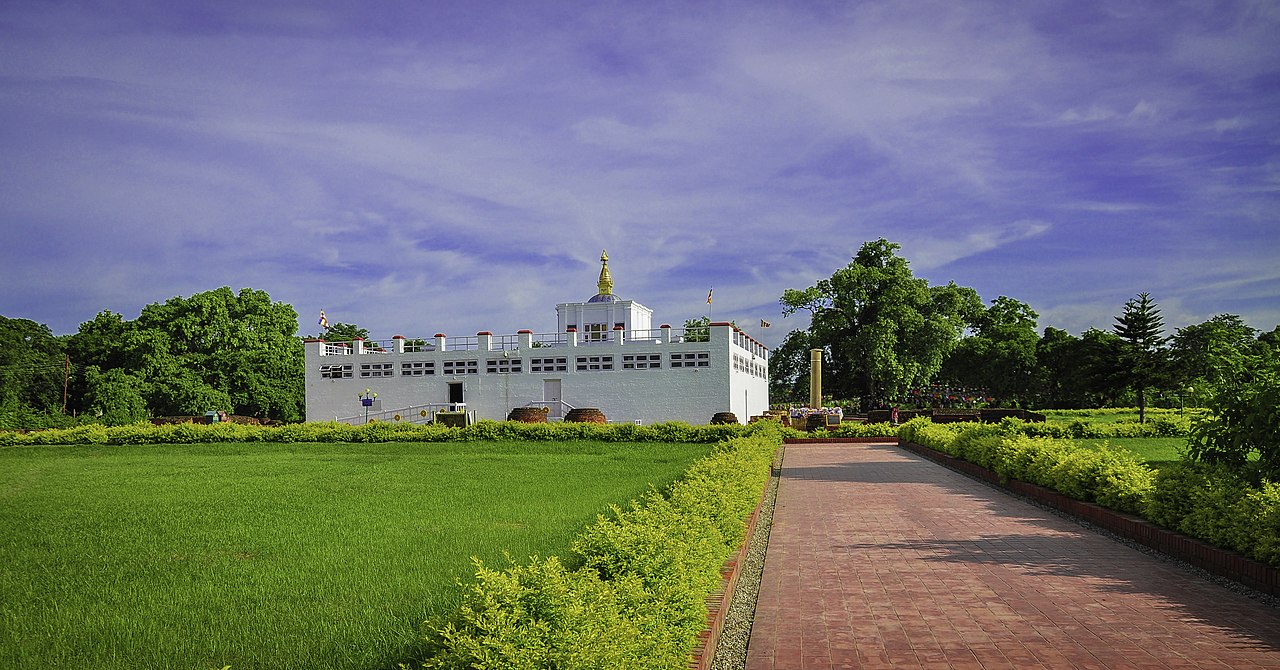


Gorkha Travel Guide
Perched above the hills of central Nepal, Gorkha is where the nation was born — a historic fort-town of royal palaces, sacred temples and sweeping views of the Manaslu Himalaya.
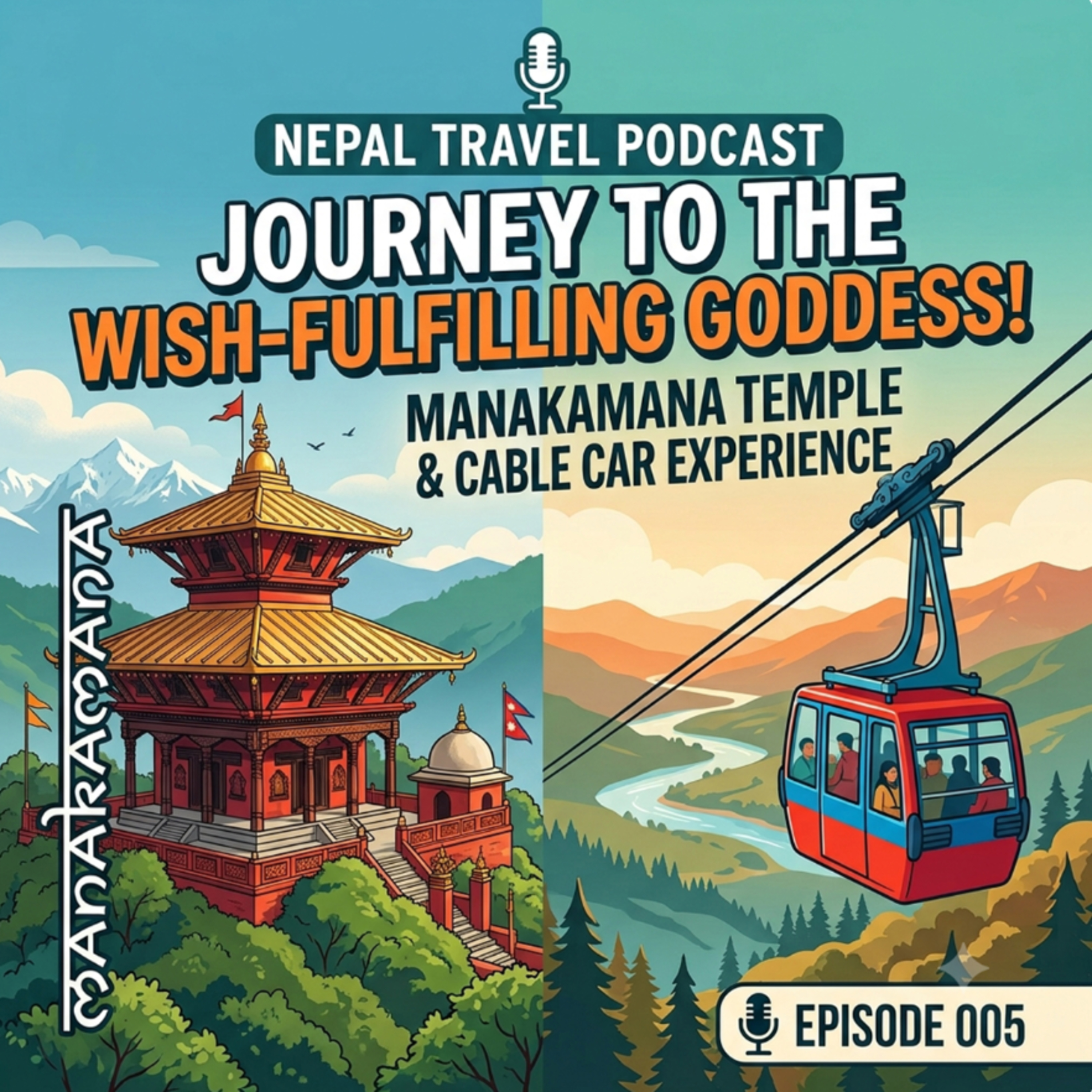
Discover the spiritual beauty of Manakamana Temple, one of Nepal's most iconic pilgrimage destinations, where thousands of devotees travel every year with the belief that…
▶ Listen on SpotifyShow notes & transcript →Follow the show →
🎧 Also on Apple Podcasts Castbox iHeartRadio
A glimpse of Gorkha


Introduction
Gorkha is a historic hill town in Gandaki Province, central Nepal, famous as the cradle of the modern nation. It was from the fortified palace of Gorkha Durbar, perched on a ridge above the town, that King Prithvi Narayan Shah set out in the 18th century to unify Nepal's scattered principalities into a single kingdom. The town also gives its name to the legendary Gurkha soldiers.
Today Gorkha rewards visitors with a powerful mix of history, living religion and Himalayan scenery: a steep climb to a royal fort-temple, panoramic views of Manaslu and Himalchuli, and an authentic, uncrowded hill-town atmosphere. It sits just off the main Kathmandu–Pokhara highway, making it an easy and rewarding detour.
Top Attractions
Gorkha Palace-Fort (Gorkha Durbar)
Crowning a ridge high above the town, Gorkha Durbar is the magnificent palace-fortress from which the Shah kings launched the unification of Nepal. A masterpiece of Newar craftsmanship in wood and stone, it combines a royal palace, the sacred Kalika Temple and the Gorakhnath cave-shrine on one fortified ridge, with sweeping views over the Himalaya and the hills. Reaching it means climbing a long stone stairway of around 1,500 steps from the town — a pilgrimage in itself. Note that as a living temple, parts have a strict dress code and some areas are off-limits to non-Hindus.
Gorakhnath Cave & Temple
Set into the Durbar ridge is the cave-shrine of Gorakhnath, the patron saint-yogi after whom Gorkha — and the Gurkhas — are named. This deeply revered spot draws sadhus and pilgrims, and its mystical atmosphere is central to the site's spiritual importance.
Kalika Temple
The Kalika Temple within the Durbar is one of Nepal's most powerful Shakti shrines, dedicated to the goddess Kali. Its interior is closed to the public and even priests are said to approach with their eyes covered; devotees worship from outside, and the temple is especially thronged during Dashain.
Upallokot (Upper Fort Viewpoint)
A short, steep walk above the Durbar leads to Upallokot, the highest point of the old fort. At around 1,500 m it offers a breathtaking panorama — Manaslu, Himalchuli, Buddha Himal and Ganesh Himal to the north, and ridge after ridge of green hills falling away below. It is a superb sunrise spot.
Manaslu & Himalayan Views
Gorkha is one of the best balcony-towns for the Manaslu massif (8,163 m), the world's eighth-highest peak, along with Himalchuli and Ganesh Himal. On clear autumn and winter mornings the snow wall glows above the town, and Gorkha is the historic gateway to the Manaslu Circuit and Tsum Valley treks further north.
Tallo Durbar (Gorkha Museum)
Down in the town, the restored Tallo Durbar ('lower palace') houses the Gorkha Museum, with exhibits on the Shah dynasty, the unification campaign, local culture and the region's history — a good, shaded complement to the climb up to the fort.
Prithvi Narayan Shah's Birthplace
Gorkha is revered as the birthplace of King Prithvi Narayan Shah (born 1723), the visionary ruler who unified the small hill states into modern Nepal. The town wears this heritage proudly, and a statue and memorials mark his legacy as the founder of the nation.
Manakamana Temple (nearby)
About 25 km away in the same district is Manakamana, the wish-fulfilling goddess reached by Nepal's first cable car — an easy and popular add-on to a Gorkha trip.
History
Gorkha was the seat of a small but ambitious hill kingdom ruled by the Shah dynasty. In 1743, Prithvi Narayan Shah ascended the Gorkha throne and began a decades-long campaign of conquest and diplomacy, culminating in the capture of the Kathmandu Valley in 1768–69 and the founding of a unified Nepal. The Shah kings ruled the country from then until 2008.
The kingdom's soldiers became known as Gurkhas, and after the Anglo-Nepalese War (1814–16) their reputation for courage led to their recruitment into the British and later Indian armies — a tradition that continues today. In April 2015, Gorkha District was the epicentre of the devastating 7.8-magnitude earthquake; the historic Durbar was damaged but has since been carefully restored.
Things to Do
- Climb to Gorkha Durbar. Tackle the ~1,500-step stone stairway to the palace-fort, Kalika Temple and Gorakhnath cave on the ridge.
- Catch sunrise at Upallokot. Continue above the Durbar for the finest viewpoint over Manaslu, Himalchuli and Ganesh Himal.
- Visit the Gorkha Museum (Tallo Durbar). Learn the story of the Shah dynasty and Nepal's unification.
- Soak up the town. Wander the bazaar, temples and traditional houses of this relaxed hill town.
- Add Manakamana. Ride Nepal's first cable car to the wish-fulfilling goddess, 25 km away.
- Trek further north. Gorkha is the historic gateway to the Manaslu Circuit and Tsum Valley.
Best Time to Visit
The best time to visit Gorkha is autumn (October–November) and spring (March–April), when skies are clear, the climb is comfortable and the Himalayan views are at their sharpest. Winter (December–February) is cold but offers crisp, clean mountain panoramas. Avoid the monsoon (June–September), when clouds hide the peaks and the stone steps can be slippery. The Dashain festival (Sep/Oct) is a spectacular but very busy time at the Kalika Temple.
How to Reach Gorkha
By road
Gorkha lies off the Prithvi Highway between Kathmandu and Pokhara. Drivers turn north at Abu Khaireni for the ~24 km road up to town. From Kathmandu it is around 4–5 hours (≈140 km); from Pokhara around 3–4 hours. Direct buses run from Kathmandu's Gongabu (New Bus Park), or take any Pokhara-bound bus and change at Abu Khaireni. Private cars and jeeps are faster and more flexible.
Getting around
The town is walkable, and the Durbar is reached on foot up the stone stairway (allow 1–1.5 hours). A newer road and steps reach partway up for those who prefer a shorter climb.
Where to Stay & Eat
Gorkha has a modest range of budget guesthouses and a few mid-range hotels in and around the bazaar, several with mountain views — enough for a comfortable night or two. For food, local dal bhat, Newari and Nepali dishes dominate, with simple teahouses and lodge restaurants serving hearty, inexpensive meals. Carry some cash, as card facilities are limited outside the main hotels.
Travel Tips
- Start the climb early to beat the heat and catch the clearest mountain views.
- Dress respectfully at the Durbar and Kalika Temple; follow the dress code and photography restrictions, and remove leather items where asked.
- Wear good shoes — the stone stairway is long and uneven.
- Bring water and sun protection; there is little shade on the steps.
- Combine it with Manakamana, Bandipur or a Pokhara trip for a rewarding loop.
Frequently Asked Questions
Why is Gorkha famous?
Gorkha is famous as the birthplace of King Prithvi Narayan Shah, who unified Nepal in the 18th century, and as the home of the historic Gorkha Durbar palace-fort. It also gives its name to the legendary Gurkha soldiers.
What is there to see in Gorkha?
The main sights are Gorkha Durbar (the hilltop palace-fortress), the Kalika Temple and Gorakhnath cave-shrine within it, the Upallokot viewpoint, the Gorkha Museum at Tallo Durbar, and superb views of Manaslu and Himalchuli. The Manakamana temple is a popular nearby add-on.
How do I get to Gorkha from Kathmandu?
Gorkha is about 4–5 hours from Kathmandu by road. Take the Prithvi Highway towards Pokhara and turn north at Abu Khaireni for the 24 km road up to Gorkha. Direct buses run from Gongabu Bus Park, or you can change at Abu Khaireni; private cars are quicker.
How many steps are there to Gorkha Durbar?
The stone stairway from the town up to Gorkha Durbar has roughly 1,500 steps and takes about 1 to 1.5 hours to climb. A newer road and steps reach partway up for a shorter walk.
What is the best time to visit Gorkha?
October–November and March–April are best, with clear skies and sharp Himalayan views. Winter is cold but very clear, while the monsoon (June–September) hides the mountains and makes the steps slippery.
Can you see the Himalayas from Gorkha?
Yes. On clear mornings Gorkha offers excellent views of Manaslu (8,163 m), Himalchuli, Buddha Himal and Ganesh Himal, especially from the Upallokot viewpoint above the Durbar.
Was Gorkha affected by the 2015 earthquake?
Yes, Gorkha District was the epicentre of the April 2015 earthquake. The historic Gorkha Durbar was damaged but has since been restored, and the town is fully open to visitors.
Reviews & Ratings
No reviews yet. Be the first to share your experience of Gorkha!
Official sources
Fees and rules on this page come from the bodies that set them. They do change, sometimes mid-season, so check the primary source before you pay anything.
- Nepal Tourism Board Official Nepal tourism informationntb.gov.np
By the BriefNepal Travel Desk
Researched and maintained by our Nepal-based editorial team and reviewed for accuracy. Last updated August 18, 2026. Prices, permits and conditions change, always verify before you travel. Spotted something out of date? Let us know.
Nepal Currency Converter
Live exchange rates for the Nepalese Rupee (NPR) against every world currency, handy for budgeting the prices in our guides.
Live mid-market rates. For information only, banks and exchanges apply their own margins.
Planning a trip to Nepal?
Join the BriefNepal Travel list for seasonal tips, new guides and our free Nepal trip-planning checklist. No spam, unsubscribe anytime.
