



Shri Dineshwarnath Mahadev Mandir, Manara
In the village of Manara in Mahottari district, about twenty minutes off the road between Jaleshwar and Janakpur, stands Shri Dineshwarnath Mahadev Mandir, a Shiva temple that most maps have never heard of and that thousands of Maithil families in the surrounding villages have been walking to for generations.
A glimpse of Manara Mahadev
Introduction
Shri Dineshwarnath Mahadev Mandir, known locally and to most visitors simply as Manara Mahadev Mandir, is a Hindu temple of Lord Shiva in the village of Manara, in Manara Shiswa Municipality, Mahottari district, Madhesh Province, in the eastern Terai plains of Nepal. It sits roughly 20 km west of Janakpur and 12–15 km northwest of Jaleshwar, the district headquarters, at about 26.73°N, 85.75°E and around 70 m above sea level.
It is not a monument, and this guide will not pretend otherwise. There is no ticket office, no signboard in English, no listing in the national tourism inventory. What Manara Mahadev is instead is a living local shrine: the temple that the villages of Manara Shiswa actually use, that fills on the Mondays of Shrawan and on Maha Shivaratri, and that families return to for the vows and thanksgivings that mark out a life. Nepal has thousands of these, and they are where the country's religious life mostly happens; almost none of them are written up anywhere a traveller can find.
That is the gap this page fills. Below you will find what is actually known about the temple and how we know it, when it is worth timing a visit, exactly how to reach it from Janakpur, Jaleshwar, Kathmandu or the Indian border, what it costs, where to eat and sleep, and how to behave as a guest at a shrine where you will very likely be the only outsider. If you know this temple and can add to what is here, there is a note at the end of the page on how to send us corrections and photographs.
Top Attractions
The Mahadev Shrine and Shivling
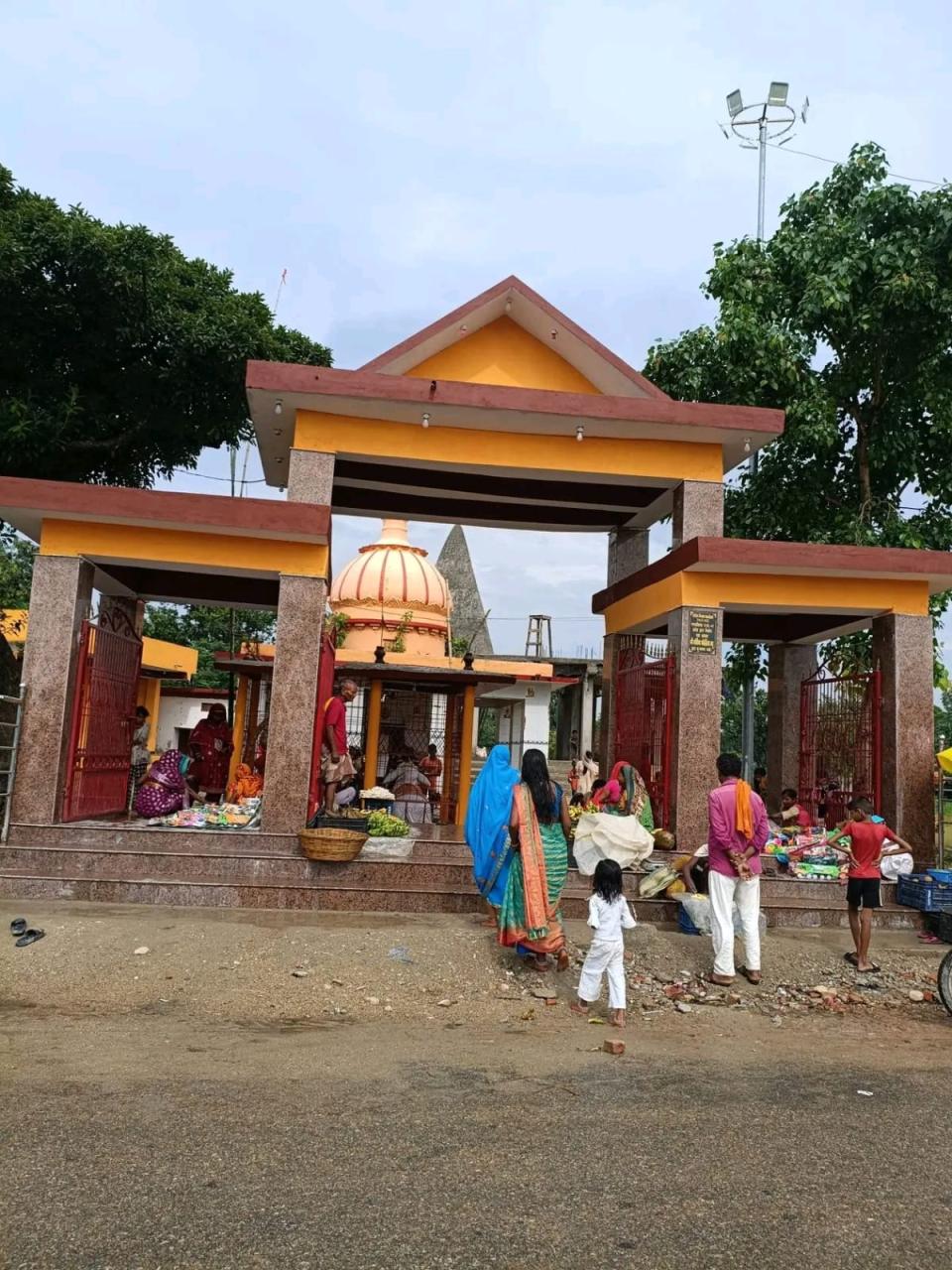
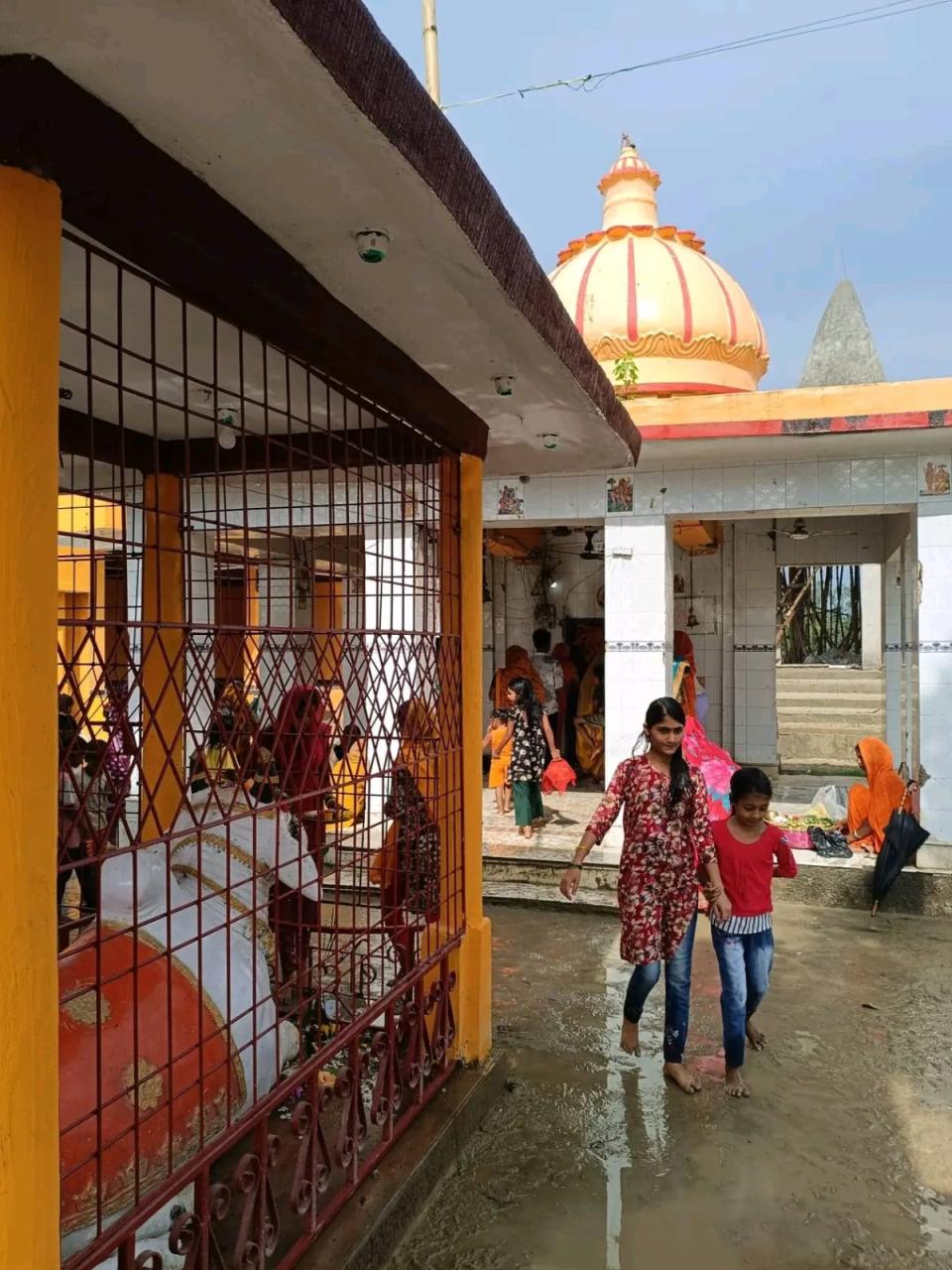
The centre of the complex is the shrine of Dineshwarnath Mahadev, a form of Lord Shiva, housed in a white tiled building under a fluted dome painted orange and cream and topped with a finial. Panels of glazed deity tiles run along the outside wall, and the shrine opens onto a raised pillared verandah where people sit and wait their turn. Devotees make the offerings that define Shiva worship across the Terai: water poured over the shivling, milk, bel (wood-apple) leaves, dhatura flowers, incense and vermilion.
Worship here is unhurried and domestic in scale. On an ordinary weekday morning you may share the shrine with a dozen people from the surrounding tole; on a Shrawan Monday you will queue with several hundred, and the courtyard floor will be wet with poured water and monsoon rain. That contrast is the difference between a village temple and a heritage monument, and it is the reason to come.
Shrawan Somvar, the Temple at Full Strength
Every Monday of the Nepali month of Shrawan (mid-July to mid-August) is sacred to Shiva, and Shrawan Somvar is when Manara Mahadev is at its busiest and most alive. Families fast through the day, walk to the temple carrying water, and queue to make their offering; the lanes around the shrine fill with vendors selling bel leaves, flowers, garlands, bangles and sweets. If you want to understand what this temple means to the villages around it, come on a Shrawan Monday rather than a quiet Thursday.
Maha Shivaratri Night
Maha Shivaratri, the great night of Shiva in Falgun (February or March), is the temple's other peak. Devotees keep an overnight vigil, offerings and the ringing of bells continue in waves through the dark, and bhajan and kirtan singing carries from the temple grounds. Nepal's national Shivaratri gathering happens at Pashupatinath in Kathmandu, but the version you see at a shrine like Manara is closer to how most of the country actually observes the night, at a local temple, with neighbours.
The Temple Gate and Grounds
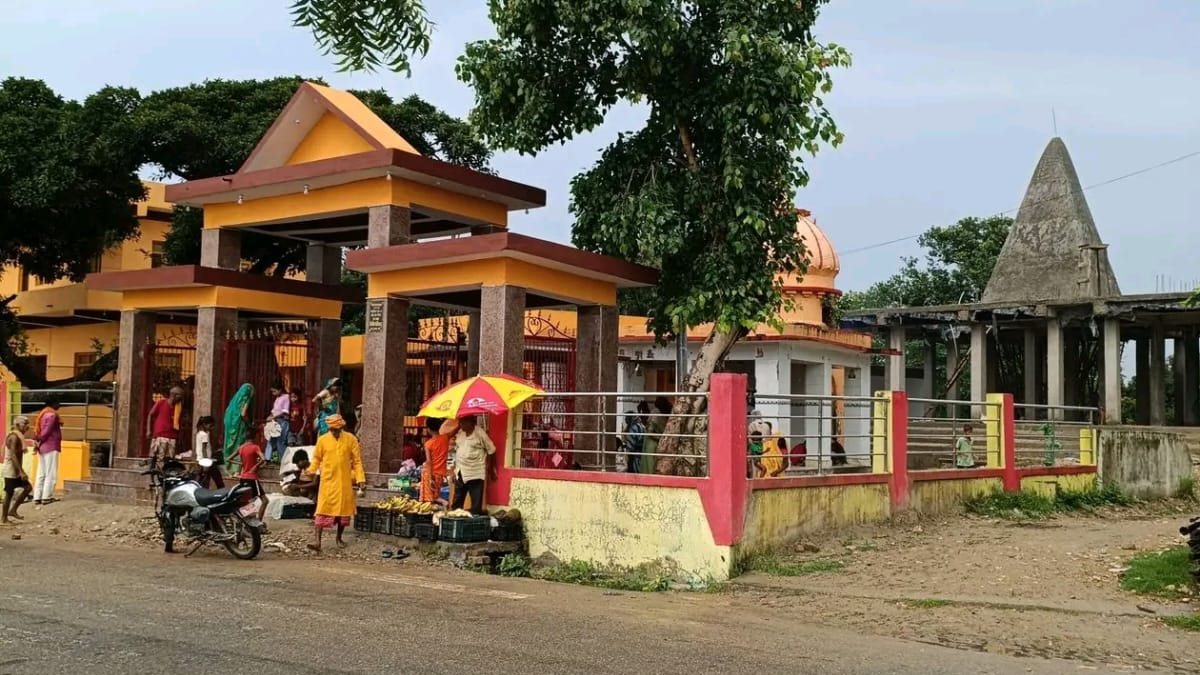
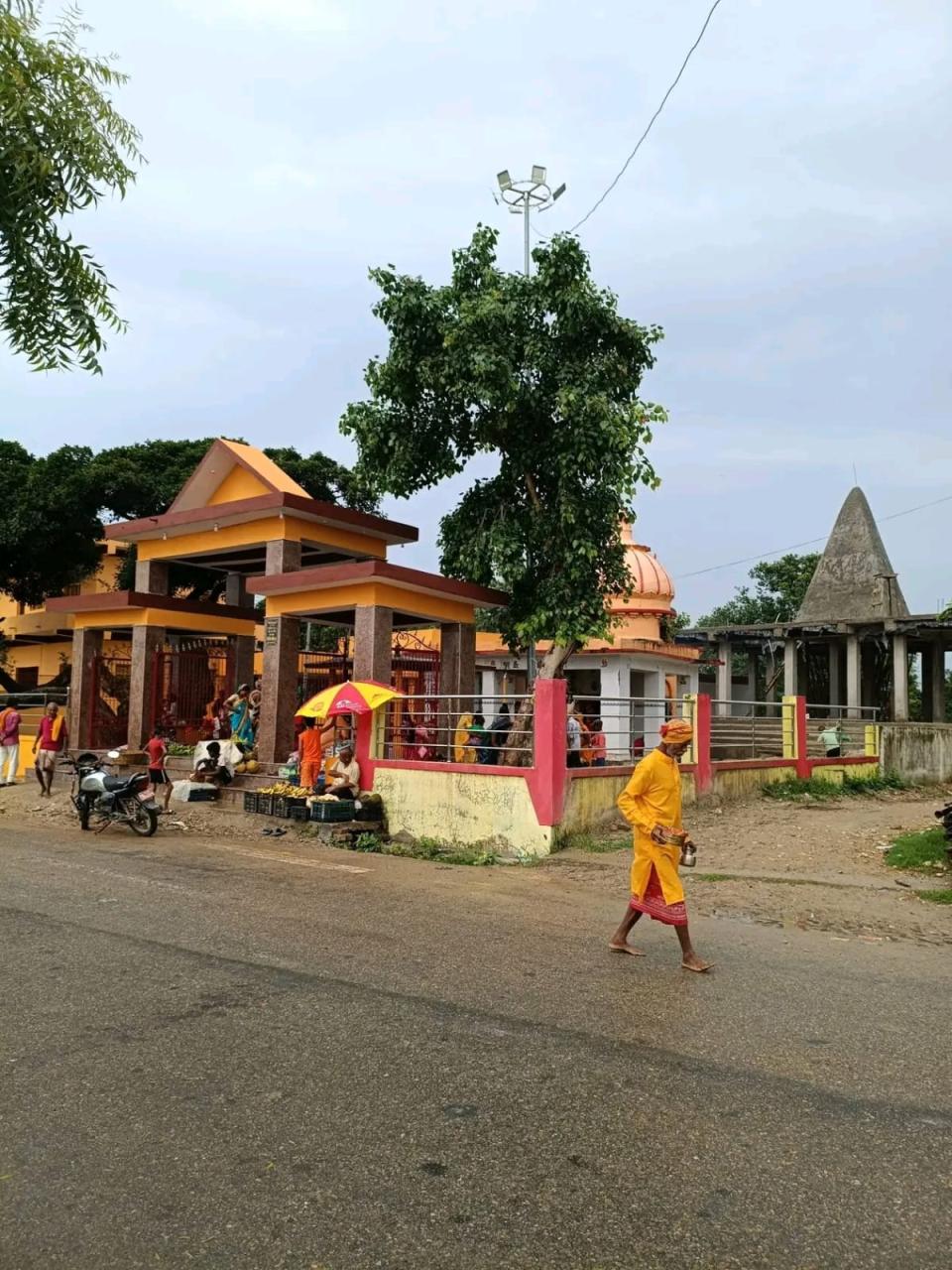
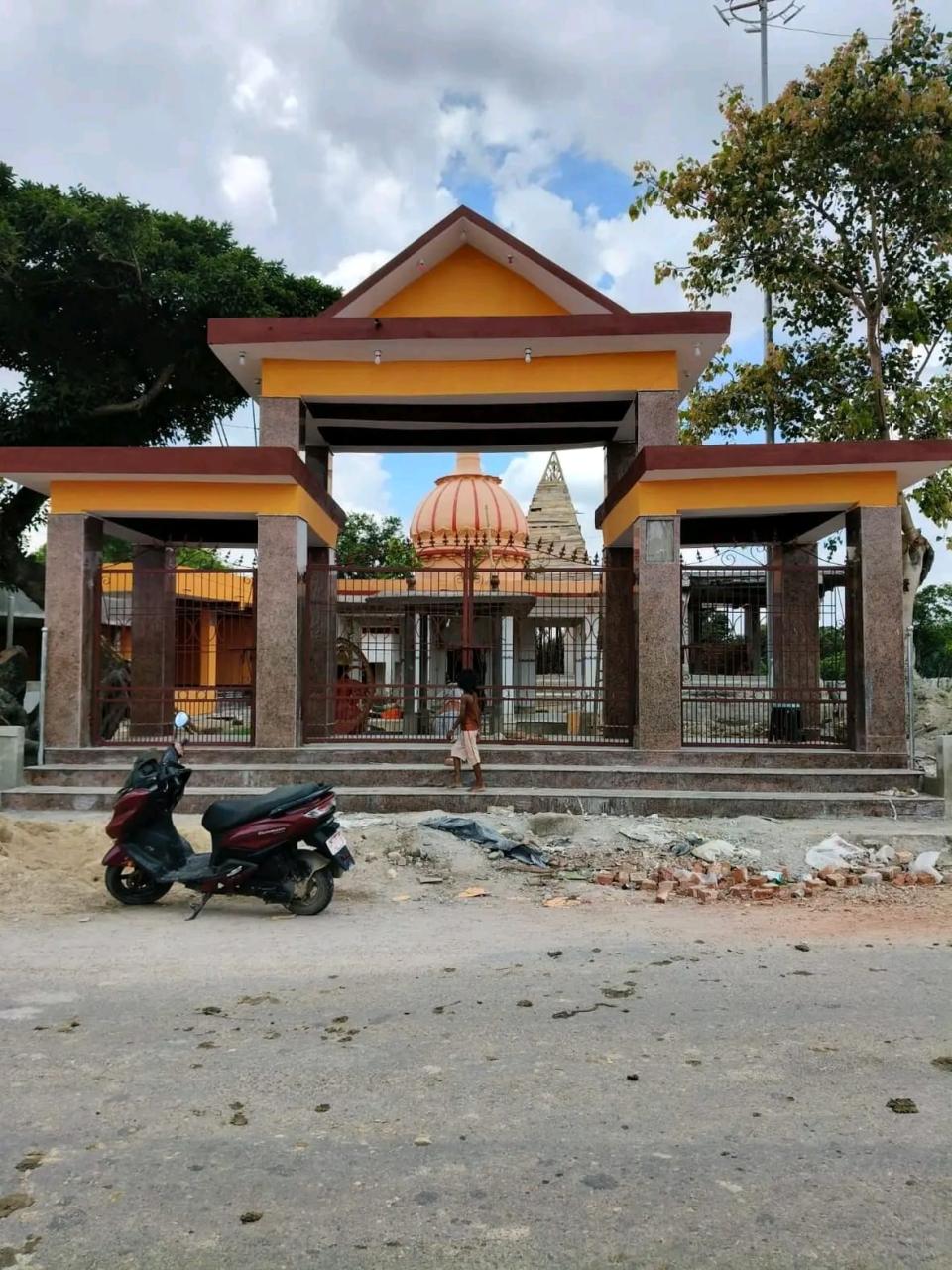
The approach passes under a large newly built gateway: three bays of granite-clad columns carrying a pitched pediment painted deep yellow and maroon, with red metal gates, lamps set into the beams and a small Devanagari plaque on one pillar. It is the most substantial structure on the site and it is recent enough that in some photographs the sand, brick and rubble of the work are still stacked along the road outside. It belongs to a run of community-funded improvements that villages across Mahottari have been making to their shrines.
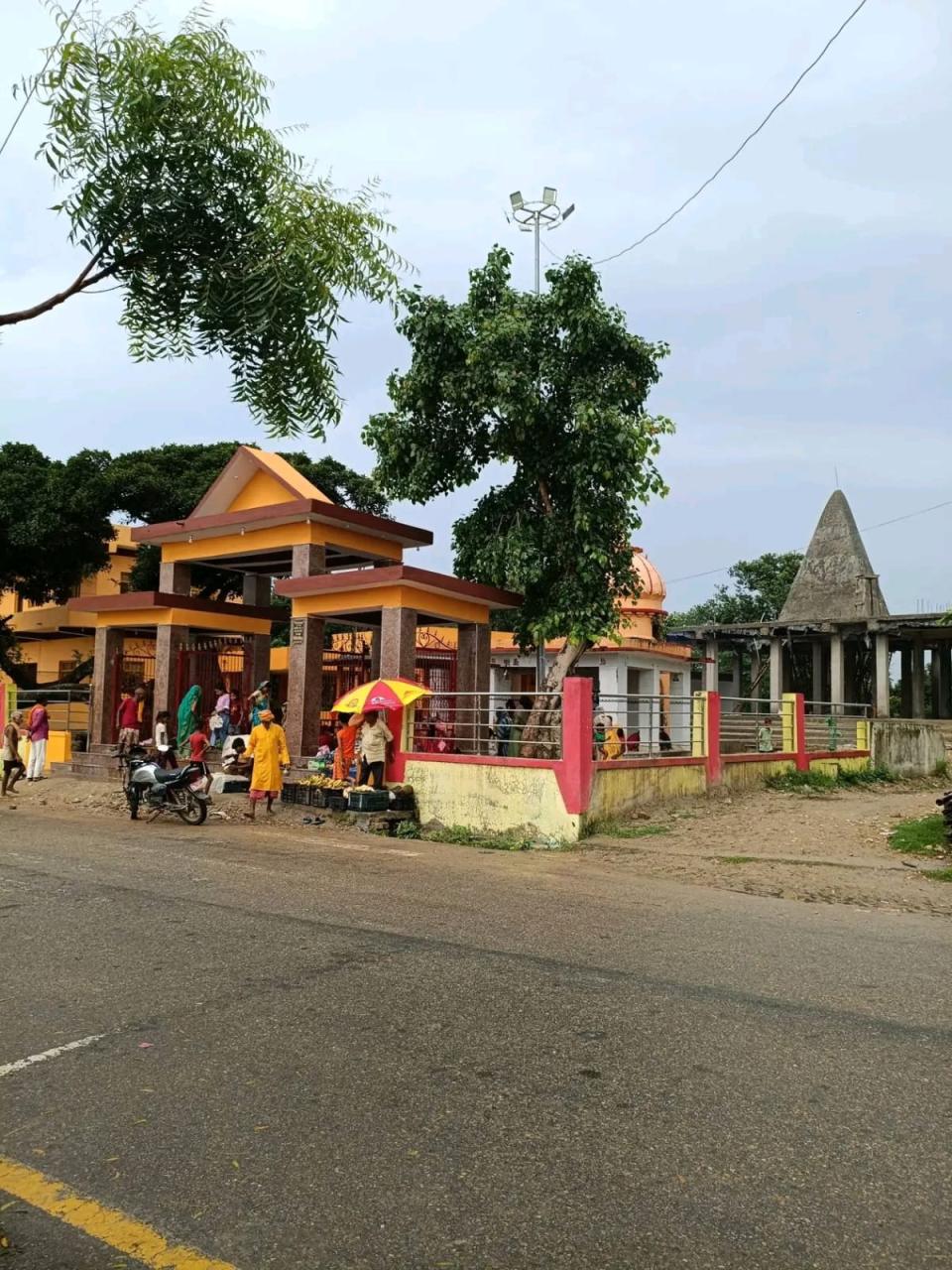
Its broad steps double as the marketplace. On busy days sellers spread cloths of flowers, garlands, bangles, sweets and puja goods across them, baskets and crates of bananas and coconuts stacked at the edge under a red and yellow umbrella. The grounds beyond are simple: an open compound, a low pink-and-cream boundary wall with steel railings, big neem and peepal trees for shade, and a tall floodlight mast so the site can be used after dark on festival nights.
The Two Shikhars and the Unfinished Colonnade
One of the first things you notice from the road is that the complex has two very different towers. Beside the painted dome of the main shrine stands a tall, plain grey concrete shikhar, a steep unornamented cone with a finial, entirely unpainted. Next to it runs a line of bare concrete pillars carrying no roof, an open colonnade still waiting to be finished.
It is worth looking at rather than looking past. The temple is visibly mid-expansion, built and extended in stages as money is raised locally, which is how most village shrines in the Terai actually grow. You are seeing a building in progress rather than a finished monument, and the gap between the polished new gateway and the raw grey tower tells you more about how this place is funded and cared for than any plaque would.
Hanuman and Nandi in the Courtyard
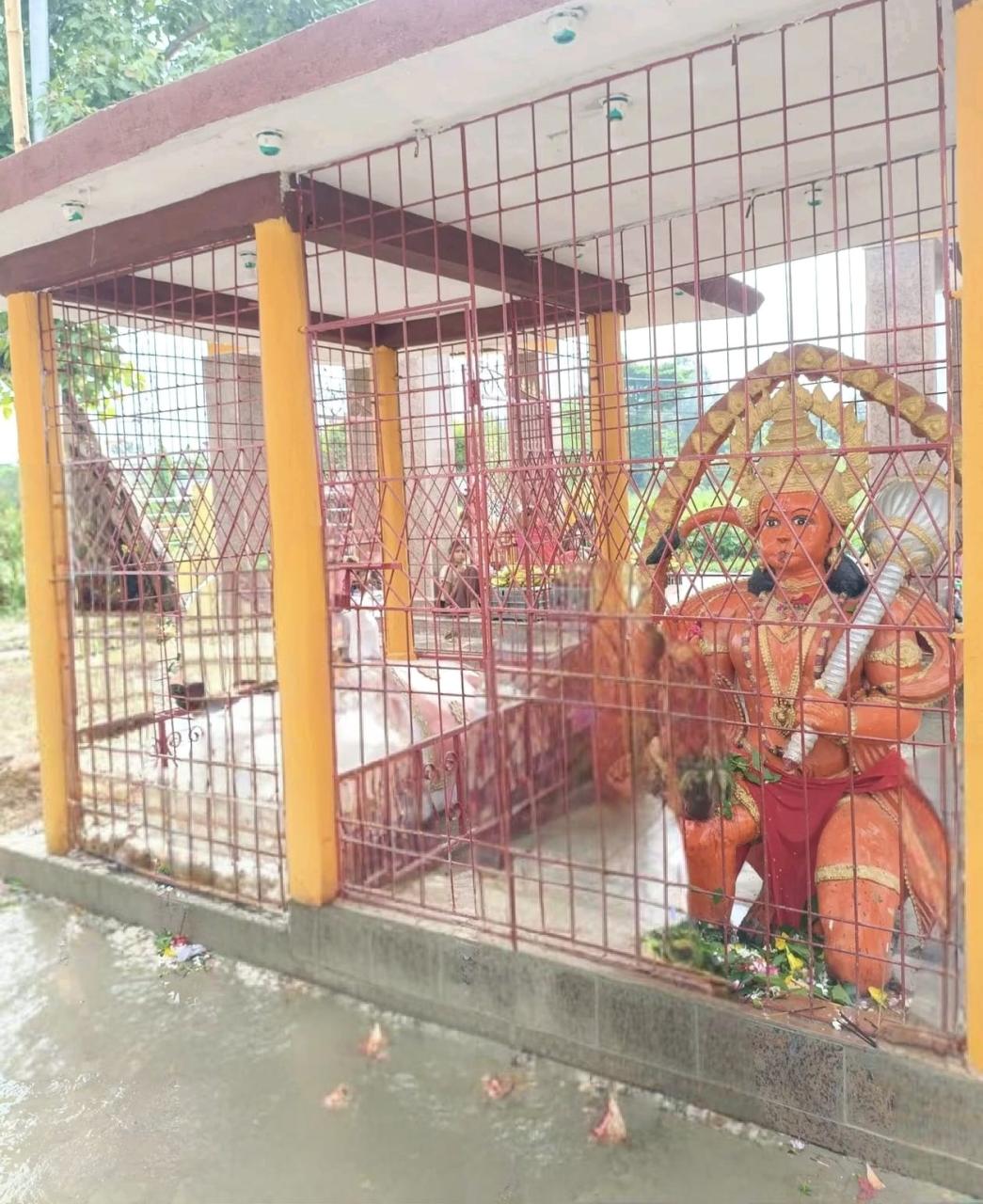
Set in its own open pavilion in the courtyard, behind a red steel grille, is a vivid orange Hanuman murti with a gada (mace) over one shoulder and a carved arch behind the head, garlanded and surrounded by loose flower offerings on the floor. Sharing the same railed enclosure is a large recumbent Nandi, the bull who is Shiva's mount and doorkeeper, painted white and dressed in an orange and gold cloth, lying as Nandi always does within sight of the shrine.
Between them these two are the clearest sign of what kind of temple this is: a working Shiva shrine with the standard supporting cast of the Hindu Terai, kept bright with fresh paint and daily flowers rather than preserved as antiquity.
The Maithil Village Setting
Manara sits in the flat, intensely farmed plain of the eastern Terai, and the walk or ride in is half the experience: paddy and sugarcane, mango groves, brick kilns, ponds, and mud-walled houses whose outer walls are sometimes painted in the geometric and figurative style of Mithila art. The everyday language here is Maithili, not Nepali. Wandering the lanes around the temple for half an hour after your darshan gives you more of Madhesh than an hour inside any monument.
Jaleshwar Mahadev, 30 Minutes Away
The best-known Shiva temple in the district is Jaleshwar Mahadev in the district headquarters of Jaleshwar, roughly 12–15 km southeast of Manara. Its name means "lord of the water": the shivling sits submerged in a tank reached by a flight of steps, and the water is drained only on Maha Shivaratri and on the Shrawan Monday fair. It pairs naturally with Manara in a single morning, and gives you the district's big temple and its village temple back to back.
Janaki Mandir and Janakpur
Janaki Mandir in Janakpur, the marble temple marking the birthplace of Sita, is only about 20 km east, well under an hour by road. Almost everyone who visits Manara Mahadev from outside the district is basing themselves in Janakpur, and the two make an easy combination: the Ramayana city in the morning, the Shiva shrines of Mahottari in the afternoon.
What Is Known About the Temple
We want to be straightforward about the record, because a page about a small temple is easy to pad with invented history and we would rather not.
What is documented. The temple's name is Shri Dineshwarnath Mahadev Mandir, and it is in Manara. It observes Shrawan Somvar, the Mondays of the month of Shrawan, as its major annual occasion, and it has recently added a new entrance gate. This comes from the temple's own community postings. The photographs on this page were taken on the ground at Manara and contributed to us, and they establish the rest of what is described here: the domed and tiled main shrine, the second unpainted grey shikhar and the unfinished colonnade beside it, the Hanuman and Nandi pavilion, the vendors on the gateway steps, the floodlight mast, and the sealed road running past the boundary wall. The administrative setting is documented too: Manara Shiswa Municipality was created in 2016 from ten former village development committees, covers about 49.7 sq km across 10 wards, and had a population of roughly 49,700 at the last full census count. Manara itself was one of those former VDCs and is now among the municipality's wards.
What rests on local tradition. Villagers describe the shrine as old and long-established, and the "-nath" naming that Dineshwarnath shares with Mahottari's other Shiva temples, Jaleshwarnath among them, places it in the same regional family of Shiva shrines that spreads across the Maithil country on both sides of the Nepal–India border. But there is no published founding date, no inscription record and no scholarly survey of this temple that we have been able to verify. Any specific age you may be told locally is oral tradition, and we have deliberately not repeated a number here.
The wider context that is solid. Mahottari and the neighbouring Dhanusha district form the heart of the historic Mithila region, the land of King Janak and of Sita in the Ramayana, and one of the densest concentrations of Hindu shrines anywhere in Nepal. Janaki Mandir, Jaleshwar Mahadev and dozens of village Shiva temples like Manara's belong to a single continuous religious landscape, tied together by Maithili language, Mithila art and a shared festival calendar. Manara Mahadev is best understood as one node in that network rather than as a standalone destination.
What to See & Do
A visit is short, an hour at the shrine is plenty on a normal day, so plan it as part of a wider loop through Mahottari and Janakpur rather than as a trip in itself. Worth doing:
- Make or watch a darshan at the shivling. Water, milk, bel leaves and flowers are the standard offering; small vendors near the temple sell a ready-made puja thali on busy days.
- Come on a Shrawan Monday if you possibly can. The temple, the queue, the vendors and the fasting crowds are a completely different experience from a quiet weekday.
- Find Hanuman and Nandi. The grilled pavilion in the courtyard holds a bright orange Hanuman with his gada and a large recumbent Nandi facing the shrine.
- Look at the second tower. The plain grey shikhar and the roofless colonnade beside the painted dome show a temple still being extended, stage by stage, on local donations.
- Sit for a while. The grounds are unhurried. Half an hour on the gateway steps, among the flower and fruit sellers, watching families arrive, tells you more than any plaque would.
- Walk the village lanes. Look for Mithila wall painting on the mud-walled houses, the village ponds, and the small shrines under the peepal and banyan trees.
- Pair it with Jaleshwar Mahadev. The district's famous submerged shivling is 12–15 km away and makes an obvious second stop.
- Continue to Janakpur. Janaki Mandir, the Vivah Mandap and the sacred ponds are under an hour east; see our Janakpur pilgrimage itinerary.
- Eat Maithil food locally. Not tourist food, village food, and it is one of the more distinctive regional cuisines in Nepal.
- Ask before you photograph. People here are generally welcoming, but a village temple is not a photo set, and asking first changes the reception you get entirely.
Best Time to Visit
For plain comfort, the best months are October to March. The eastern Terai is hot and humid for much of the year, the pre-monsoon months of April to early June regularly push past 40°C, and the monsoon from mid-June to September brings heavy rain, waterlogged village roads and, in bad years, flooding across Mahottari. Winter mornings can be genuinely cold and fog can delay flights and buses across the Terai in December and January, but daytime conditions from late October onwards are comfortable and the light is good.
For atmosphere, the calendar matters more than the weather. The two occasions that transform this temple are:
| Occasion | When | What happens |
|---|---|---|
| Shrawan Somvar | Every Monday of Shrawan, mid-July to mid-August. In 2026 (Shrawan 2083, 17 July – 16 August) these fell on 20 and 27 July and 3 and 10 August. | The temple's biggest days. Fasting, queues, water offerings, vendors, crowds from the surrounding villages. |
| Maha Shivaratri | Falgun Krishna Chaturdashi. 6 March 2027 (22 Falgun 2083). | Overnight vigil, continuous offerings, bhajan singing through the night. |
| Teej | Bhadra, August–September | Women's fasting festival; Shiva temples across the Terai see large gatherings. |
| Bala Chaturdashi, Ram Navami | Nov–Dec, Mar–Apr | Smaller local observances at the shrine. |
Note the clash: Shrawan falls in the middle of the monsoon. If you want the temple at its most alive you accept rain, mud and heat; if you want easy travel you come in the cool season and see a quiet shrine. There is no month that gives you both. Shrawan dates shift each year with the Nepali calendar, so check a Nepali patro before fixing travel.
How to Reach Manara Mahadev Mandir
Manara is in the flat Terai and is easy to reach, but there is no direct long-distance transport to the temple itself. Everyone arrives via Janakpur or Jaleshwar, then takes local transport the last stretch.
From Janakpur (the usual way, about 20 km)
Janakpur is the practical base. From there Manara is roughly 20 km west, about 45 minutes by road. Options are a hired taxi or car for the round trip, which is what most visitors do and lets you add Jaleshwar on the same run; a local bus or shared jeep along the Jaleshwar road, cheap but slower and with a short auto-rickshaw or walk at the village end; or an auto-rickshaw for the whole distance, which is doable but not comfortable.
From Jaleshwar (12–15 km)
Jaleshwar, the district headquarters, is about 12–15 km southeast, roughly 30 minutes. If you are already visiting Jaleshwar Mahadev, this is the shortest approach. Local jeeps, buses and autos run out along the district roads; ask for Manara rather than for the temple, which is not a recognised destination name outside the immediate area.
From Kathmandu
By air: fly Kathmandu to Janakpur, about 25 minutes, with several daily services, then continue by road as above. This is by far the fastest option and turns Manara into a comfortable day trip from the capital.
By road: buses from Kathmandu to Janakpur take roughly 7–9 hours via the Mahendra (East–West) Highway, descending from the hills onto the plains. Bardibas, on the highway in northern Mahottari, is the junction where the road turns south towards Jaleshwar and is a useful reference point if you are driving yourself.
From India
Mahottari borders Bihar. The nearest crossings are Bhittamod–Sonbarsa, close to Jaleshwar, and Jaynagar–Janakpur, which also carries the cross-border railway into Janakpur. Travellers coming up from Sitamarhi, Madhubani or Darbhanga can reach Manara in a couple of hours from either crossing. Indian nationals do not need a visa for Nepal; other nationalities should carry a passport and obtain a visa on arrival at the border post.
The last stretch
Manara is a village, and the temple sits among lanes rather than on a highway. Signage is in Devanagari where it exists at all, and the everyday language is Maithili. The reliable method is the local one: get to Manara, then ask for "Mahadev mandir" or "Dineshwarnath" and follow the directions you are given. In the wet season some of the approach lanes turn to mud, so a jeep or motorbike beats a low-clearance car.
Costs & Entry
There is no entry fee. Manara Mahadev is a community temple open to visitors, and it is one of the cheapest things you can do in Nepal. Your only real costs are transport from your base and whatever you choose to offer. Treat these as indicative and confirm locally, as fares in particular are negotiated rather than fixed:
| Item | Approx. cost | Notes |
|---|---|---|
| Temple entry | Free | No ticket, no foreigner fee |
| Puja items (flowers, bel leaves, incense) | NPR 50–200 | From vendors near the temple on busy days |
| Donation at the shrine | Optional | Small notes into the donation box; entirely voluntary |
| Taxi round trip from Janakpur | NPR 2,000–3,500 | Half-day hire, more if you add Jaleshwar; agree the fare first |
| Local bus / shared jeep from Janakpur | NPR 50–150 | Cheapest, slower, plus a short auto or walk |
| Auto-rickshaw from Jaleshwar | NPR 400–800 | Negotiate before setting off |
| Flight Kathmandu–Janakpur | From about NPR 5,000 one way | Varies by airline and season |
| Hotel in Janakpur | NPR 1,500–5,000 / night | Simple to mid-range; more during Vivaha Panchami |
Money tips. Carry cash in small notes. There are ATMs in Janakpur and Jaleshwar but not in the village, and card payment is not a realistic option anywhere near the temple. Indian rupee notes are widely handled in this border district, but change and rates are informal, so Nepali rupees are simpler. Fix taxi and auto fares before you get in.
Food & Nearby
Around the temple, expect tea stalls and small local eateries, plus seasonal vendors selling snacks, fruit and sweets on festival days. There are no restaurants in the tourist sense. For a proper meal, eat in Jaleshwar or, better, in Janakpur, where the choice is much wider.
The food here is Maithil, and it is worth seeking out rather than defaulting to the standard tourist dal bhat. Look for bhat with dal, tarkari and achar in the local style; bagiya or dhikri, steamed rice-flour dumplings that are a Mithila speciality; tilkor, a fried gourd preparation; sattu drinks and chura-dahi (beaten rice with curd) in hot weather; and Mithila sweets such as khaja and anarsa. Freshly cooked, hot food from a busy stall is the safe choice, and stick to bottled or treated water.
As at any Shiva shrine, do not bring meat, eggs, alcohol or leather goods into the temple precinct. Many devotees fast on Mondays through Shrawan and on Shivaratri, so if you are visiting on those days expect the food scene around the temple to be vegetarian and snack-based.
Nearby, in order of how far you have to go: Jaleshwar Mahadev (12–15 km), Janaki Mandir and the Vivah Mandap in Janakpur (about 20 km), the sacred ponds and Ram Mandir in Janakpur, Dhanushadham further north in Dhanusha, and, if you are travelling on west along the Terai, the Gadhimai shrine in Bara.
Where to Stay
There is no tourist accommodation in Manara, and none is needed, the temple is a short trip from two towns that have plenty. Choose your base by what else you want to see:
- Janakpur (recommended, about 20 km). The obvious base. A decent spread of budget and mid-range hotels and guesthouses, restaurants, ATMs, the airport and the railway station, plus Janaki Mandir and the rest of the Ramayana circuit on your doorstep. Rooms fill and rates rise sharply around Vivaha Panchami in November or December.
- Jaleshwar (12–15 km). The district headquarters has simple hotels and lodges aimed at business and pilgrim traffic rather than tourists. Convenient if you are crossing at Bhittamod or want to be next to Jaleshwar Mahadev, but a much thinner choice than Janakpur.
- Bardibas (on the highway). A practical overnight stop if you are driving the East–West Highway and want to break the journey, though it is well north of the temple.
Standards across the district are modest. Expect clean, plain rooms, fans and often air conditioning in the better places, intermittent hot water and occasional power cuts. Book ahead for Shivaratri, Shrawan weekends and Vivaha Panchami; outside those, walking in is usually fine.
Etiquette & Practical Tips
Manara Mahadev is an active place of worship in a village where visitors from outside are uncommon. You will be noticed, and you will almost certainly be welcomed. A few things make the visit go well for everyone:
- Dress modestly. Cover shoulders and knees. This matters more at a village shrine than at a city temple used to tourists.
- Remove your shoes and any leather before entering the shrine area, and leave belts and bags with leather trim outside where asked.
- Ask before photographing people. The temple grounds are fine; worshippers mid-puja are not, unless invited. Ask at the shrine before photographing the deity, as some temples do not allow it.
- Follow what others do. If you are unsure how to make an offering, watch first, or simply say so, someone will show you. Circumambulate clockwise.
- Accept prasad with your right hand, and take off your shoes before stepping onto shrine platforms.
- Learn two words of Maithili. Pranam as a greeting and dhanyabad for thank you go a long way. Hindi is widely understood; English much less so.
- Carry small cash. No ATM in the village, no card payments, and vendors and auto drivers will not have change for large notes.
- Plan for the heat. From April to September carry water, a hat and sunscreen; the Terai sun is unforgiving and there is little shade on the approach.
- Go early on festival days. On Shrawan Mondays and Shivaratri, arrive in the morning to avoid the worst of the queue, keep valuables secure in the crowd, and expect the last stretch of road to be congested.
- Time your visit with daylight. Village roads are unlit and local transport thins out after dark, so aim to be back in Janakpur or Jaleshwar by evening.
- Do not treat the temple as a photo location. It is a working shrine maintained by the community, not a heritage site with staff. Behave as you would in someone else's place of worship, because that is exactly what it is.
Help Us Improve This Page
Very little about Shri Dineshwarnath Mahadev Mandir has ever been written down, and this page is deliberately conservative about what it claims as fact. The photographs here were contributed by people who know the temple; the descriptions of the shrine, the gateway, the shikhars and the Hanuman and Nandi pavilion all come from them. If you are from Manara or Manara Shiswa, or you look after the temple, we would like to make the rest of it better, and we would rather get it from you than guess.
Still missing, and genuinely useful:
- The temple's history as it is told locally, and any inscription, trust record or committee document that fixes dates.
- The exact ward and location within Manara Shiswa, and a map pin. The coordinates on this page are village-level, not the temple itself.
- Festival details: the full annual calendar, mela dates, and who runs the temple committee.
- More photographs, especially of Shrawan Somvar and the Shivaratri night vigil, and of the shrine interior.
- Corrections to anything on this page, particularly distances, fares and timings.
Send it through our contact page. We will credit contributors and note the update date on the page.
Frequently Asked Questions
Where is Manara Mahadev Mandir?
Shri Dineshwarnath Mahadev Mandir is in the village of Manara, in Manara Shiswa Municipality, Mahottari district, Madhesh Province, in the eastern Terai plains of Nepal. It is about 20 km west of Janakpur and 12–15 km northwest of Jaleshwar, the district headquarters.
What is the full name of the temple?
The temple's formal name is Shri Dineshwarnath Mahadev Mandir. Locally and among visitors it is usually just called Manara Mahadev Mandir, after the village. Both names refer to the same Shiva shrine.
What does Manara Mahadev Mandir look like?
The complex sits directly beside a sealed road behind a low pink-and-cream boundary wall. You enter through a large new three-bay gateway of granite-clad columns painted yellow and maroon, whose steps double as a market for flower, fruit and puja sellers. Inside, the main shrine is a white tiled building under a fluted orange-and-cream dome, with a separate railed pavilion holding an orange Hanuman murti and a recumbent Nandi. A second, plain grey concrete shikhar and a roofless colonnade stand alongside, still unfinished.
Is there an entry fee at Manara Mahadev Mandir?
No. There is no entry fee and no separate foreigner charge. It is a community temple open to visitors. Offerings and donations are entirely voluntary; small puja items such as flowers, bel leaves and incense cost roughly NPR 50–200 from vendors near the temple on busy days.
What is the best time to visit Manara Mahadev Mandir?
October to March is the most comfortable, with mild, dry weather in the Terai. For atmosphere, come on a Monday during Shrawan (mid-July to mid-August) or on Maha Shivaratri, when the temple is at its busiest. Note that Shrawan falls in the monsoon, so the liveliest days are also the wettest.
When is Shrawan Somvar at the temple?
Shrawan Somvar is every Monday of the Nepali month of Shrawan, which runs roughly mid-July to mid-August. In 2026 Shrawan 2083 ran from 17 July to 16 August, with Mondays on 20 and 27 July and 3 and 10 August. The dates shift each year with the Nepali calendar, so check a Nepali patro before planning.
When is Maha Shivaratri at Manara Mahadev Mandir?
Maha Shivaratri falls on Falgun Krishna Chaturdashi, in February or March. The next observance is on 6 March 2027 (22 Falgun 2083). Devotees keep an overnight vigil at the temple, with offerings and bhajan singing continuing through the night.
How do I reach Manara Mahadev Mandir from Janakpur?
Manara is about 20 km west of Janakpur, roughly 45 minutes by road. Most visitors hire a taxi or car for a half-day round trip, often combining it with Jaleshwar Mahadev. Local buses and shared jeeps run along the Jaleshwar road for a fraction of the cost, with a short auto-rickshaw ride or walk at the village end.
How do I reach Manara Mahadev Mandir from Kathmandu?
Fly Kathmandu to Janakpur, about 25 minutes with several daily services, then drive roughly 45 minutes west. Overland, buses from Kathmandu to Janakpur take about 7–9 hours via the Mahendra Highway. With the flight it works comfortably as a day trip from Kathmandu.
Can I visit from India?
Yes. Mahottari borders Bihar, and the nearest crossings are Bhittamod–Sonbarsa near Jaleshwar and Jaynagar–Janakpur, which also carries the cross-border railway into Janakpur. From Sitamarhi, Madhubani or Darbhanga the temple is a couple of hours away. Indian nationals do not need a visa; other nationalities should carry a passport and take a visa on arrival at the border post.
How old is Manara Mahadev Mandir?
We do not know, and we would rather say so than invent a date. Local tradition holds that the shrine is old and long-established, but there is no published founding date, inscription record or scholarly survey of this temple that we have been able to verify. If you have documentation, please send it to us.
Where should I stay to visit Manara Mahadev Mandir?
There is no tourist accommodation in Manara. Stay in Janakpur, about 20 km away, which has the widest choice of budget and mid-range hotels plus the airport, railway station and the Janaki Mandir circuit. Jaleshwar, 12–15 km away, has simpler hotels and is convenient if you are crossing at Bhittamod.
What else can I see nearby?
Jaleshwar Mahadev, the district's best-known Shiva temple with its submerged shivling, is 12–15 km away and pairs naturally with Manara. Janaki Mandir, the Vivah Mandap and the sacred ponds of Janakpur are about 20 km east. Further afield, Dhanushadham lies north in Dhanusha district and the Gadhimai shrine is west in Bara.
What should I wear and how should I behave at the temple?
Dress modestly with shoulders and knees covered, remove shoes and leather items before entering the shrine area, walk clockwise around the shrine, and do not bring meat, eggs or alcohol into the precinct. Ask before photographing worshippers or the deity. This is a village shrine with few outside visitors, so courtesy is noticed and appreciated.
Is Manara Mahadev Mandir worth visiting for foreign travellers?
It depends what you want. If you are looking for monumental architecture, Janaki Mandir and the Kathmandu Valley temples will serve you better. If you want to see how Hindu worship actually works in a Maithil village in the Terai, away from anything arranged for visitors, then yes, especially on a Shrawan Monday. Plan it as part of a Janakpur and Mahottari loop rather than a trip on its own.
Reviews & Ratings
No reviews yet. Be the first to share your experience of Manara Mahadev!
Official sources
Fees and rules on this page come from the bodies that set them. They do change, sometimes mid-season, so check the primary source before you pay anything.
- Department of Immigration Nepal visa on arrival, fees & extensionswww.immigration.gov.np

By the BriefNepal Travel Desk
Researched and maintained by our Nepal-based editorial team and reviewed for accuracy. Last updated September 3, 2026. Prices, permits and conditions change, always verify before you travel. Spotted something out of date? Let us know.
Nepal Currency Converter
Live exchange rates for the Nepalese Rupee (NPR) against every world currency, handy for budgeting the prices in our guides.
Live mid-market rates. For information only, banks and exchanges apply their own margins.
Planning a trip to Nepal?
Join the BriefNepal Travel list for seasonal tips, new guides and our free Nepal trip-planning checklist. No spam, unsubscribe anytime.
Explore More of Nepal
 Janaki MandirThe birthplace of Sita and a marble marvel in Janakpur.
 JanakpurThe Mithila cultural capital and birthplace of Sita in the southern Terai.Janakpur Pilgrimage TourA devotional journey through the land of Sita and the Ramayana.
 GadhimaiThe Terai shakti shrine of the great five-yearly Gadhimai Mela.